
Editorial
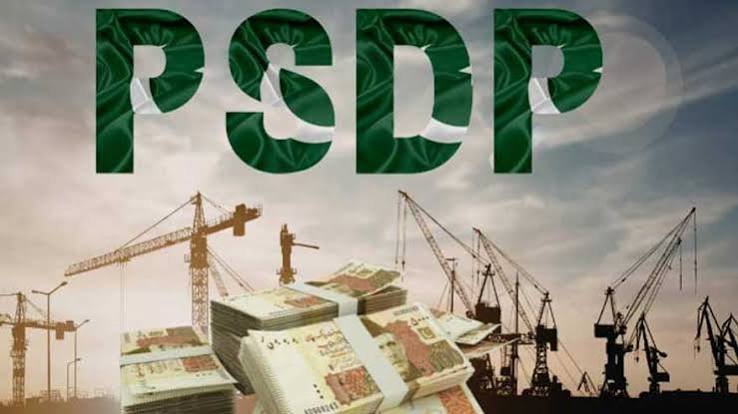
Pakistan’s Public Sector Development Programme has survived since the 1950s, and that survival alone should worry us. Conceived under a colonial logic of public investment driving national growth, it was meant to build the roads, the universities, the infrastructure that would lift a nation forward. Decades later, ask a simple question: where is the growth? The link between PSDP spending and actual economic output has never been clearly established. What we have instead is political pork, dressed up as development.
Consider the record. Thousands of assets built — stadiums, airports, universities — and how many sit empty, underused, gathering dust while officials cut ribbons and move on? More than eighty percent of PSDP allocation goes to hardware, to bricks and mortar, while maintenance is ignored, returns are never measured, and productivity is an afterthought nobody bothers to check. This is not development. This is spectacle.
Politicians treat PSDP as a personal treasury for constituency projects, a mechanism for kickbacks dressed in the language of public service. Consultants circle the process, pushing new agencies, new schemes, new justifications for more disbursement, more commissions, more of the same failed cycle. And Pakistan pays for it, year after year, budget after budget.
A modern growth model looks nothing like this. It invests in ideas, in research, in software, in human capital — not merely in concrete structures that outlive their usefulness before they are even completed. Nations that grew fast in the last three decades did not do so by pouring money into buildings alone. They invested in people, in knowledge, in systems that multiply value rather than simply occupy land.
Pakistan must ask itself: how much longer will we mistake construction for progress? PSDP, as it stands, is a colonial hangover. It is time to scrap the spectacle and build something real.
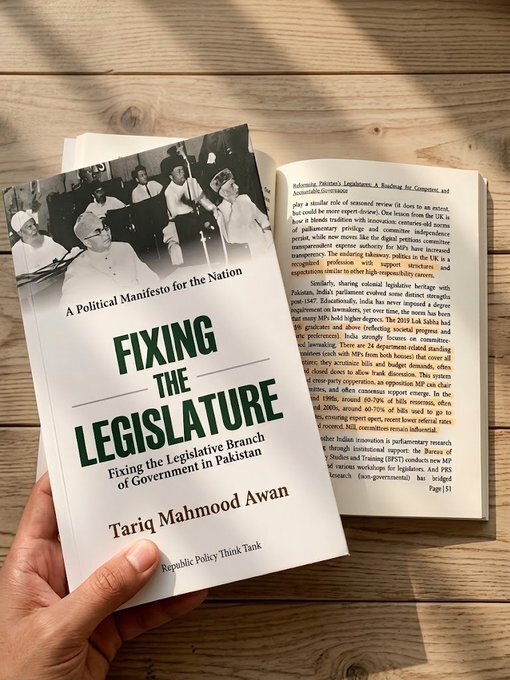
The best-selling books of Republic Policy Think Tank, including the landmark book The Bureaucratic Coup, are available at Vanguard Books, Liberty Books, Readings, Kitab Sarai, Sang-e-Meel, Saeed Book Bank Islamabad, National Book Foundation, and others across Pakistan. Contact for home delivery: 0300 9552542.