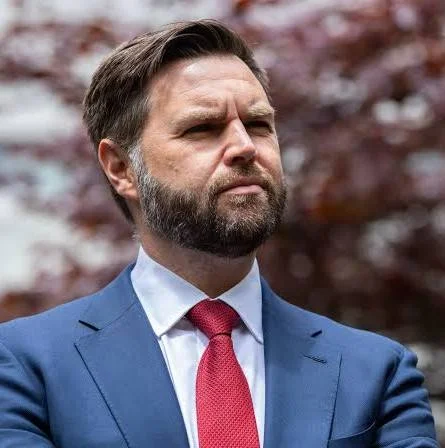

United States Vice President JD Vance has accused some members of the Israeli government of attempting to influence American public opinion in an effort to derail Washington’s diplomatic efforts with Iran and prolong the conflict.
Speaking during an interview with popular American podcaster Joe Rogan, which aired on Wednesday, Vance made some of his strongest public remarks to date regarding Israel’s role in shaping US policy. He defended the US-brokered agreement reached with Iran last month to halt hostilities and claimed that certain Israeli officials sought to prevent the deal from succeeding.
Vance said he was convinced that individuals within the Israeli government had actively worked to shift US policy away from negotiations because they preferred the continuation of military operations against Iran.
Referring to a recent report published by Time magazine, Vance alleged that an Israeli-backed influence campaign had been launched to affect American public opinion regarding Israel and the Iran conflict. According to the report, a former manager of Donald Trump’s presidential campaign had been engaged to oversee a digital campaign aimed at influencing US audiences.
The vice president claimed that the campaign was well-funded and designed to undermine diplomatic negotiations. He further alleged that some individuals connected with the Israeli government were attempting to manipulate American public opinion to keep the conflict with Iran ongoing.
Vance also said he had personally become a target of criticism because of his support for diplomatic engagement with Tehran. He argued that he was being attacked for pursuing the negotiation strategy endorsed by President Donald Trump.
Although Vance acknowledged that it is common for both allies and adversaries to seek to influence US foreign policy, he said his concern arises when such campaigns begin to affect American political decision-making.
He reiterated his support for the interim US-Iran agreement reached last month, describing it as an effort to end the war through diplomacy. However, he acknowledged that the agreement had faced significant opposition in Israel and that recent military exchanges between the United States and Iran had weakened the prospects for the deal.
When asked whether the United States would have become involved in the latest conflict with Iran without Israeli influence, Vance replied that he believed it would not have happened in the same way. At the same time, he stressed that President Trump remains firmly opposed to Iran acquiring nuclear weapons, a position with which he said he fully agrees.
Vance has previously criticised Israeli opposition to the Iran agreement. In June, he stated that President Trump remained Israel’s strongest ally despite disagreements over policy, noting the extensive military assistance the United States provides to Israel.
Former Israeli diplomat Alon Pinkas described Vance’s latest remarks as unprecedented, saying no sitting US vice president had previously accused Israel of conducting an organised campaign to undermine American foreign policy. Pinkas said the comments reflected growing differences between Washington and Tel Aviv over the handling of the Iran conflict.
Separately during the interview, Vance also commented on the controversy surrounding the late convicted sex offender Jeffrey Epstein, alleging that Epstein had connections with both American and Israeli intelligence agencies, although he did not provide evidence or further details to support the claim.