
China’s economic transformation over the past four decades has produced one of the most striking social achievements of modern history: the share of its population going hungry has fallen from 30 percent in 1980 to less than 2.5 percent today. Much of that progress rests on a simple strategy: buying what it cannot grow. China is now the world’s largest agricultural importer, accounting for 60 percent of global soybean imports and 76 percent of beef imports in 2024.
Food security sits close to the core of the Chinese Communist Party’s political legitimacy, which is why Beijing has grown increasingly anxious about whether its food imports will remain available and affordable in the years ahead. Weather-linked shortages among a small group of major suppliers have long worried Chinese planners, a concern climate change is only sharpening. Rising tensions with Washington have added a second layer of anxiety over the security of overseas supply routes themselves.
China’s first response has been diversification, particularly away from American suppliers. Brazil overtook the United States as China’s largest foreign agricultural supplier back in 2018, exporting nearly $60 billion worth of soybeans and beef to China in 2023 alone. Chinese firms are now building new port and rail infrastructure, including a new port at Chancay in Peru and a rail link into Brazil, specifically to bypass chokepoints like the Panama Canal. Beijing has also built enormous buffer stocks, holding more than 60 percent of the world’s maize reserves and nearly half of global wheat stocks.
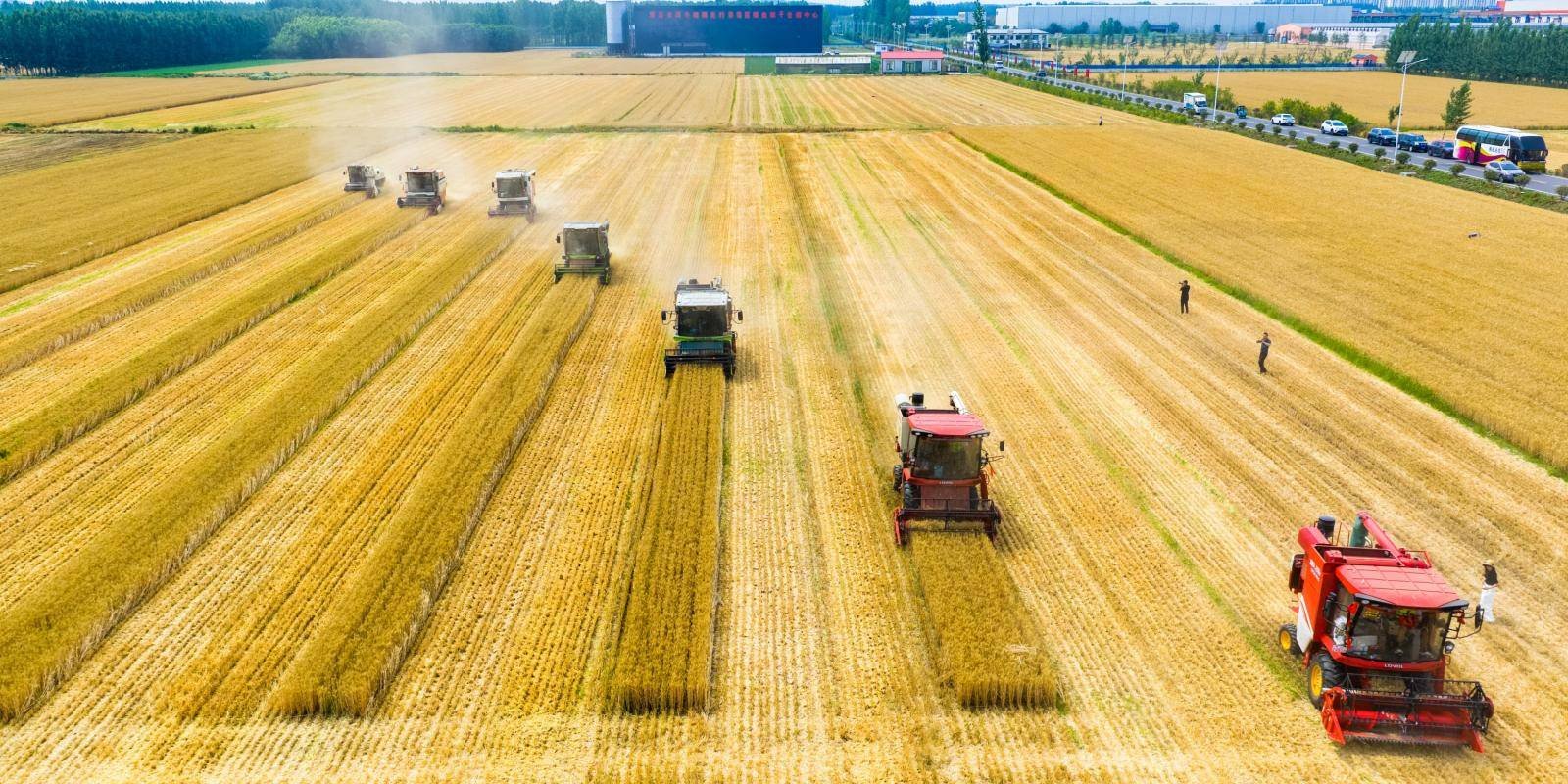
Alongside diversification, China is pushing hard toward greater self-sufficiency, leaning on new technology, regulation, subsidies, and close coordination between state and private firms. The approach has already delivered real gains in agricultural infrastructure, cutting waste and conserving water.
Some analysts see echoes here of China’s earlier rise in advanced manufacturing, particularly green technology, where the same playbook of import substitution and export expansion proved transformative. The parallel holds in places, but food is a different animal. China’s path to self-sufficiency is constrained by a shortage of arable land and water scarcity, both worsened by urbanization and industrial contamination. Improving food processing efficiency is one thing; lifting agricultural yields, or persuading Chinese consumers to embrace alternative proteins, is considerably harder.
There are real risks to concentrating food production within China’s own borders. It could leave the food supply more exposed to climate shocks or push farming toward greater intensity, with knock-on effects for pollution, water scarcity, land degradation, and energy demand. Cutting reliance on imported animal feed could also push domestic food prices higher, at least in the near term. And the geopolitical consequences cut both ways: importing less could weaken China’s leverage over exporting nations, while exporting more, layered atop its existing manufacturing surplus, could deepen trade tensions elsewhere. There’s also the risk of “involution,” the same excessive, subsidy-fueled competition that has plagued Chinese manufacturing potentially spilling into agriculture, undercutting the very farmer incomes the strategy is meant to protect.
Even so, China’s food strategy, paired with its shrinking population, will likely bring a sustained decline in average agricultural imports and a more diversified supplier base over time, with enough lead time for major exporters to adjust.
That shift could carry real benefits for the rest of the world. Falling Chinese demand for imported food could ease deforestation pressure in supplier countries, freeing up land to serve other fast-growing markets, such as sub-Saharan Africa, or future biofuel production that could aid transport decarbonization. It might also open space for nature-based carbon sequestration, supporting the land-use shifts needed for net zero. China’s rising sustainability standards at home could likewise filter into its overseas purchasing decisions. And technologies developed to boost Chinese self-sufficiency in yields, contamination resistance, waste reduction, and land recovery could prove useful well beyond China’s borders, potentially accelerating agricultural modernization in other developing markets.
The risks, though, are just as real. Expansion into new markets could accelerate deforestation if poorly regulated. Diverting land toward biofuels could weaken the global food system’s ability to absorb future shocks. And a China that imports less in normal times could still trigger sharp, unpredictable swings, positive or negative, in global markets during a crisis. A sudden flood of heavily subsidized Chinese food exports, in particular, could hit farmers in developing countries hard.
What the world most needs from China is predictability, stability in its net external demand for food over time, even as other forces, like the rapid uptake of weight-loss drugs in wealthier countries, also reshape global food demand. The world equally needs major producers to retain the flexibility to respond to supply shocks and needs China to use its considerable market power to help raise sustainability standards globally.
China stands to gain from this outcome too, and deeper cooperation between producers and consumers offers the clearest route there. Some groundwork already exists, including WTO discussions on common sustainability standards for food trade, but these efforts need firmer political backing and broader scope. Low-income countries need genuine access to the food technologies, including AI-driven tools, being developed in China and other advanced economies. Greater transparency is needed on supply and demand, particularly around biofuels, and on the size and future use of food reserves that may prove critical in balancing future shocks.
Geopolitical tension is the force driving China’s food security push. But with the right cooperation, it could still become a genuine win-win for China and for the world alike. Neither side can afford to miss that opening.