

The Mechanics of Emergency Intervention: Security Imperatives vs. Political Suppression
The federal government’s sudden imposition of emergency rule and governor’s rule in Khyber Pakhtunkhwa under Articles 232 and 234 of the Constitution has transformed the province into a heavily militarized focal point of Pakistan’s enduring political crisis. Marked by widespread road blockades using shipping containers, targeted internet suspensions, educational closures, and troop deployments, the administrative lockdown represents a drastic escalation in the confrontation between the PML-N-led federal coalition and the Pakistan Tehreek-e-Insaf (PTI).
While Federal Information Minister Attaullah Tarar asserted that emergency rule was purely a national security imperative aimed at combating rising counterterrorism threats and alleged provincial negligence, the administration has yet to present formal intelligence disclosures to substantiate claims of provincial collusion with militant groups. Consequently, independent political analysts, constitutional experts, and international observers view the federal intervention not merely as a security measure, but as a deliberate political strategy designed to dismantle the opposition’s primary operational stronghold.
┌──────────────────────────────────────────────────────────────────────────┐
│              ANATOMY OF THE KP CONSTITUTIONAL EMERGENCY                  │
├──────────────────────────────────────────────────────────────────────────┤
│                                                                          │
│  [FEDERAL EXECUTIVE ACTION]                                              │
│   ├── Invocation of Articles 232 & 234 (Emergency & Governor's Rule)     │
│   └── Suspension of KP Chief Minister & Cabinet Operations               │
│                                                                          │
│  [OPERATIONAL SECURITY MEASURES]                                         │
│   ├── Preventive Custody / Detention of Key PTI Leaders                  │
│   ├── Deployment of Federal Paramilitary Forces & Container Blockades     │
│   └── Imposition of CrPC Section 144 & Telecommunications Restrictions   │
│                                                                          │
│  [POLITICAL IMPACT & ANALYTICAL ASSESSMENT]                              │
│   ├── Disruption of PTI's 13-Year Provincial Governance Base             │
│   ├── Neutralization of Long March Pressure on Islamabad                 │
│   └── Heightened Risk of Long-Term Political & Regional Instability      │
│                                                                          │
└──────────────────────────────────────────────────────────────────────────┘
The Trigger: PTI’s Street Mobilization and the Long March
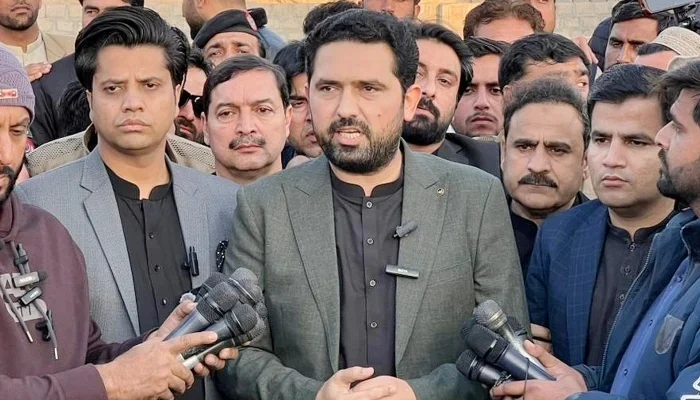
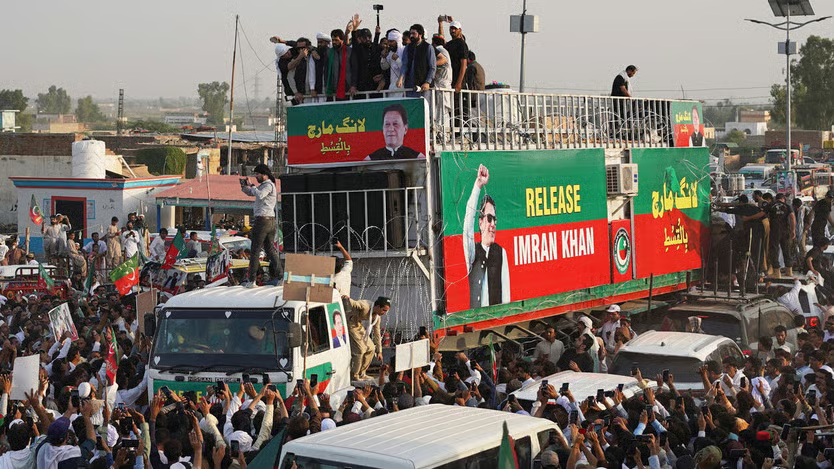
The timing of the constitutional emergency directly coincided with a massive protest march organized by PTI leadership, which saw thousands of supporters march from Khyber Pakhtunkhwa—a province governed by PTI for 13 years—towards Islamabad to demand the release of former Prime Minister Imran Khan. Led by non-functional Chief Minister Sohail Afridi, whose legal status remains shrouded in controversy following conflicting reports of arrest and preventive custody, the mobilization represented the party’s most aggressive attempt to exert political leverage on the capital in recent months.
Analysts note that the federal intervention was designed to neutralize this political pressure before it reached the federal capital:
- Disruption of Operational Infrastructure: By suspending the provincial government and enforcing preventive detentions, the state effectively dismantled the administrative and financial logistics supporting PTI’s street movements.
- Decapitation of Regional Leadership: With Chief Minister Afridi, Provincial Assembly Speaker Babar Saleem Swati, and senior party leadership taken into preventive custody or forced into hiding, PTI’s organizational apparatus in KP has been temporarily rendered leaderless.
- Containment of Popular Unrest: Despite police enforcement, pockets of resistance have emerged, including street demonstrations in Bara, Khyber district, where law enforcement utilized tear gas to disperse crowds protesting the leadership detentions.
Systemic Implications: The Risk of Further Instability
Imran Khan’s continued imprisonment since August 2023—compounded by severe restrictions on family and legal access, as well as the recent detentions of his close relatives—has fueled growing agitation among PTI’s base. External experts observe that while the federal government’s emergency declaration may succeed in short-term containment, suppressing political expression in a strategically sensitive border province carries severe long-term risks.
Farzana Sheikh, associate fellow at Chatham House, and Michael Kugelman, senior South Asia fellow at the Atlantic Council, highlight that using exceptional constitutional measures to resolve political deadlocks risks deepening institutional fragility. Rather than stabilizing the region, locking down the provincial stronghold of an popular opposition movement threatens to alienate regional populations, weaken democratic norms, and exacerbate the very governance crisis the state seeks to resolve.