
Arshad Mahmood Awan
Agriculture and livestock remain the backbone of Pakistan’s economy, and the prime minister is correct in placing these sectors at the heart of the country’s export-led growth strategy. No other segment of the economy combines such extensive employment, abundant natural resources, and established production capacity with the potential to generate rapid economic gains. If Pakistan is serious about expanding exports, creating jobs, and strengthening rural incomes, agriculture must play a leading role.
Yet acknowledging agriculture’s importance is only the first step. Pakistan has long recognized the sector’s enormous potential, but recognition alone has never been enough. The country’s challenge is not discovering opportunities—it is converting those opportunities into higher productivity, better-quality products, stronger value chains, and globally competitive exports.
For decades, governments have introduced policies aimed at supporting farmers. Agricultural credit has expanded, subsidies have been provided for tractors, fertilizers, and other farm inputs, and public institutions have frequently intervened in commodity markets. More recently, policymakers have promoted solar-powered tube wells, digital platforms for farmers, and financial assistance programs designed to reduce production costs.
While many of these initiatives have produced short-term benefits, they have not fundamentally transformed agriculture. The underlying structural weaknesses that have limited productivity continue to exist. Pakistan still struggles with outdated seed varieties, weak breeding systems, inadequate agricultural research, inefficient irrigation practices, poor extension services, limited mechanization, insufficient storage infrastructure, and weak post-harvest management.
The livestock sector faces similar challenges. Despite having one of the world’s largest livestock populations, Pakistan continues to experience low productivity because of poor genetics, inadequate disease control, limited animal identification systems, weak veterinary services, and insufficient quality assurance mechanisms.
This reality highlights an important distinction. Pakistan has invested heavily in financing agriculture, but it has invested far less in making agriculture fundamentally more productive. Providing easier access to loans or subsidized equipment can support farmers temporarily, but these measures cannot substitute for long-term improvements in technology, research, management, and infrastructure.
The next phase of agricultural reform must therefore move beyond simply expanding financial support. It should concentrate on addressing the structural constraints that continue to limit productivity.
Fortunately, recent policy initiatives provide a more promising direction. Efforts to modernize the seed industry, strengthen agricultural research institutions, improve livestock identification and traceability, reform commodity markets, introduce electronic warehouse receipt systems, and improve water management represent reforms that target deeper institutional weaknesses rather than temporary financial gaps.
The challenge now is not designing additional schemes but implementing and expanding those reforms that have the greatest capacity to transform agricultural production.
Among the highest priorities should be improving seed quality and agricultural genetics. Productivity begins long before crops reach the market or farmers seek financing. High-quality seeds, climate-resilient crop varieties, stronger breeding programs, and wider adoption of certified seed can significantly increase yields while reducing vulnerability to changing weather patterns.
Research institutions must also receive sustained attention. Scientific innovation has been the driving force behind agricultural transformation in nearly every successful farming economy. Pakistan cannot expect to compete internationally if its research organizations remain underfunded or disconnected from farmers’ practical needs.
Climate change makes this investment even more urgent. Rising temperatures, unpredictable rainfall, floods, droughts, and water shortages demand new crop varieties capable of surviving increasingly difficult environmental conditions. Agricultural research must therefore become a national priority rather than an afterthought.
Mechanization represents another area requiring a major policy shift. Pakistan’s agricultural landscape is becoming increasingly fragmented as farms are divided into smaller holdings through inheritance. This makes individual ownership of expensive machinery economically impractical for many farmers.
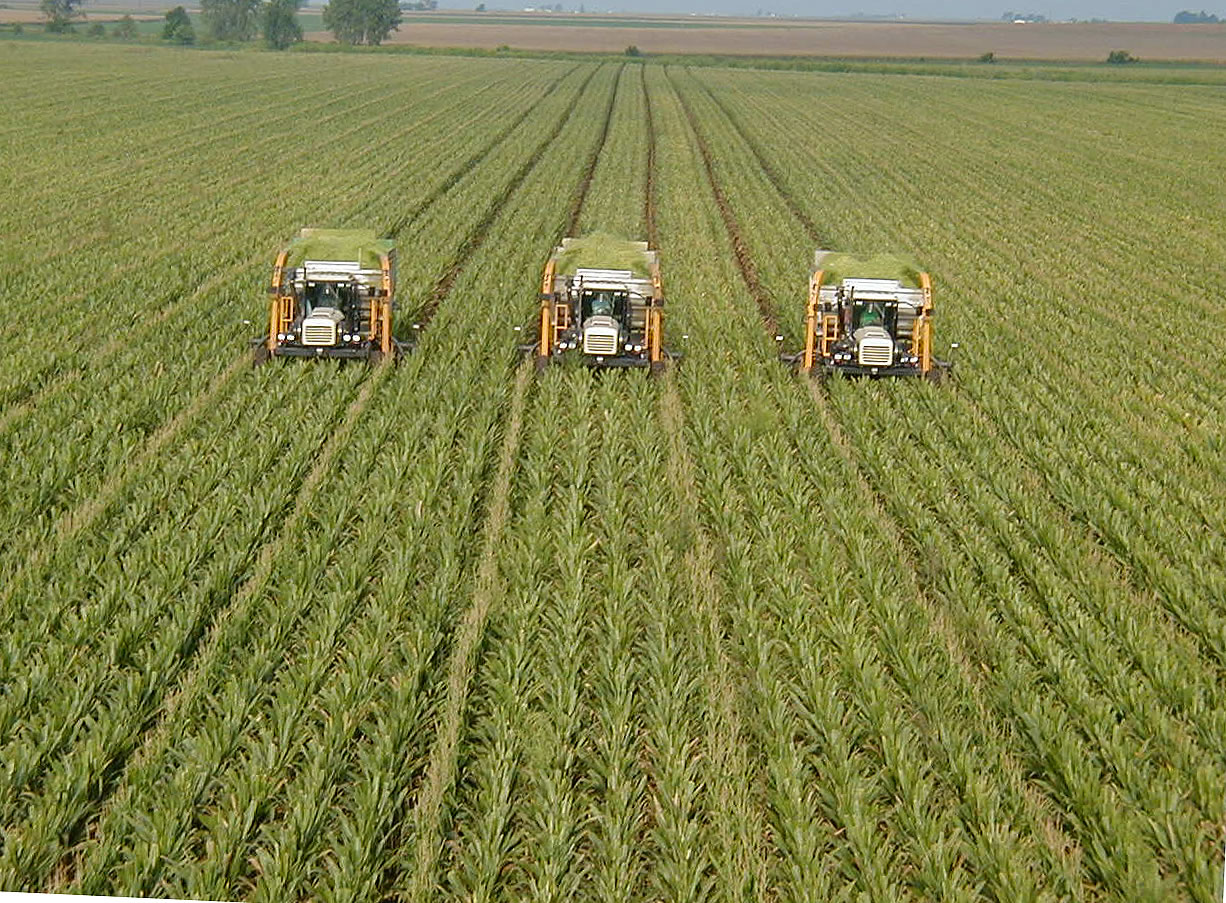
Instead of focusing almost exclusively on subsidizing tractor purchases, policymakers should encourage machinery-sharing services and equipment rental businesses. Through these models, small farmers could gain affordable access to advanced technologies such as precision planters, combine harvesters, laser land levelers, balers, drones, and modern irrigation equipment without bearing the full cost of ownership.
Such an approach treats agricultural machinery as shared productive infrastructure rather than a government distribution program. It also allows farmers to benefit from technological advances regardless of farm size.
Water management demands even more comprehensive reform. Pakistan remains one of the world’s most water-stressed countries, making efficient use of every available drop increasingly essential. Simply lowering the cost of pumping groundwater does not improve agricultural sustainability. In fact, cheaper pumping can encourage excessive groundwater extraction and accelerate depletion of already stressed aquifers.
Agricultural policy should therefore measure success by the economic value generated from each unit of water consumed rather than by the number of subsidized tube wells installed. Crop selection, irrigation technology, groundwater management, and regional water availability must be planned together rather than through isolated programs managed by separate departments.
The livestock sector offers perhaps the clearest example of the difference between scale and productivity. Pakistan possesses enormous livestock resources, but large animal populations alone do not guarantee export success.
International markets demand products that meet strict health, safety, and quality standards. Buyers seek animals with verified genetic quality, complete traceability, effective disease control, proper vaccination records, and internationally recognized certification. Milk productivity, meat quality, feed efficiency, carcass weight, and veterinary compliance determine competitiveness far more than the total number of cattle or buffaloes.
Without systematic improvements in these areas, Pakistan will continue to underperform in global livestock markets despite its impressive herd size.
Agricultural transformation also extends well beyond production. Growing larger quantities of crops or livestock means little if products cannot be properly collected, stored, processed, certified, and transported efficiently.
Warehouses, cold storage facilities, processing plants, grading centers, quality testing laboratories, packaging units, transportation networks, and export logistics are not secondary concerns. They form the essential backbone of competitive agricultural value chains.
Policy should also shift its focus from supporting individual farmers through isolated interventions to developing integrated production clusters. Rather than treating every farm separately, governments should identify regions where specific commodities already enjoy commercial advantages and then coordinate investments across the entire production system.
Within each production cluster, improved seeds, irrigation systems, mechanization services, research support, storage facilities, processing industries, financing, transportation, and export access should reinforce one another. This integrated approach generates far greater economic impact than isolated projects operating independently.
Unfortunately, Pakistan has historically managed agricultural programs through multiple institutions pursuing separate objectives with limited coordination. The result has been fragmented policymaking, duplication of effort, and disappointing productivity gains despite significant public spending.
Finance still has an important place within agricultural development, but it should support productive businesses rather than replace structural reforms. Expanding agricultural credit alone cannot generate higher yields or stronger competitiveness if farmers continue operating within inefficient production systems.
Financial support becomes most effective after profitable value chains have been established. Storage companies, cold-chain operators, food processors, machinery-service providers, livestock enterprises, and export-oriented small businesses often struggle to obtain commercial financing despite having sound business models.
Targeted public risk-sharing mechanisms, including partial credit guarantees, can encourage private banks to finance these enterprises without requiring the government to fund them directly. When carefully designed, such instruments attract private investment into productive sectors while limiting fiscal costs. However, if applied indiscriminately, they simply become another form of subsidy with limited long-term benefits.
Equally important is changing how agricultural success is measured. Too often, governments celebrate the number of tractors distributed, agricultural loans approved, farmer cards issued, or solar tube wells installed. These figures indicate administrative activity, but they reveal little about whether agriculture has actually become more productive.
Meaningful evaluation requires more demanding indicators. Crop yields per acre, certified seed adoption rates, water-use efficiency, livestock productivity, disease reduction, post-harvest loss reductions, storage capacity, processing volumes, export quality certification, and export earnings provide a far more accurate picture of progress.
Ultimately, Pakistan’s agricultural future depends not on how much assistance the government provides but on how effectively it enables farmers and agribusinesses to produce more with fewer resources while meeting international quality standards.
The prime minister has correctly identified agriculture and livestock as the country’s greatest opportunity for accelerating economic growth and expanding exports. However, realizing that vision requires more than renewed political attention. Pakistan has recognized agriculture’s potential for decades. What has remained missing is a comprehensive productivity revolution that transforms research, technology, water management, value chains, livestock development, infrastructure, and market integration into a coherent national strategy.
Only by building that productivity-driven system can Pakistan fully unlock the economic promise that has long existed within its fields and farms.