
The consultations between Pakistan, Saudi Arabia and Turkiye suggest that their collective defence agreement is entering a practical phase. The immediate emphasis is on protecting Saudi territory, but the military arrangements now under discussion could also shape how the three countries respond to future attacks.
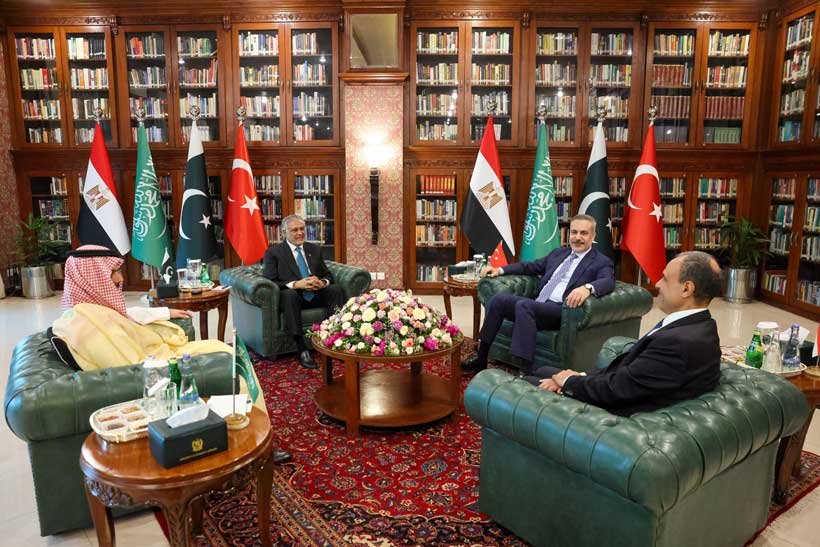
The meeting of the Pakistani, Saudi and Turkish military chiefs in Riyadh on Friday marked an important development in the Makkah Joint Defence Agreement. Signed on August 7, the pact is moving beyond political declarations towards the difficult task of establishing a framework for military cooperation.
The distinction matters. A commitment to regard an attack on one member as an attack on all three is a statement of collective responsibility. Making that commitment operational requires intelligence-sharing arrangements, compatible capabilities, military planning and clear channels for decision-making.
The Riyadh consultations indicate that the three governments have begun addressing these practical requirements.
Yet the meetings should not be interpreted as an announcement of joint military action against Yemen’s Ansar Allah movement, commonly known as the Houthis. Neither the trilateral statement nor the separate communiqué following Field Marshal Asim Munir’s meeting with Saudi Defence Minister Prince Khalid bin Salman announced offensive operations or military deployments.
What emerged instead was a commitment to accelerate cooperation in response to attacks threatening Saudi Arabia.
Why the Language of the Riyadh Statement Matters
Only two weeks before the Riyadh meeting, Pakistan’s Foreign Office had described the Makkah agreement as a defensive arrangement that was still being institutionalised. It had also stated that Pakistani participation in strikes against Houthi targets in Yemen was not under discussion.
The language issued after the military chiefs’ meeting indicates a shift in emphasis.
The three commanders discussed intelligence cooperation, military coordination and the integration of capabilities. They also expressed their determination to begin translating the agreement’s commitments into effective military cooperation immediately.
These are more than routine diplomatic assurances. They identify the areas in which the participating militaries intend to work together.
Intelligence cooperation could improve the identification of threats. Military coordination could establish procedures for sharing information and responding to attacks. Capability integration could allow personnel, equipment and technical systems from different countries to contribute to a common defensive effort.
The challenge is to convert these broad objectives into arrangements that function under operational pressure.
Saudi Arabia’s Security Concerns Are Driving the Process
The urgency of the consultations reflects the recent missile and drone attacks launched from Yemen towards Saudi Arabia.
The reported threats to civilian and economic facilities have increased the kingdom’s need for effective surveillance, early warning and interception capabilities. Claims that an attack was directed towards the vicinity of Makkah have added particular significance to the security discussions.
The trilateral communiqué condemned the attacks and acknowledged the Saudi armed forces’ efforts to protect the kingdom. Notably, however, it did not refer to retaliation, strikes on Houthi positions or operations inside Yemen.
Its emphasis remained on defending Saudi territory.
This leaves considerable room for Pakistan and Turkiye to support Saudi Arabia without immediately becoming involved in a wider military confrontation.
The first practical steps could involve closer intelligence-sharing, technical assistance and the identification of gaps in Saudi Arabia’s existing defensive arrangements. Air defence specialists, sensors, electronic warfare capabilities and early warning systems are among the resources that could be considered.
These are possible forms of cooperation, not confirmed deployments.
The Difficult Task of Integrating Three Militaries
Pakistan, Saudi Arabia and Turkiye have longstanding defence relationships, but their armed forces do not operate identical equipment or military systems.
That difference creates a practical challenge for the Makkah alliance.
The three countries can cooperate while retaining separate operational structures. Integrating their capabilities, however, would require more detailed arrangements for planning, communication and command and control.
A possible next step would be the appointment of liaison officers and the establishment of a joint planning mechanism. Such arrangements could help the three militaries assess threats, identify Saudi requirements and determine which country is positioned to provide particular forms of assistance.
Turkiye has already expressed its readiness to help meet Saudi military requirements, particularly in technical areas.
Pakistan’s longstanding military relationship with Saudi Arabia provides another channel for cooperation. Pakistani personnel already serving in the kingdom could facilitate additional assistance if the governments agree on specific measures.
The central question is therefore not simply what each country possesses, but how its capabilities could contribute to Saudi Arabia’s existing defence system.
Why the Munir–Khalid Meeting Deserves Attention
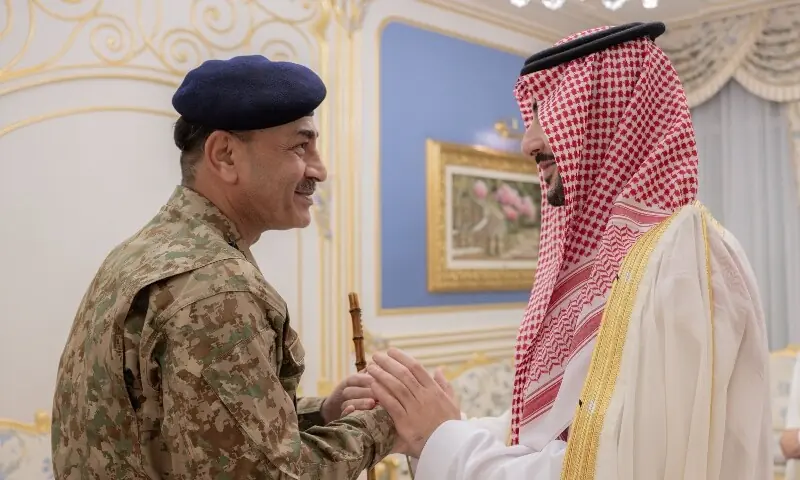
The separate meeting between Field Marshal Asim Munir and Saudi Defence Minister Prince Khalid bin Salman adds another dimension to the Riyadh consultations.
According to the Saudi statement, the two sides discussed attacks directed towards the vicinity of Makkah and towards civilian and economic facilities. They also stressed continued joint efforts to confront these threats under the Makkah Joint Defence Agreement.
The bilateral statement used more direct language about responding to attacks than the trilateral communiqué.
Pakistan and Saudi Arabia also have an established bilateral security relationship, including their 2025 Strategic Mutual Defence Agreement. That arrangement provides an existing framework for cooperation while the newer trilateral alliance develops its institutions and procedures.
The composition of the delegations was notable. The Saudi side included the national security adviser and an adviser to the defence minister on intelligence affairs, alongside senior defence officials. Field Marshal Munir was accompanied by the director general of military operations and his secretary.
Their participation is consistent with discussions extending into operational and intelligence matters, although the precise substance of the closed-door meeting has not been disclosed.
Defensive Cooperation Does Not Automatically Mean Offensive Action
The distinction between preparing a collective defence mechanism and deciding to conduct military operations is essential.
Intelligence-sharing, coordinated threat assessments and integrated capabilities could help Saudi Arabia detect and intercept missiles and drones. The same arrangements could also support a more active military response if the participating governments made that decision later.
But establishing the capacity to act is not the same as authorising action.
The public statements from Riyadh reaffirmed the defence of Saudi Arabia’s security, sovereignty and territorial integrity. They did not announce Pakistani or Turkish participation in strikes inside Yemen.
The foreign ministers had previously affirmed Saudi Arabia’s right to defend itself under Article 51 of the United Nations Charter. The military consultations now appear directed towards determining how the three partners could support the kingdom in exercising that right.
Any broader response would still require political decisions, agreement on the nature of assistance and an assessment of the consequences.
What Comes Next for the Makkah Alliance?
The most immediate task is likely to be an assessment of Saudi Arabia’s security requirements and the capabilities that Pakistan and Turkiye could contribute.
That process could lead to closer intelligence links, technical cooperation, joint planning and, if agreed, the deployment of additional personnel or equipment.
The pace and scope of those measures will depend on the persistence of attacks and the assistance requested by Riyadh.
For Pakistan and Turkiye, the developing arrangement also raises an important institutional question: how to fulfil collective defence commitments while retaining control over the nature and extent of their military involvement.
The Riyadh meetings have not answered every question about the Makkah alliance. They have, however, clarified its immediate direction.
The agreement is no longer being discussed solely as a political commitment. Its members are beginning to consider the military structures needed to make collective defence workable.
Whether those structures remain focused on deterrence and protection or eventually support a wider response will depend on subsequent decisions by the three governments. For now, the significance of Riyadh lies in the movement from a promise of mutual defence towards the practical arrangements required to honour it.