
Naeem Afzal
Suppose two scenarios happening in the justice landscape of our culture:
First, a meter reader notes a wrong reading of the monthly bill of a power consumer. He submits a complaint verbally or in writing at the regional office. He’s assured that the problem is resolved. A month has passed; the next bill comes with pending charges. Bill is multiplying due to unpaid charges. Finally, a huge payable with a fine is on the consumer, and the file lands in the court. The judge, completely alien to the history of the power company and the nature of litigation, sends a call for response to the DISCO. Months are spent on this litigation. Finally, the consumer has spent more in energy, time, and money than what he owes to the company.
Second, two kids fight each other while playing in the street. Parents get involved. Finally, the matter lands in the tehsil court. Both parties hire lawyers and spend time, energy, and money on useless court hearings.
The scenes indicate that the so-called ‘justice system hardly serves justice to the ordinary citizens. It’s time-consuming, costly, and inefficient. What if we could utilise the forums at the local tiers? For instance, Utility bills related grievances must be resolved in an autonomous mediator between consumers and DISCOS.
In the second case, what if we could build ADR (Alternative Dispute Resolution) mechanisms, which are enshrined in the Islamic Principles as Musalihat, Sulh, etc.? Through ADR, both parties could resolve the dispute swiftly and cheaply at the local level rather than spending resources in the courts.
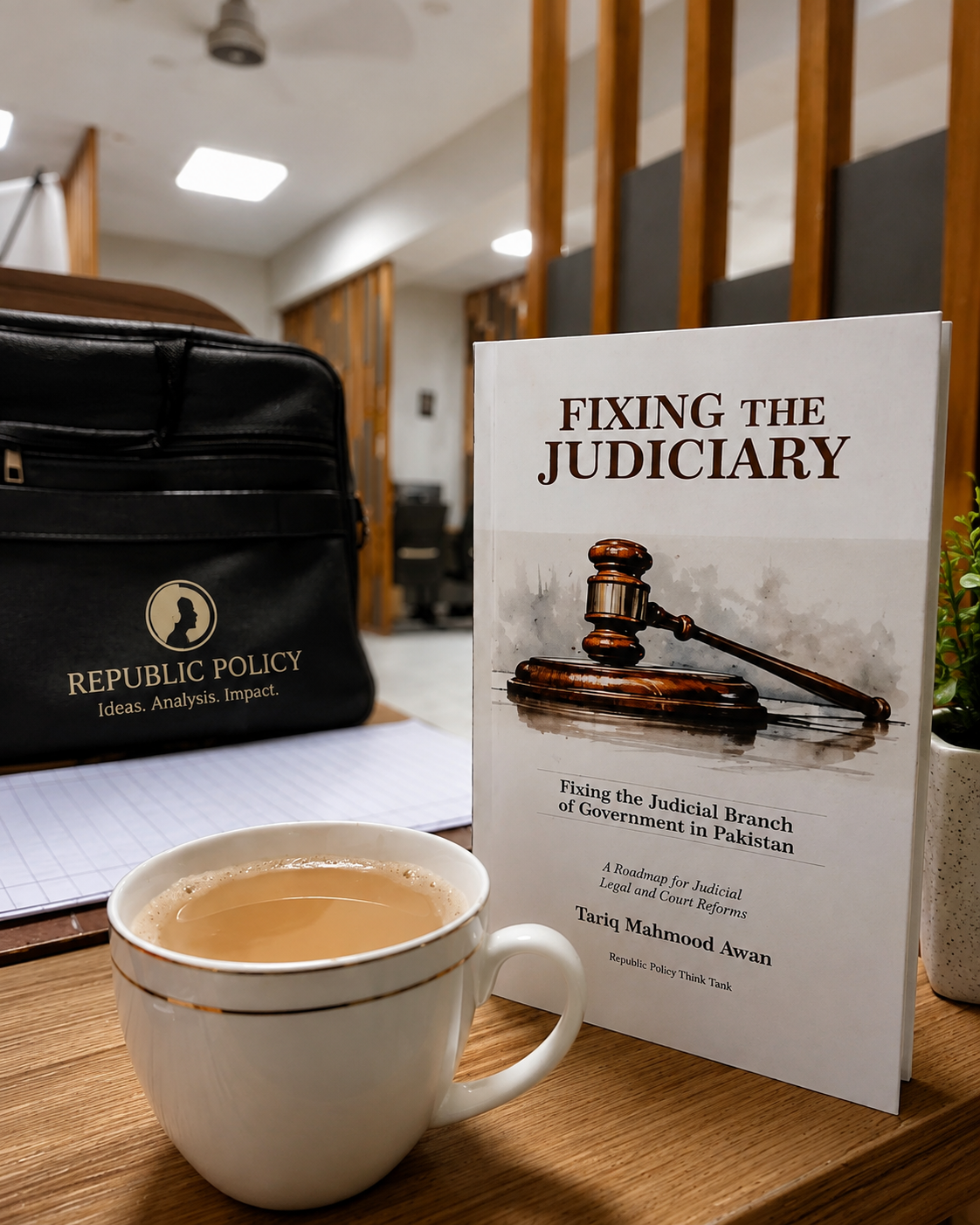
This book, Fixing the Judicial Branch of Government of Pakistan, presents a case for strengthening ADR frameworks in the courts. In the second chapter of the book, the writer argues for the de-judicialisation of the society. The book’s main argument is that Pakistan has developed a litigation culture: every conflict, big or small, tends to end up in courts. We must reverse that trend and build a law-abiding culture instead of the litigation culture in our society, the author argues in beautiful prose.
My favourite lines from the chapter are: The dysfunctional state-society relationship is fundamentally a justice problem. Order in society is mutually produced: laws and officials alone cannot ensure peace if social norms encourage confrontation, and likewise citizens cannot live orderly lives if state institutions ignore or provoke injustices.
The writer is the researcher at the Republic Policy
To Get a Copy of the Book: WhatsApp at 0341-4222501