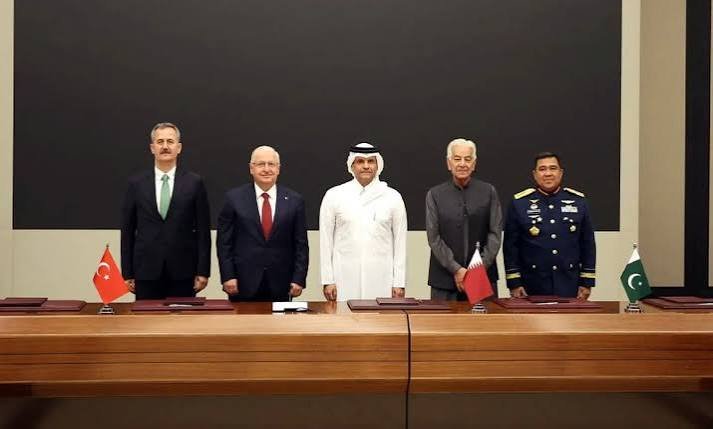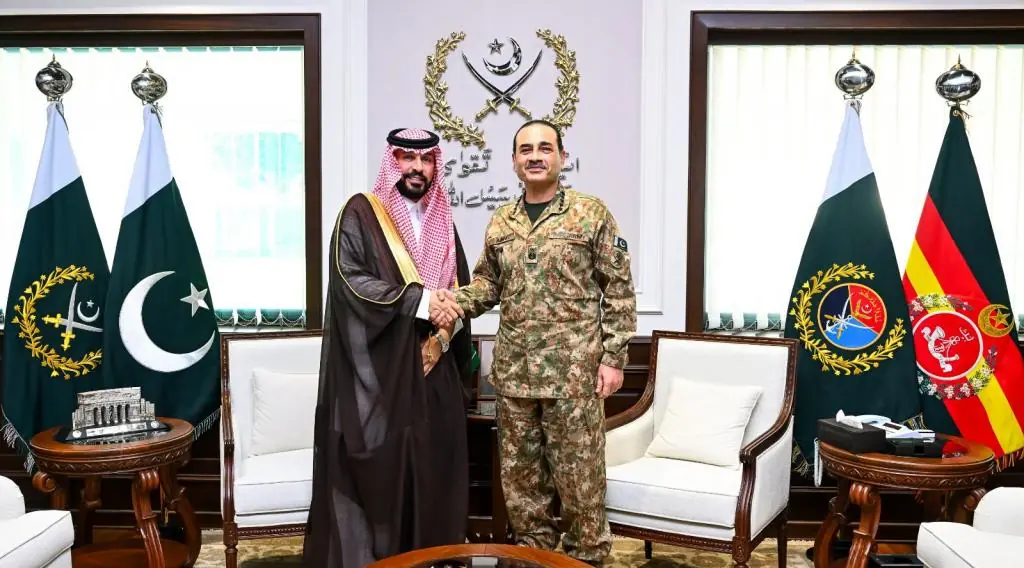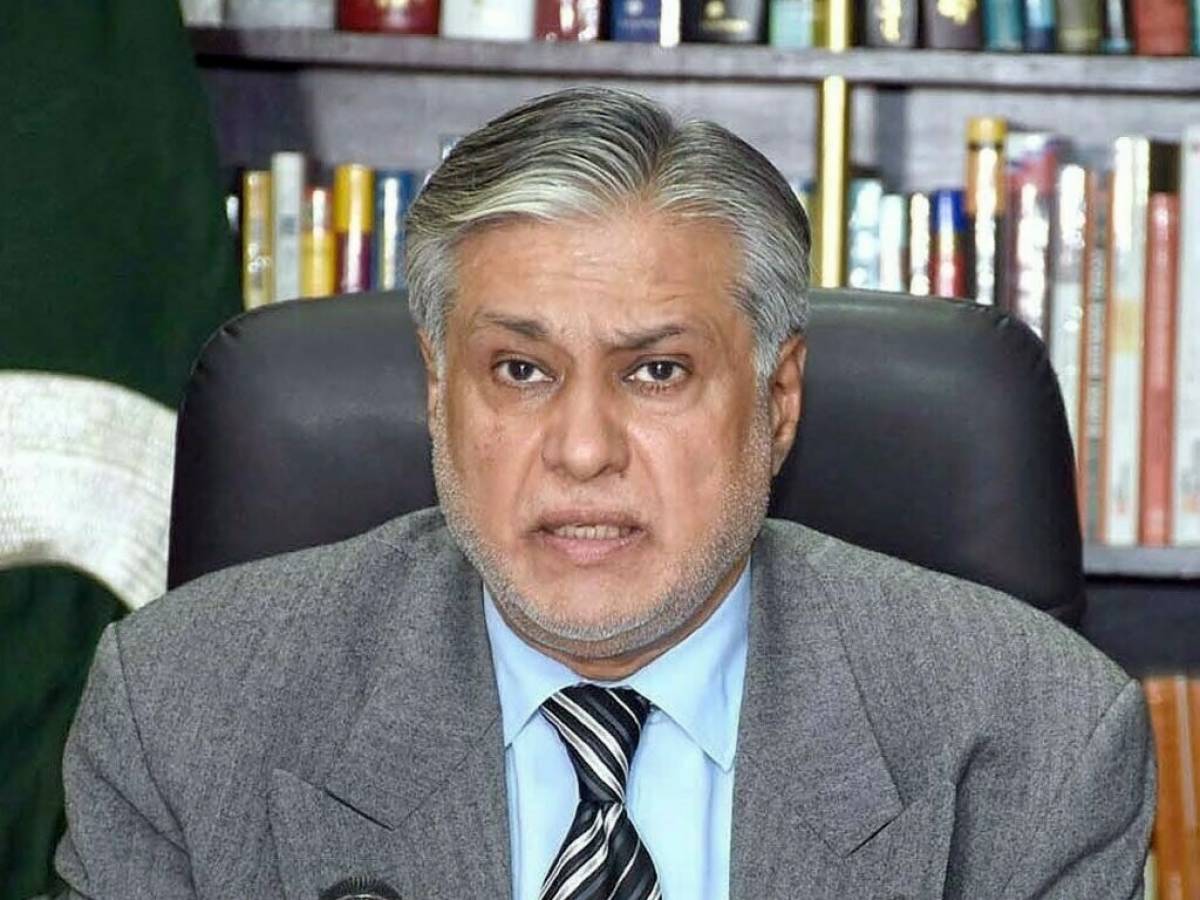

Deputy Prime Minister and Foreign Minister Ishaq Dar said Sunday that the defence pact signed between Pakistan, Saudi Arabia, and Turkiye remains “open to any country in the region” willing to uphold its fundamental principles, while clarifying that the agreement is “purely defensive” in nature.
The signal that the Makkah Joint Defence Agreement, signed in Saudi Arabia on Friday, could be expanded came a day after Turkish Foreign Minister Hakan Fidan said Egypt could join the pact. The agreement aims to strengthen collective deterrence and empowers its signatories to treat an attack against one member as an attack against all.
Elaborating on what he referred to as the Makkah Accord in a post on X, Dar said the pact “reflects the depth of the brotherly relations between the leadership and peoples of the three countries.” He described it as “the culmination of years of discussions and coordination, with a common desire to strengthen strategic cooperation in addressing multifarious peace and security challenges and advancing regional peace, stability and prosperity.”
Dar clarified that the agreement does not abrogate or replace any existing bilateral or multilateral agreements between the signatory countries or with other countries or organizations. Reiterating that any external armed attack on one of the three countries would be treated as an attack on all, he said the pact is consistent with the inherent right of individual and collective self-defence under Article 51 of the UN Charter, and stressed that it is purely defensive. “It is not targeted against any country, and its sole purpose is to further strengthen our ongoing efforts towards peace, stability, and prosperity in the wider region,” he said.
“The Makkah Accord remains open to any country in the region willing to uphold its fundamental principles and resolve differences through mutual respect, cooperation and peaceful means,” Dar added, saying the pact aligns with the fundamental pillars of Pakistan’s foreign policy. He concluded: “Pakistan looks forward to continuing to work closely with all brotherly countries in the region towards lasting peace and stability. We remain committed to advancing the cause of peaceful resolution of all conflicts and building a more secure, stable, and prosperous future for our peoples.”
Later in the day, Dar and Canadian Foreign Minister Anita Anand exchanged views on the regional situation, including the Makkah Joint Defence Agreement, according to the Foreign Office. Dar briefed Anand on the essence of the agreement and the joint resolve of the three countries to contribute to regional peace, stability, and security.
Egypt Likely to Join: Turkish FM
Earlier, on Saturday, Fidan said he believed Egypt could join the pact once several technical issues are resolved. “Egypt is already our natural partner on all issues. I believe that at the next stage, Egypt will also be among us in the alliance. We already act toward one another as if we were alliance members. There are a few technical issues. Once these are implemented, there is no reason for Egypt not to be part of it,” he told Anadolu Agency.
Fidan said other countries have also expressed interest in joining, though founding members have debated how such expansion should be managed. Some interested countries asked not to be named, he said, adding that the preferred model would keep Turkiye, Saudi Arabia, and Pakistan as the three core founding states responsible for setting the alliance’s principles, standards, and long-term structure, with other countries able to join subject to the founding members’ approval. “Under our president’s vision, we should not remain limited to three countries. We should grow,” Fidan said, adding that Pakistan’s involvement gives the initiative a scope broader than the traditional definition of the Middle East.