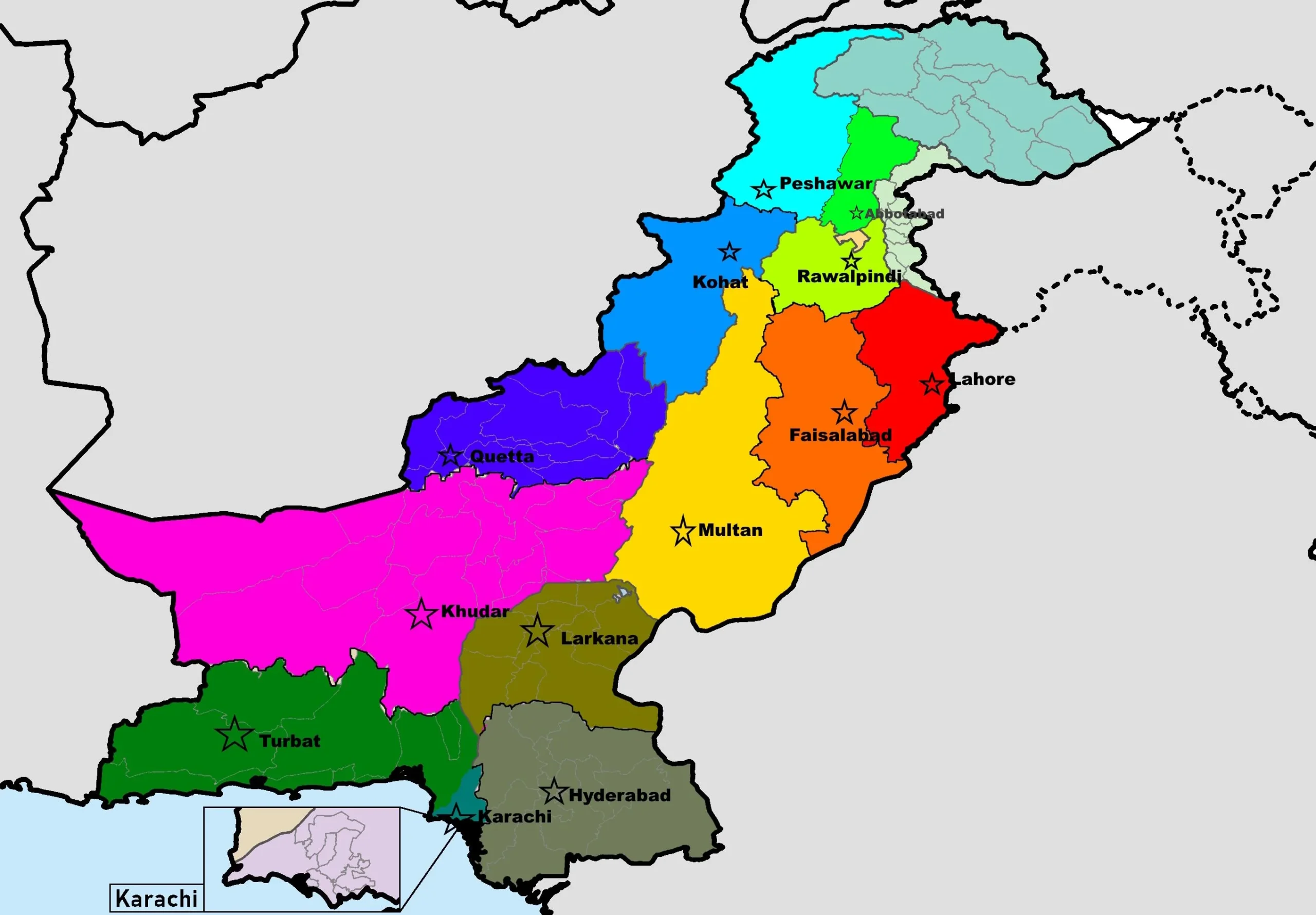

Federal Interior Minister Mohsin Naqvi’s recent remarks, that the current political system has collapsed and that politics is increasingly the domain of a few families and elites, have sparked intense debate over Pakistan’s political and constitutional trajectory. A map proposing new provinces has been circulating simultaneously, fuelling speculation that the country may be entering yet another phase of constitutional experimentation and administrative restructuring.
Amid this discussion, another voice has entered the conversation: Dr Ishrat Husain, who argues that good governance is the basic issue at stake. A prominent economist, academic, and civil servant, Husain contends that institutional effectiveness, economic stability, and public trust form the fundamental pillars of national security. Taken together, these interconnected views point to one reality: Pakistan is facing an acute crisis of governance, a truth captured in the very title of Husain’s book, Governing the Ungovernable.
These days, “good governance” is often floated as a panacea for the country’s ills. It undoubtedly is a prerequisite for public wellbeing. But the fundamental question is not whether governance matters; it is what we actually mean by good governance.
Shehzad Roy’s satirical song Laga Reh comes to mind here. It narrates Pakistan’s political history since independence with biting irony, reminding listeners that successive governments have promised change while often serving their own interests rather than genuinely developing institutions or ushering in reform. Its central idea, that everyone pursues narrow self-interest while the country’s structural problems remain untouched, points to an uncomfortable truth. The same reality is captured in the Hindi proverb dhaak ke teen paat, describing a situation that never changes despite repeated efforts, best translated as “the same old story.”
Pakistan has cycled through parliamentary governments, presidential systems, martial law, caretaker setups, constitutional amendments, accountability drives, and repeated promises of a “new beginning.” Yet having tried every model, the country finds itself facing the same problems, back at square one.
Having recently returned from an extended visit to the UK and the US, what stood out most was that good governance there is reflected not just in institutional performance but in everyday life. The rule of law is the hallmark of good governance. Those countries are administered by elected local governments operating within a clear legal framework and planning principles, parks, roads, commercial centres, residential areas, playgrounds, recreational facilities, and public services, all developed and maintained according to law rather than personal discretion.
More importantly, enforcement of the law is impartial and non-discriminatory. Freedoms are exercised within the bounds of the law, and the moment a violation occurs, the law takes its course, with the violator held accountable. This universality, ensuring no one is above the law, is the essence of good governance, distinguishing it from mere political sloganeering. Adherence to the rule of law is what allows genuine freedom to flourish; freedom without law inevitably descends into chaos, a sentiment echoed in the words “thy liberty in law,” from Katharine Lee Bates’s America the Beautiful.
The Constitution remains the supreme law of the land, and respect for it is central to good governance. Unfortunately, Pakistan’s constitutional history is riddled with instances of provisions being mutilated, ignored, or bent to suit political expediency and tailored to favour specific individuals.
This brings the discussion back to new provinces. Redrawing administrative boundaries and creating additional provinces may appear a sound idea to many, but it risks sidelining the real issue of governance itself. Whether Pakistan has four provinces or fourteen, the real question is whether the state can deliver quality education, accessible healthcare, employment opportunities, public safety, robust infrastructure, and timely justice to every citizen.
These undertakings require massive funding, which in turn demands a broad-based tax system. Yet the majority of the affluent class remains outside effective taxation, while regions like Malakand, the former FATA, Gilgit-Baltistan, and Azad Jammu and Kashmir remain outside the federal and provincial tax net altogether, despite requiring substantial public investment for socio-economic development.
Dismantling the existing federal structure, or ignoring the constitutional framework of the National Finance Commission, would only compound the problem further. The real solution lies in expanding the economy, broadening the tax net, strengthening institutions, ensuring equitable resource distribution, and investing meaningfully in underdeveloped areas. If governance truly is Pakistan’s central problem, then good governance, at its core, means efficiency, effectiveness, transparency, accountability, and above all, the rule of law, including respect for the Constitution.
Creating new provinces or administrative structures would only add to administrative costs, further shrinking the fiscal space available for development, proving counterproductive in the process. What is imperative instead is the enforcement of law. Otherwise, once another political cycle runs its course, the country will find itself exactly where it stands today, new faces, new promises, same problems. Once again, Shehzad Roy’s satire and the old proverb, dhaak ke teen paat, will capture the country’s political reality.