Arshad Mahmood Awan
The rising flows in the Chenab River this season have once again pushed floods back into national conversation. Yet framing the discussion around seasonal flooding alone risks missing a far larger and more urgent story. Pakistan’s relationship with water has moved well past disaster management. It now stands at the crossroads of climate change, economic survival, food security, and, increasingly, national security itself.
Recent calls for a comprehensive national water security policy, arriving alongside fresh disclosures of staggering cost overruns in the country’s flagship hydropower projects, should serve as a wake-up call. Pakistan can no longer treat water as a series of disconnected emergencies to be managed one flood, one drought, one funding crisis at a time. It requires a coherent, long-term national strategy, and it requires one now.
None of Pakistan’s water vulnerabilities are new. The country remains among the most climate-exposed nations on earth, despite contributing only a negligible share of global greenhouse gas emissions. Glaciers are melting faster than before. Rainfall has grown erratic and unpredictable. Long dry spells are interrupted by sudden, punishing floods, and groundwater continues to be pumped out at a pace the land simply cannot sustain. Add to this a rapidly growing population and unchecked urban sprawl, and the strain on an already fragile resource base becomes impossible to ignore.
Climate change, however, is only part of the story. Decades of underinvestment in water storage, crumbling irrigation networks, fragmented and overlapping governance structures, and repeatedly delayed projects have all compounded the country’s exposure. The result is a cruel and familiar paradox: catastrophic floods in one season, followed by acute water shortages in another, often within the same year, sometimes in the same province.
The soaring costs of major hydropower projects illustrate exactly what delay costs the nation. Inflation, a depreciating rupee, extended construction timelines, and repeated design changes have all combined to push the price tags of critical projects far beyond original estimates. Whether one looks at Diamer Bhasha, Mohmand, or Dasu, the pattern is the same: every year of delay makes these strategic investments more expensive while pushing their benefits further into the future. Money that should have gone toward building capacity instead goes toward absorbing the cost of hesitation.
It would be a mistake, though, to view these dams purely as electricity projects. Hydropower infrastructure does far more than generate power. It stores water, mitigates floods, stabilizes irrigation supplies, and builds resilience against a changing climate. In a country whose reservoir capacity lags well behind international benchmarks, expanding storage is not some distant developmental goal. It is an economic necessity that cannot be postponed any longer.
The timing of this debate carries added weight because of what is happening beyond Pakistan’s borders. India’s increasingly assertive posture on the Indus Waters Treaty has introduced a new and unwelcome strategic dimension to what was once treated primarily as a technical or environmental matter. The treaty remains a binding international legal framework, one that cannot simply be altered by one side’s unilateral rhetoric. But recent developments make clear that water in this region can no longer be discussed purely in terms of engineering and irrigation. It has become a matter of geopolitics, one with direct implications for Pakistan’s security calculus.
Still, external pressure should not become an excuse to overlook Pakistan’s own shortcomings. If anything, the presence of an external threat makes the case for better domestic governance even stronger, not weaker. Full and consistent implementation of the Water Apportionment Accord, tighter regulation of groundwater extraction, wider adoption of climate-smart agricultural practices, better hydrological forecasting, digital water accounting systems, and faster investment in storage infrastructure are not new ideas. Policymakers have discussed all of them for years. What has been consistently missing is the political will to act on them before the next disaster forces the issue.
The same pattern of recognition without execution applies to how major water projects are managed. Inflation and currency depreciation explain a large share of recent cost overruns, but they do not explain everything. Land acquisition disputes, bureaucratic bottlenecks, procurement delays, and weak implementation continue to inflate budgets and push back completion dates well beyond what currency movements alone would justify. Any serious increase in public investment in this sector must be matched by a parallel effort to strengthen project management and institutional accountability. Pouring more money into a system that leaks time and resources at every stage will only repeat the mistakes of the past on a larger scale.
The deeper challenge facing Pakistan’s policymakers is a shift in mindset: moving from reacting to water crises as they occur to managing water as a strategic national resource. Emergency flood relief, sudden reallocation of funds, and post-disaster reconstruction will always be necessary to some degree. No country can eliminate the need for crisis response entirely. But these measures cannot be allowed to substitute for genuine long-term planning built on strong institutions, sustained investment, and political consistency across changing governments.
Pakistan has entered a period where water security cannot be separated from economic security, food security, energy security, or national security. Climate change and the shifting regional strategic landscape have only sharpened this reality, not created it. What should offer some encouragement is that the solutions are neither unknown nor beyond reach. Pakistan does not lack the technical knowledge or the policy blueprints. What it lacks is the urgency to act on them before circumstances force its hand once again.
Water policy in Pakistan cannot continue to be dictated by the arrival of the monsoon each year. It must be treated as a standing national priority, discussed and planned for in every season, not just the rainy one. Only then can the country begin to build the kind of resilience that an increasingly volatile climate, and an increasingly assertive regional environment, now demand of it.
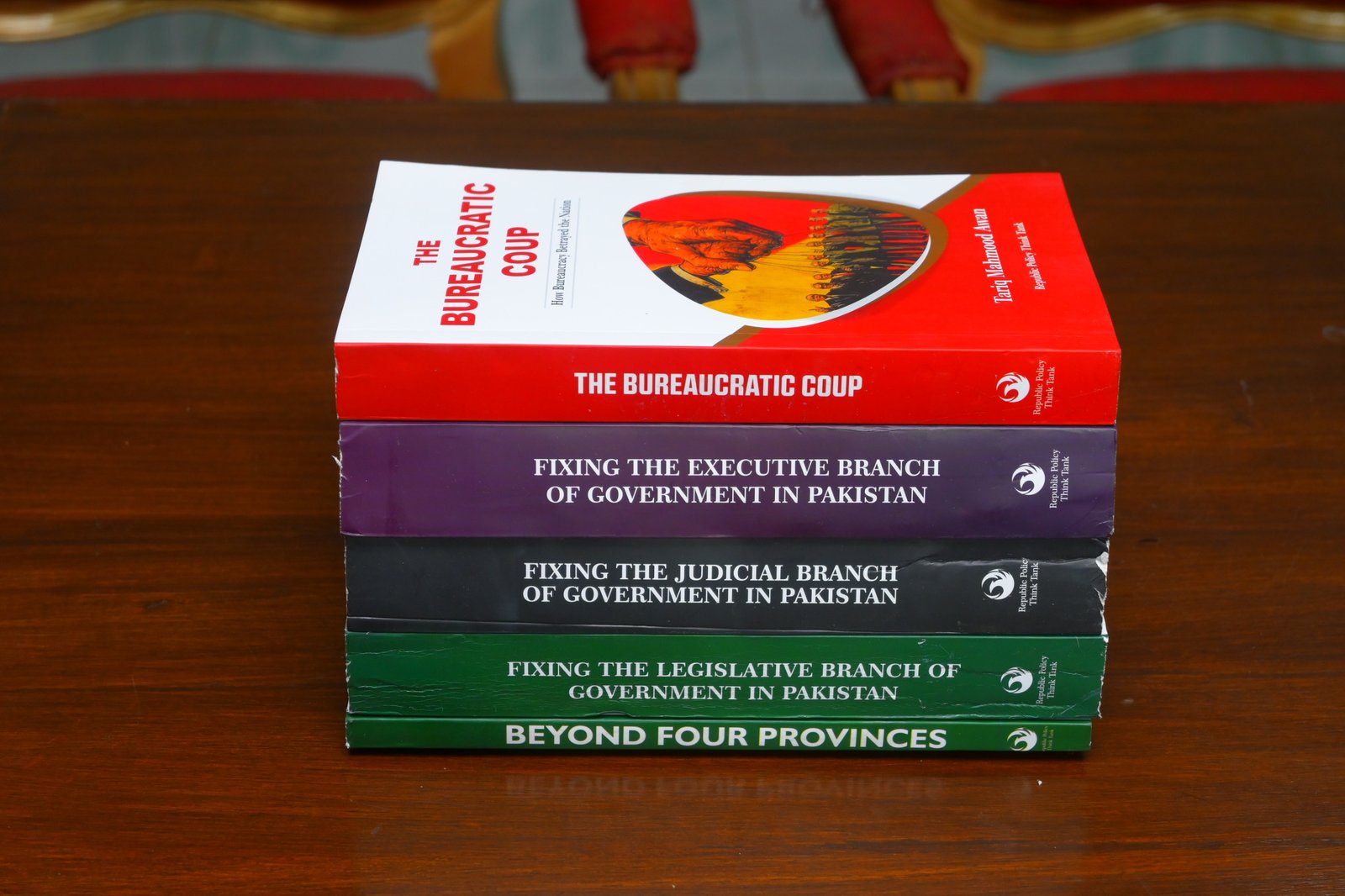
The best-selling books of Republic Policy Think Tank, including the landmark book The Bureaucratic Coup, are available at Vanguard Books, Liberty Books, Readings, Kitab Sarai, Sang-e-Meel, Saeed Book Bank Islamabad, National Book Foundation, and others across Pakistan. Contact for home delivery: 0300 9552542.