
Pakistan warned India on Wednesday that its rejection of a Permanent Court of Arbitration (PCA) ruling upholding the Indus Waters Treaty (IWT) cannot absolve New Delhi of its treaty obligations, insisting Islamabad retains “all diplomatic and non-diplomatic options” to ensure the award is implemented.
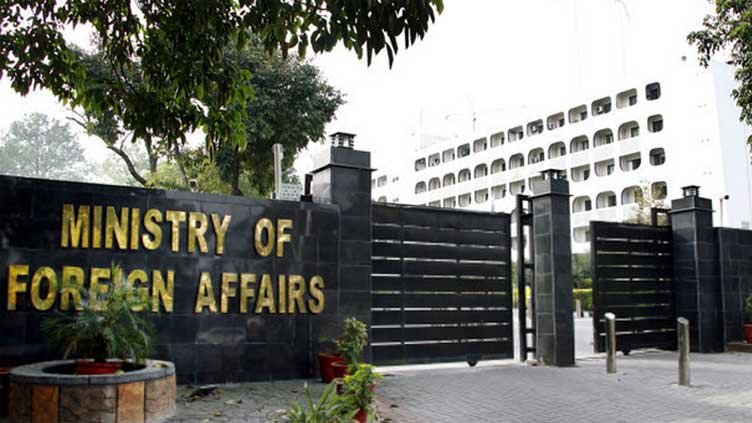
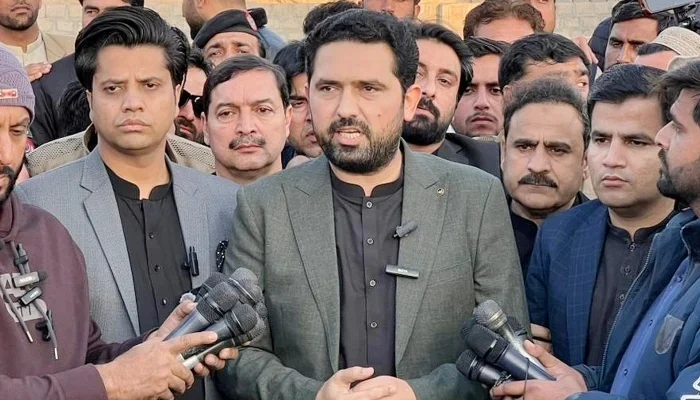
Foreign Office spokesperson Tahir Andrabi said India could not invoke international law when convenient and discard it when the outcome proved unfavourable, urging New Delhi to return to full compliance with the 1960 water-sharing agreement. “India’s rejection of the award cannot extinguish or otherwise alter India’s obligations under the Indus Waters Treaty,” Andrabi said at his final briefing before taking up a new diplomatic posting.
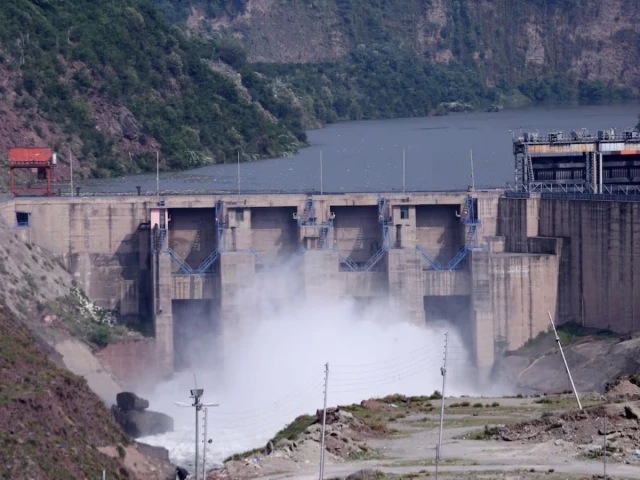
The PCA’s September 1 ruling reaffirmed that the IWT remains in force and binding, rejecting India’s unilateral attempt to place the treaty in “abeyance.” Pakistan has welcomed the decision as vindication of its longstanding position that Indus water disputes must be resolved through the treaty’s prescribed mechanisms.
Responding to India’s rejection of the ruling, Andrabi said such an approach undermines the sanctity of treaties and international dispute-settlement mechanisms, warning that unilateral management of transboundary waters is particularly concerning in a sensitive region like South Asia. “Pakistan retains all options regarding the follow-up to this decision, as well as the broader issue of India’s weaponization of water,” he said, noting that the treaty’s dispute-resolution mechanism had been duly followed and that India’s participation in that process meant it could not now disassociate itself from the outcome.
Iran-US Tensions
Turning to the Iran-US confrontation, Andrabi said Pakistan remains committed to diplomacy despite the latest escalation, describing the recent exchange of attacks as part of the broader cycle of escalation and retaliation common to such conflicts, and argued the flare-up should not be read as a failure of mediation efforts.
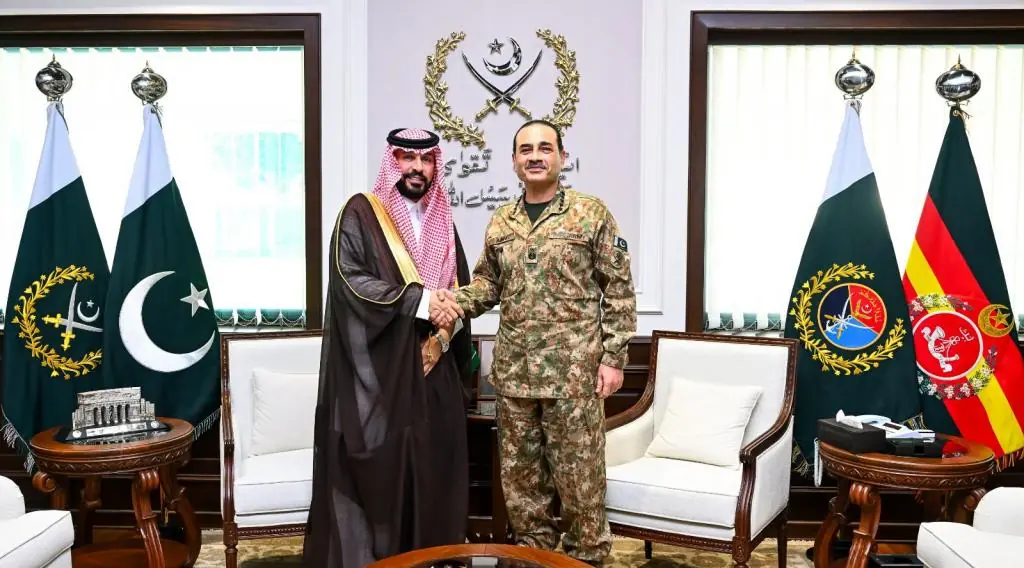
Prime Minister Shehbaz Sharif met Iranian President Masoud Pezeshkian on the sidelines of the SCO summit in Bishkek, while Deputy Prime Minister and Foreign Minister Ishaq Dar held separate talks with Iranian Foreign Minister Abbas Araghchi. Chief of Defence Forces Field Marshal Syed Asim Munir had earlier visited Tehran on August 25 as part of Pakistan’s efforts to help de-escalate the crisis, including the standoff over the Strait of Hormuz.
Andrabi said Pakistan remains hopeful the parties will eventually return to negotiations, with the Islamabad MoU and the Pakistan-Qatar joint statement offering a potential framework for renewed dialogue, including at the technical level. Asked about President Trump’s dismissal of prospects for an agreement with Iran, he said statements made during periods of escalation shouldn’t necessarily be read as a final rejection of diplomacy. “There’s no question of it being alive or dead or half-dead,” he said of the Islamabad MoU, arguing the framework would remain relevant whenever the parties chose to resume talks. Pakistan is also assessing the potential impact of new US economic measures on its own bilateral trade with Iran, he added.
Makkah Joint Defence Agreement
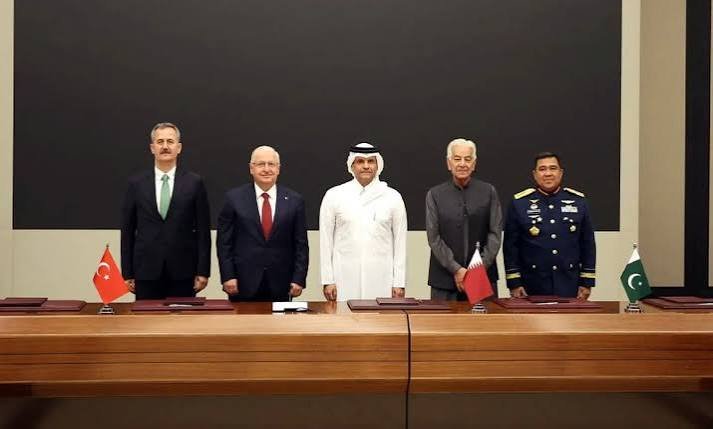
On the Makkah agreement between Pakistan, Saudi Arabia, and Türkiye, Andrabi said the three countries have taken initial steps toward institutionalising the framework. The inaugural meeting of its Strategic Political and Defence Committee was held in Istanbul on August 31, where all three sides reaffirmed commitment to regional peace, stability, de-escalation, and collective defence. A permanent secretariat will be established in Saudi Arabia, initially headed by a Pakistani secretary-general for three years, with the three countries also set to expand cooperation in defence industries, technology development, and joint production.
Andrabi said Pakistan was not aware of any formal applications from other countries seeking to join the agreement, despite reports of interest from several Muslim-majority states, and stressed that focus should remain on the substance of the agreement rather than speculation about hypothetical future conflicts.
Afghanistan
On Afghanistan, Andrabi said Pakistan’s position remains unchanged despite renewed diplomatic activity, including China’s efforts to revive the Urumqi process. Chinese Special Representative for Afghanistan Ambassador Yue Xiaoyong visited Islamabad from August 31 to September 1, holding detailed talks with Pakistan’s Special Assistant to the Prime Minister, Ambassador Muhammad Sadiq. Andrabi said Pakistan appreciates China’s constructive and sustained engagement, but warned that progress in Pakistan-Afghanistan relations depends on concrete, verifiable action by the Taliban government against the banned Tehreek-e-Taliban Pakistan (TTP), the Baloch Liberation Army (BLA), and other groups operating from Afghan soil. “There is no change in that position,” he said, adding that Pakistan is seeking written, verifiable assurances from Kabul that Afghan territory will not be used for attacks against Pakistan.
He also downplayed the significance of Afghan Ambassador Sardar Ahmad Shakeeb’s recent appearance at the National Defence University, describing it as an academic engagement rather than a sign of improving bilateral ties. “There is no question of any such decision on engagement with Afghanistan,” Andrabi said, stressing that any progress remains contingent on assurances and concrete action from Taliban authorities.