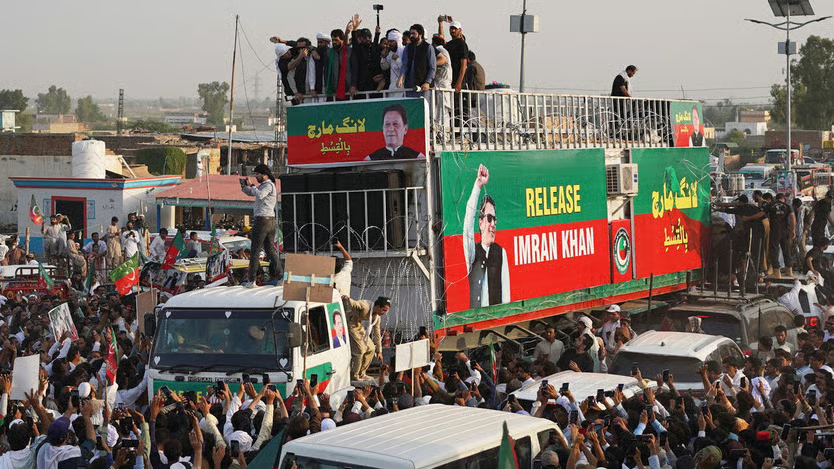

A new generation is beginning to change the politics of South Asia. Young people are questioning old political systems, challenging established elites and demanding a greater say in the future of their countries.
Over the past five years, six youth-led movements have shaken the region. They emerged in different countries and under different circumstances, but their frustrations were remarkably similar. Young people are worried about jobs, rising living costs, inequality and political systems that seem distant from their everyday struggles.
For many, the problem is no longer simply bad governance. It is the feeling that the system itself does not offer them a fair chance.
Education once carried a simple promise: study, work hard and build a better life. That promise is becoming harder to believe. Millions of educated young people enter the job market with ambition but find limited opportunities. At the same time, they watch wealth, influence and political power remain concentrated among a small section of society.
Technology has given this frustration a new voice. This generation lives online. It can question official narratives, exchange ideas, organise protests and see how people elsewhere live and govern themselves. A local grievance can become a national movement within hours.
But protest alone cannot guarantee change. South Asian countries have very different political institutions. Some can absorb public anger through elections, dialogue and reform. Others may respond with repression, creating deeper instability.
This is where the real test lies.
Governments should not see young people simply as an angry generation that needs to be controlled. Their anger carries a message. They want jobs, dignity, representation and governments that work.
South Asia’s future will depend not only on how loudly its young people speak, but on how wisely its institutions listen.