
Pakistan’s governance crisis is not merely a consequence of bureaucratic inefficiency or administrative weaknesses. It also reflects a fundamental imbalance between political authority and institutional capacity. While the constitutional framework places political leadership at the centre of democratic governance, the practical exercise of executive authority often reveals a different reality: an administratively powerful bureaucracy operating alongside a political executive that frequently lacks the technical expertise required to direct it effectively.
In a parliamentary democracy, elected representatives are expected to determine the direction of public policy, initiate legislation, oversee administrative institutions and lead the process of reform. Bureaucracy, by contrast, is meant to provide professional advice, administrative continuity and the institutional machinery necessary to implement political decisions. The distinction is essential. Political leadership establishes the objectives of governance, while the civil service translates those objectives into administrative action.
However, this constitutional relationship becomes difficult to maintain when political leaders lack the capacity to exercise their responsibilities.
One of Pakistan’s persistent governance challenges is the limited institutional preparation of its political executive. Ministers and advisers are entrusted with complex responsibilities involving legislation, public administration, financial management and regulatory oversight. Yet many enter office without sufficient training in these areas. Understanding a legislative bill, interpreting its legal provisions, evaluating its administrative implications and identifying potential consequences require knowledge and professional competence that political experience alone cannot necessarily provide.
Consequently, bureaucratic institutions often acquire influence beyond their intended administrative role. When elected officials cannot independently evaluate policy proposals or critically examine official advice, they become excessively dependent on the very bureaucracy they are constitutionally expected to direct. This dependency weakens political oversight and creates an imbalance between democratic accountability and administrative authority.
The solution, however, cannot be found simply by reducing bureaucratic powers. Weakening the civil service without strengthening political institutions would create additional administrative problems. The more important requirement is to improve the professional and institutional capacity of political leadership.
This responsibility rests primarily with Pakistan’s political parties.
Political parties must recognise that their purpose extends beyond winning elections, organising public gatherings and mobilising supporters. They are also institutions responsible for preparing individuals to govern. A political organisation that produces effective campaigners but fails to develop competent legislators, ministers and policymakers cannot adequately fulfil its democratic responsibilities.
Political parties therefore need to evolve from personality-centred and mobilisation-driven organisations into structured institutions capable of producing informed political leadership. Internal policy research, legislative training, administrative education and continuous professional development should become essential components of party organisation.
Prospective legislators must understand constitutional responsibilities, parliamentary procedures and the principles of lawmaking. Future ministers should receive training in public administration, institutional management, budgetary processes and policy implementation. Political advisers must possess the analytical capacity to assess government proposals and evaluate their consequences.
Such preparation should not begin after a political party assumes power. It must be an ongoing institutional responsibility.
Political parties should also develop permanent research and policy units capable of providing professional assistance to their elected representatives. Independent policy specialists, constitutional experts, economists and public administration professionals can help political organisations formulate realistic programmes and translate political commitments into workable legislation and administrative reforms.
The objective is not to replace political judgment with technical expertise. Rather, it is to ensure that political decisions are informed by sufficient institutional knowledge.
A capable political executive is essential for a balanced relationship between elected representatives and the bureaucracy. Ministers who understand their constitutional authority, administrative responsibilities and policy objectives are better positioned to lead government departments, evaluate bureaucratic recommendations and demand institutional accountability.
Conversely, political leaders who lack such preparation risk becoming dependent on administrative officials for both policy formulation and implementation. This undermines the distinction between political leadership and bureaucratic execution.
Pakistan’s governance reforms must therefore address political capacity alongside bureaucratic structures. Civil service reform, legislative reform and executive reform cannot be treated as entirely separate undertakings. Their effectiveness depends on the development of institutions capable of performing their respective constitutional responsibilities.
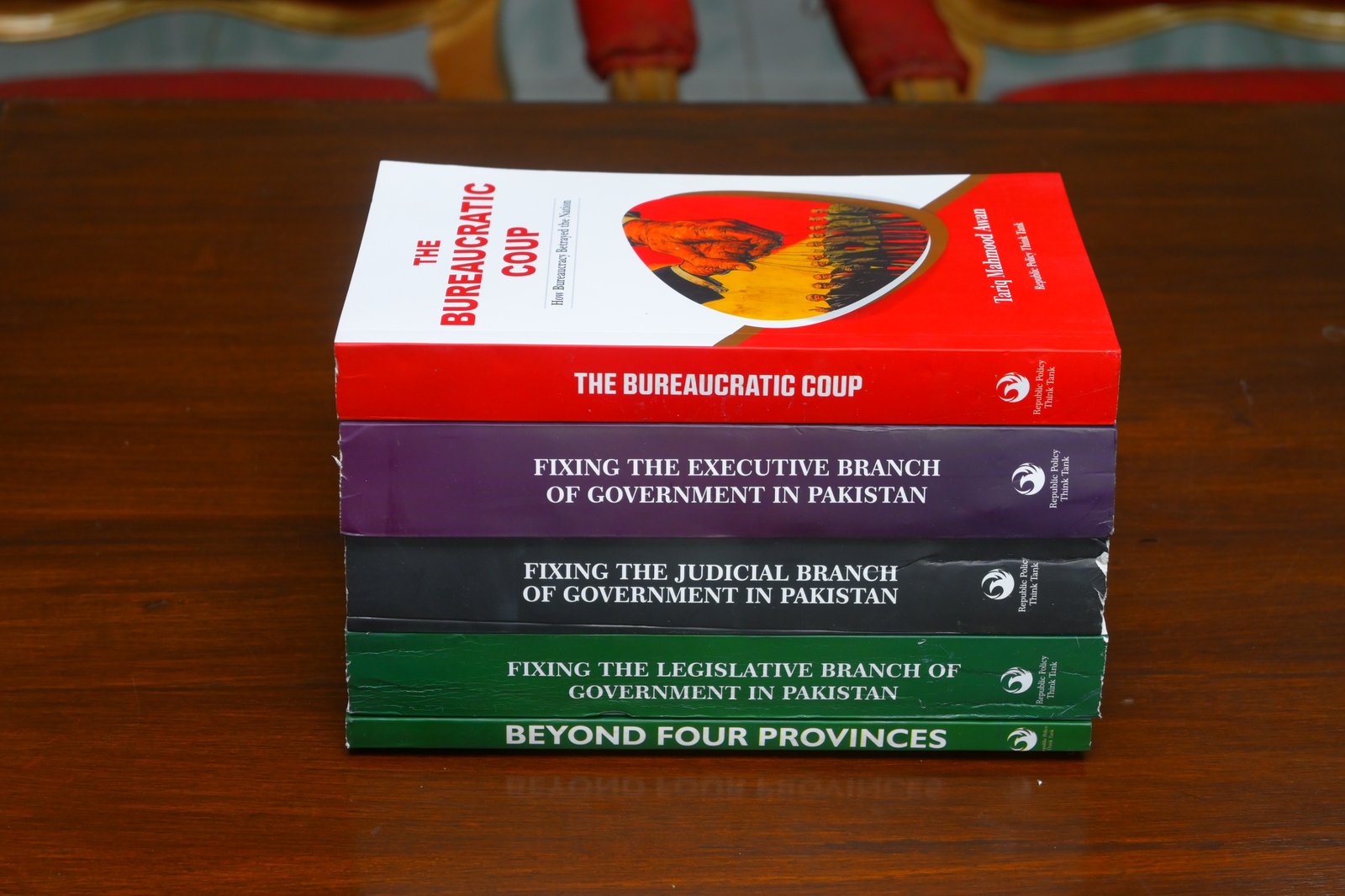
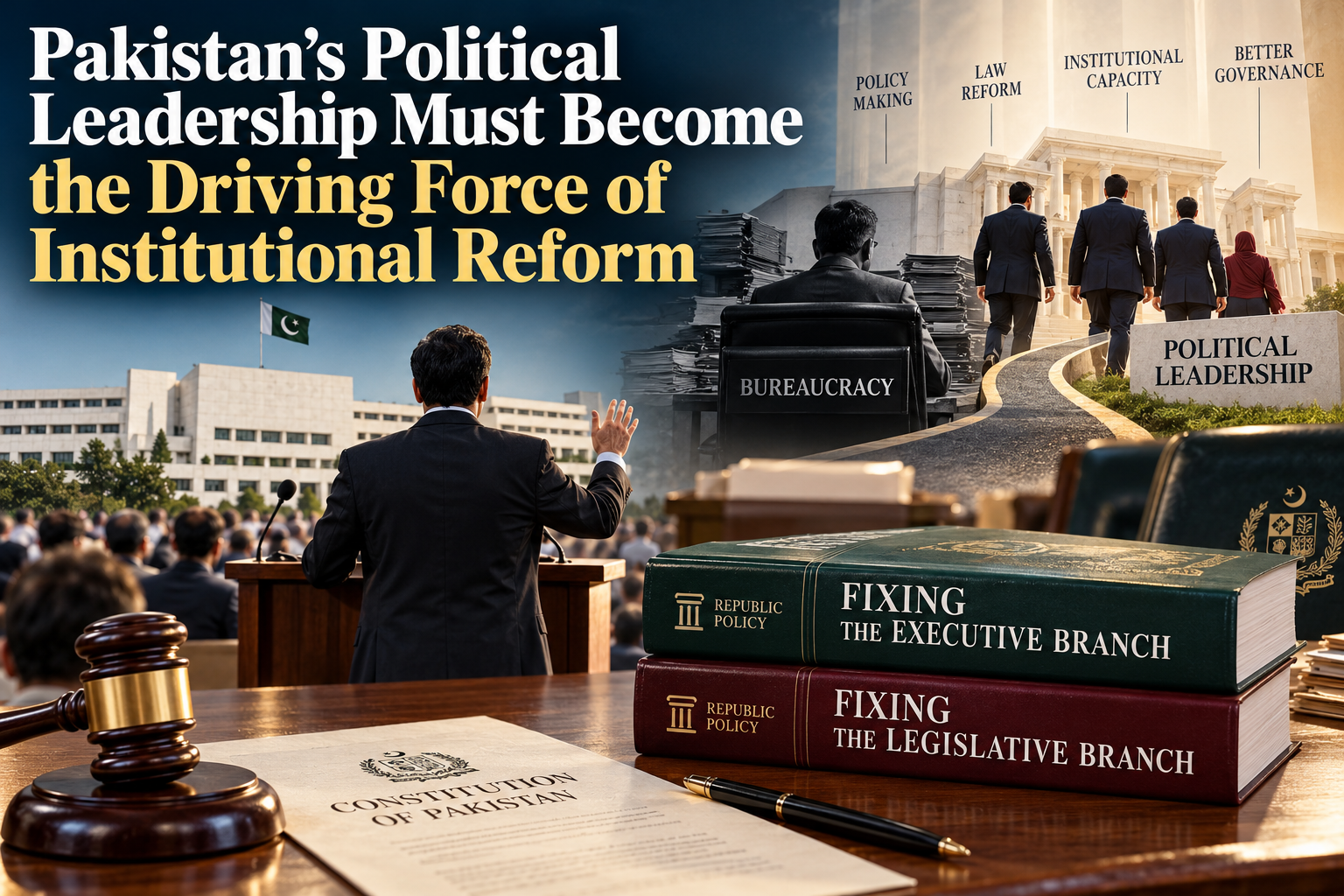
Republic Policy has examined these interconnected challenges in its research publications, particularly Fixing the Executive Branch and Fixing the Legislative Branch. These works discuss the institutional design of government, the distribution of authority, legislative responsibilities and the reforms necessary to strengthen democratic governance in Pakistan.
Ultimately, Pakistan cannot achieve meaningful institutional reform through bureaucratic restructuring alone. The political executive must develop the competence to exercise the authority entrusted to it. Political parties must move beyond slogans and electoral mobilisation to become institutions that educate, train and prepare individuals for the responsibilities of government.
Democratic governance requires more than elected politicians occupying positions of authority. It requires political leaders who possess the knowledge, judgment and institutional capacity to lead. Until political parties accept responsibility for developing such leadership, Pakistan’s constitutional promise of politically directed administration will remain difficult to realise.