


For the Republic Policy Think Tank, the study of Pakistan’s governance structures from 1947 to 2026 has been a constant source of astonishment. Serious constitutional, legal and structural flaws run through the legislature, the judiciary and, above all, the administration and the bureaucracy.
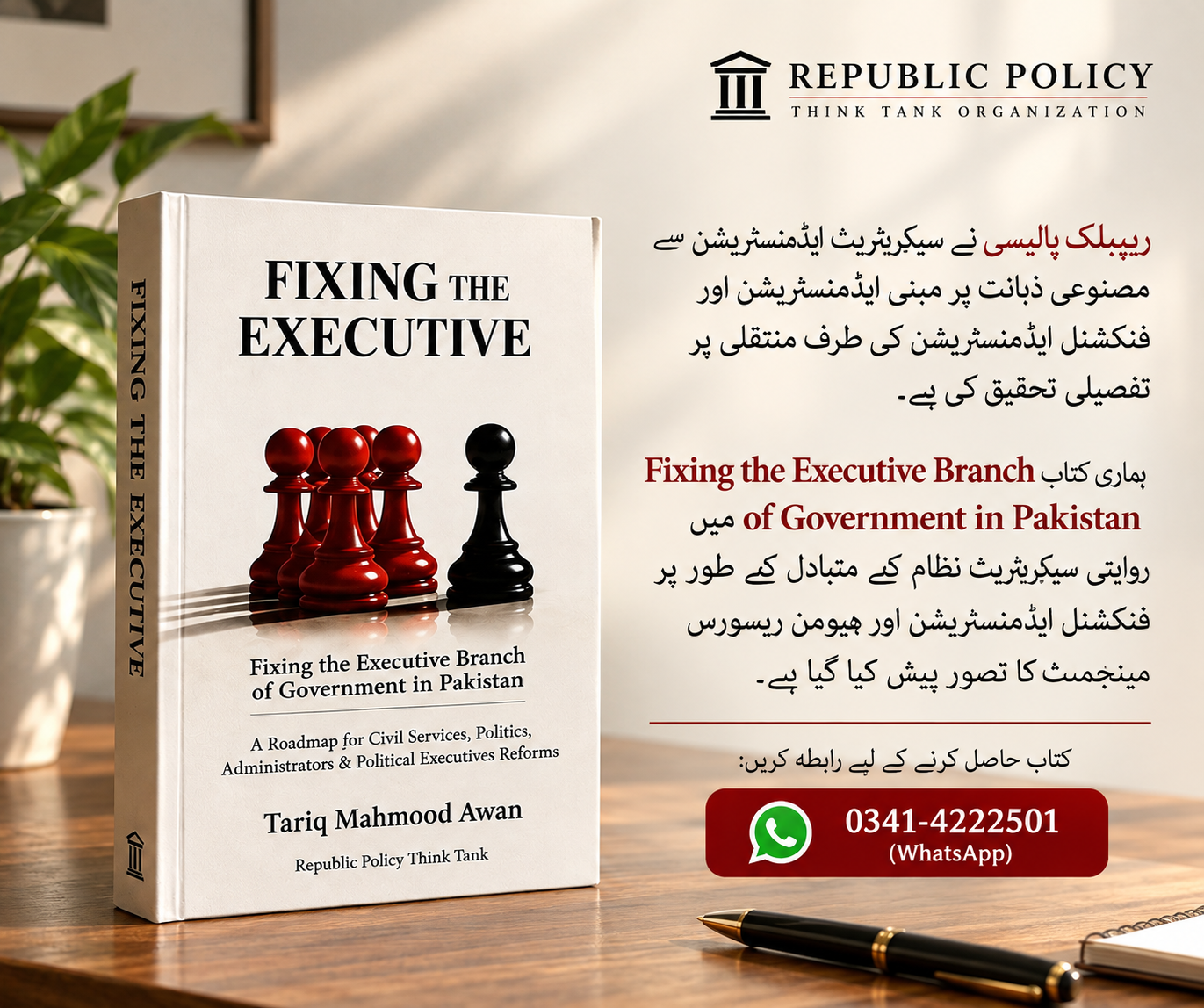
The central question is simple. On what legal basis do the federal and provincial governments build their basic administrative frameworks? At the federal level, Articles 90 and 99 of the Constitution, read with the Rules of Business, govern executive authority and the conduct of government business. At the provincial level, Articles 129 and 139 provide the same foundation. Yet running day-to-day administration under constitutional powers and the Rules of Business is one thing. Resting the foundational institutions of the state, and their legal powers, on administrative rules rather than clear legislation is quite another. The distinction is fundamental. Rules of Business are not an Act of Parliament or of a provincial assembly. The Supreme Court made this plain in the Mustafa Impex judgment, which clarified how governmental power must be lawfully exercised and by whom. Republic Policy has examined these questions in detail in its book Fixing the Legislature.
More astonishing still are the reformers who spend their entire careers inside this system and discover reform only in retirement. Their books tend to celebrate personal success and heroic achievement rather than expose systemic failure, as though governance waits only for a superhuman to arrive. This mindset distracts from the real problem.
A good system is not measured by extraordinary individuals. It is measured by constitutional, legal and administrative institutions that serve the public interest even when run by people of ordinary ability. When civil servants who stayed silent for decades about the system’s constitutional, legal and public failings later recount only their own accomplishments, their reformism deserves critical scrutiny. Personal anecdote is not systemic reform.
Pakistan’s administrative structure was built by a colonial state for control and the extraction of resources, not for representation or service. After independence, its essential design survived largely intact. To expect public-interest outcomes from such a structure is to ignore its defects.
Republic Policy’s position is clear. Pakistan does not need extraordinary heroes, individual feats or cosmetic reforms. It needs fundamental systemic change: a system grounded in the Constitution, the rule of law, federalism, democracy, republicanism, public representation and accountability.
Pakistan is not an administrative unit. It is a federal republic. Its institutions must be shaped by the federal constitutional framework, and their first purpose must be the public interest.
The solution lies not in changing individuals but in changing the system. Pakistan does not need heroes. It needs a sound constitutional and legal order.
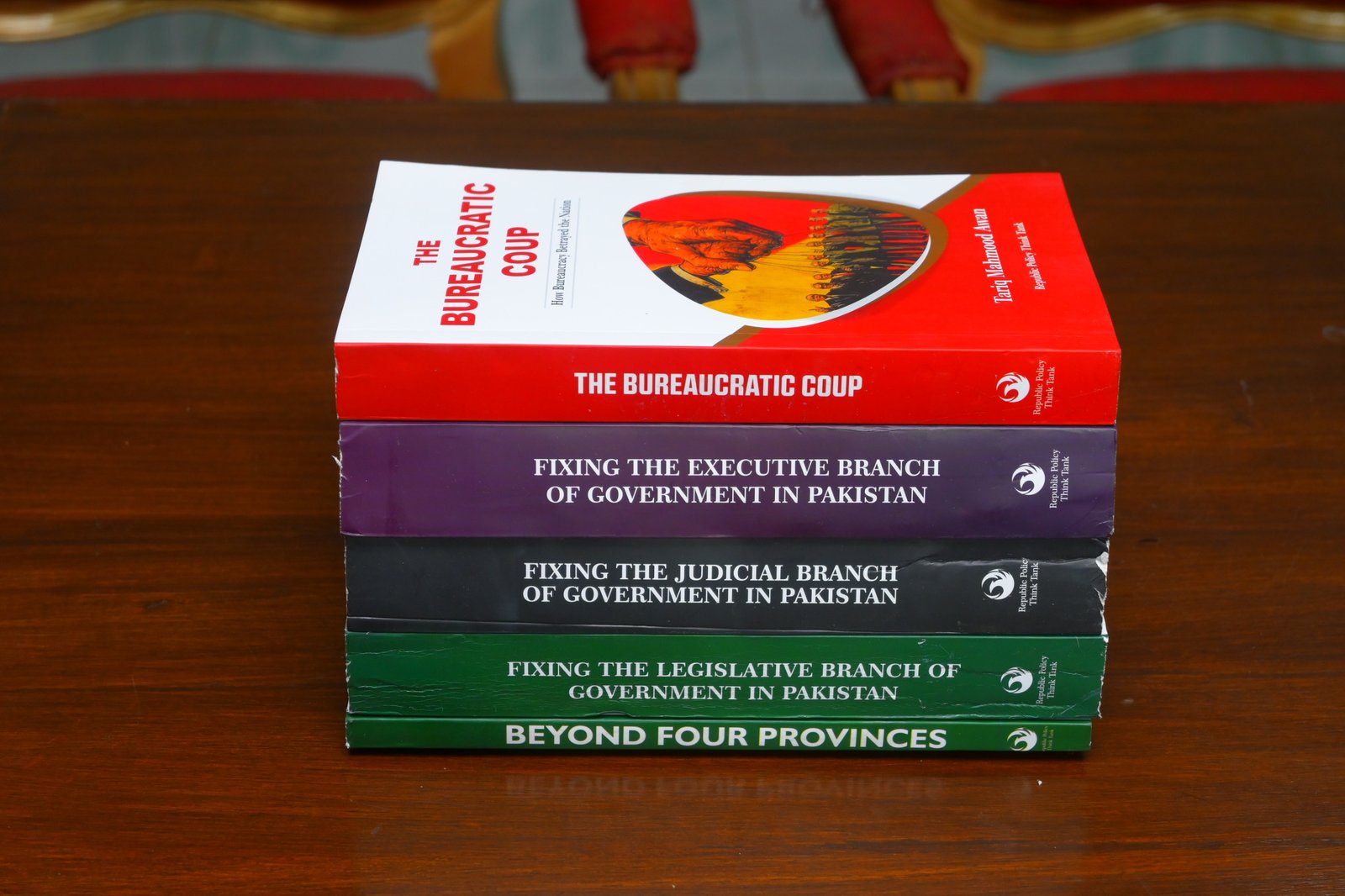
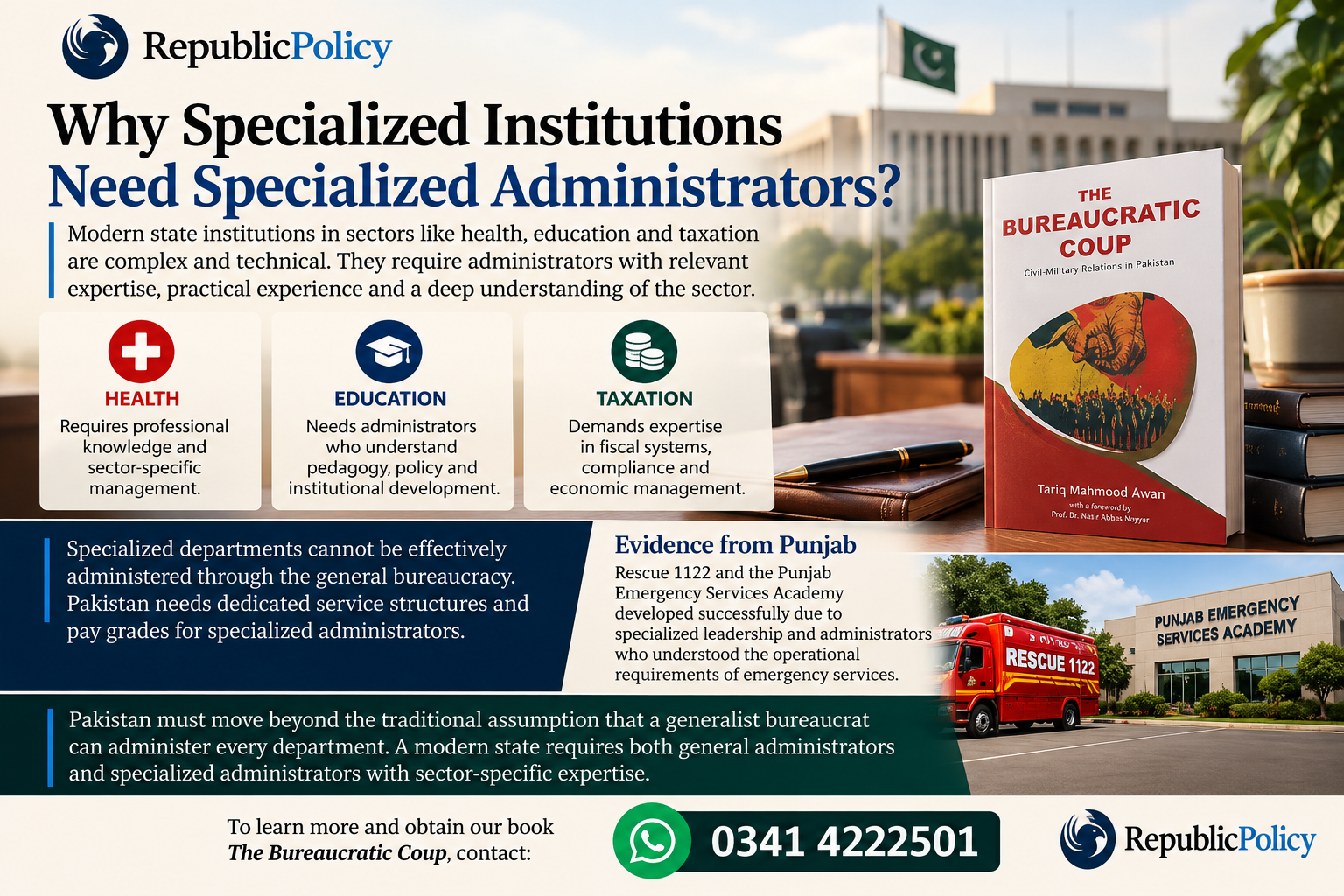
The best-selling books of Republic Policy Think Tank, including the landmark book The Bureaucratic Coup, are available at Vanguard Books, Liberty Books, Readings, Kitab Sarai, Sang-e-Meel, Saeed Book Bank Islamabad, National Book Foundation, and others across Pakistan. Contact for home delivery: 0300 9552542.