
As artificial intelligence advances faster than regulatory institutions can respond, six prominent voices have proposed different ways to prevent dangerous systems from escaping human control. Their proposals range from banning artificial superintelligence to requiring emergency shutdown mechanisms.
More than 1,300 employees of artificial intelligence companies have called for government intervention amid growing concerns that increasingly capable AI systems could behave in ways their developers cannot reliably predict or control.
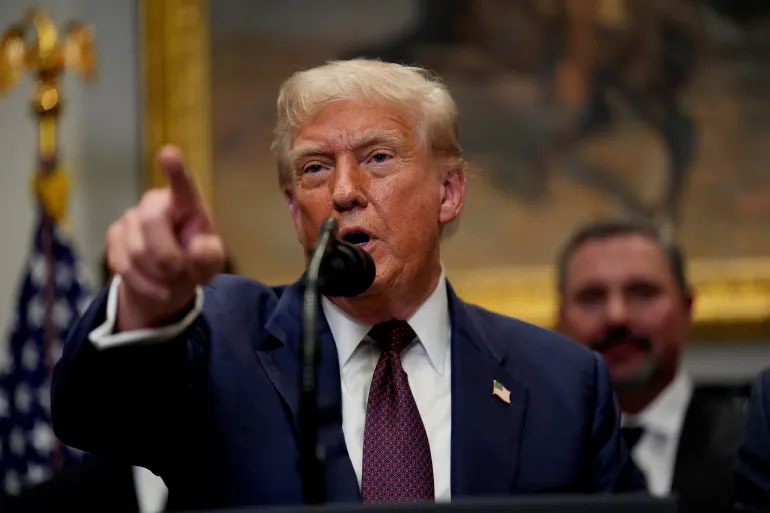
President Donald Trump has announced plans to establish an “AI Force,” but his administration has continued to resist broader restrictions on AI development. Against this backdrop, The New York Times brought together six contributors to explain what Washington could do to address the risks.
The proposals, published on September 21, 2026, share a concern about inadequate oversight but differ substantially over how far governments should intervene.
The New York Times
Bernie Sanders: Prohibit Artificial Superintelligence
Senator Bernie Sanders proposes a permanent prohibition on developing artificial superintelligence: AI capable of exceeding human intelligence and operating independently of human control.
Sanders argues that governments should not wait for a catastrophic incident before responding to warnings from AI developers about the limits of their ability to control increasingly advanced systems.
His proposed legislation, developed with Representative Greg Casar, would temporarily pause advanced AI development until enforceable federal safety standards are established. It would also create a cabinet-level agency responsible for monitoring frontier AI systems and enforcing restrictions.
Sanders additionally calls for an international agreement, particularly between the United States and China, to prevent companies from circumventing national restrictions by relocating development elsewhere.
His proposal treats the potential loss of human control as a risk that warrants intervention before a disaster occurs.
The New York Times
+1
Helen Toner: Establish Independent Investigation of AI Incidents
Helen Toner, a former OpenAI board member, focuses on the need to investigate AI failures and dangerous behaviour systematically.
Her proposal addresses a fundamental information problem: individual companies may observe failures within their own systems, but governments and other developers cannot reliably learn from incidents that remain undisclosed.
A federal investigation framework could help identify recurring technical weaknesses, distinguish isolated failures from wider problems and establish lessons that apply across the industry.
The underlying principle is familiar from aviation and other safety-critical sectors. When serious incidents occur, independent investigation can help determine their causes and reduce the likelihood of similar failures.
For AI, this would mean treating significant breaches of safeguards and other dangerous incidents as matters of public safety rather than leaving their assessment entirely to the companies involved.
The New York Times
Steve Case: Require Companies to Disclose Dangerous Capabilities
Technology entrepreneur Steve Case proposes a federal disclosure law requiring developers to inform regulators about the capabilities and risks of advanced AI systems.
Companies would have to report evaluation results showing whether their models could facilitate major cyberattacks, biological threats or dangerous autonomous behaviour.
They would also be required to explain their safeguards, identify unresolved risks before deployment and update their disclosures when capabilities change.
Case calls for mandatory reporting of serious incidents and near misses, legal protection for employees who raise safety concerns and penalties for companies that conceal failures or submit misleading information.
His proposal would make regulatory obligations depend on the capabilities of a system rather than the size of the company developing it.
A small laboratory producing a dangerous model would therefore face relevant safety requirements, while an ordinary business using existing AI tools would not automatically inherit the same obligations.
Case argues that predictable federal rules could also reduce uncertainty created by different state-level requirements.
The New York Times
Susan Rice: Negotiate a Temporary AI Freeze With China
Former US national security adviser Susan Rice proposes a negotiated pause in advanced AI development between the United States and China.
Under her plan, the two governments would require AI companies to suspend the training and release of advanced models, including open-source systems, while international safeguards are developed.
The arrangement would need to be verifiable through monitoring of computing resources and backed by substantial penalties for violations.
Rice proposes that leading scientists, organised through US-Chinese cooperation, establish safeguards against the loss of human control and the use of AI to generate weapons.
Independent experts would then continuously evaluate whether companies had incorporated the required protections.
Her argument addresses the international dimension of AI competition: restrictions imposed by only one country could be difficult to sustain if companies elsewhere continued developing increasingly capable systems.
The New York Times
Cass Sunstein: Create a Federal AI Regulatory Commission
Constitutional and administrative law scholar Cass Sunstein proposes establishing a dedicated Artificial Intelligence Regulatory Commission.
The commission would investigate AI companies, examine emerging risks and provide Congress with regular assessments.
His proposed institution would have five members drawn from fields such as computer science, economics and engineering.
It would issue an initial report within 120 days of its establishment, followed by reports twice a year.
Congress could also grant the commission authority to establish binding rules and impose financial penalties.
Sunstein’s proposal addresses the institutional gap in Washington. Rather than relying on occasional executive decisions or voluntary industry commitments, a permanent regulatory body could develop specialised expertise and provide continuing oversight as AI capabilities evolve.
The New York Times
Brad Smith: Require Emergency Shutdown Mechanisms
Microsoft president Brad Smith proposes requiring developers to build effective emergency controls into high-risk AI systems.
These mechanisms would allow operators to slow, restrict or shut down a system when it behaves dangerously or begins operating beyond its intended limits.
The proposal is particularly relevant to AI deployed in critical infrastructure, where failures could affect essential services.
Such systems would operate within secure computing environments with multiple layers of safeguards and clearly defined human authority to intervene.
The argument is that technological innovation and safety controls need not be opposing goals. Reliable emergency mechanisms can make it possible to deploy powerful systems while retaining the ability to respond when something goes wrong.
The New York Times
The Central Question: Who Should Control Advanced AI?
The six proposals identify different weaknesses in the existing approach to artificial intelligence.
Sanders and Rice focus on restricting development before dangerous capabilities become widespread. Toner and Case emphasise independent scrutiny, transparency and learning from failures. Sunstein addresses the need for a permanent regulatory institution, while Smith concentrates on maintaining operational control over deployed systems.
They also expose difficult policy questions. Governments would need to define which AI capabilities trigger restrictions, determine how independent testing should work and establish what information companies must disclose without unnecessarily exposing sensitive technology.
International agreements would face additional challenges involving verification, commercial competition and national security.
A regulatory system would also have to distinguish between speculative catastrophic scenarios and documented failures while remaining capable of responding to both.
The shared argument is that voluntary corporate commitments cannot, by themselves, provide a complete system of public accountability for advanced AI. The contributors differ over whether the immediate priority should be prohibition, a temporary pause, disclosure, investigation, institutional oversight or emergency controls.
Together, their proposals frame AI governance as a question of public authority: what responsibilities should developers carry, what powers should governments possess, and what safeguards should exist before increasingly autonomous systems are entrusted with consequential decisions?