
Experiments with governance in Pakistan never seem to end. Whenever a new experiment is introduced, its basic purpose appears to be little more than rearranging administrative posts. What has rarely been assessed is whether the experiment actually achieved the objective for which it was introduced or produced any meaningful improvement.
Punjab has recently witnessed another such experiment. At the district level, the office of the Deputy Commissioner has been empowered in a manner that is both unlawful and unconstitutional. The Deputy Commissioner is fundamentally the District Collector, meaning a revenue officer working under the Board of Revenue and responsible for matters relating to land records and land revenue. He is an officer of the Provincial Government. In addition to revenue functions, he also coordinates the interventions of the Provincial Government within the district.
However, the Deputy Commissioner’s office has effectively been turned into a Local Government office, which is a clear violation of Article 140A. It is essential to understand the distinction between a district and a Local Government. A district is an administrative unit that primarily represents a revenue jurisdiction, whereas a Local Government may exist at the tehsil level or the district level. Its jurisdiction can be determined through law.
Fundamentally, therefore, the Deputy Commissioner’s office, being an office of the Provincial Government, must be separated from Local Government.
The latest experiment, designed collectively by some secretaries and the Chief Secretary, is absurd from a governance perspective. Under the district hierarchy, five Additional Deputy Commissioners have been placed beneath the Deputy Commissioner:
- Additional Deputy Commissioner Revenue
- Additional Deputy Commissioner Headquarters
- Additional Deputy Commissioner Enforcement
- Additional Deputy Commissioner Social Services
- Additional Deputy Commissioner Municipal Services
There are now five different Additional Deputy Commissioners. Some are performing functions of the Provincial Government, some are dealing with Local Government functions, while another performs the functions of the Board of Revenue. All of them have been placed under a single Deputy Commissioner.
If Local Government is to be strong, the obvious question is: why are different Local Government functions being assigned to the office of a Provincial Revenue Officer?
Then, at the tehsil level, there is an Assistant Commissioner accompanied by an Additional Assistant Commissioner. It is difficult to imagine a more absurd administrative organogram: one officer at the top, five officers immediately beneath him, and then, at the tehsil level, another officer attached to the existing officer.
The simple question is whether this arrangement has produced any improvement at the district level. How could it? It has effectively destroyed the Local Government system.
If a proper Local Government system is introduced tomorrow, where will these five Additional Deputy Commissioners go? The Deputy Commissioner’s office is fundamentally an office of the Provincial Government. There is no need to merge Local Government into that office in the name of provincial coordination.
This experiment was designed by a few secretaries and the Chief Secretary and subsequently given the Cabinet’s stamp of approval. Here, by Cabinet, I do not mean the Chief Minister or the ministers, but the Cabinet Secretary, who is also the Chief Secretary. This is another administratively absurd arrangement: the Chief Secretary and the Cabinet Secretary are the same person, meaning that the boss of the Cabinet Secretary is effectively the Cabinet Secretary/Chief Secretary himself.
The fundamental principle, however, is that the creation or abolition of posts, or any fundamental amendment to their functions, should be carried out through law. This is a matter for the elected government and the Provincial Assembly, not the bureaucracy.
Secretaries and the Chief Secretary do not have the authority to keep altering the structure of state institutions according to their administrative whims.
Another interesting point is that in Britain and the United States, a minister is called a Secretary, whereas in Pakistan, Secretary has become a bureaucratic office. During the colonial period, the bureaucratic Secretary possessed administrative and financial powers because the concepts of political government and representative cabinet governance were different. After the creation of Pakistan, once the country moved towards Cabinet Government, these powers should have passed to the Minister.
A department or ministry is fundamentally supposed to be run by the Minister, not by the bureaucratic Secretary. The Chief Minister is the Chief Executive, not the Chief Secretary. In Pakistan, however, the Chief Secretary has effectively become the real chief executive.
Yet the colonial conception of the Secretary remained intact, and power increasingly shifted into the hands of the bureaucracy. There could hardly be a greater injustice to Pakistan. I have discussed this issue in detail in my book, The Bureaucratic Coup.
The question now is: who will hold accountable this bureaucratic laboratory created in Punjab and the new bureaucratic district model it has produced? Neither the Punjab Assembly, nor the political government, nor anyone else appears to be doing so. Consequently, the bureaucracy will continue designing structures according to its own preferences, while the system continues to deteriorate.
Another restructuring exercise has now begun. Restructuring is fundamentally the responsibility of the political government and the Cabinet, and there is a constitutional framework involving law and the Provincial Assembly for undertaking it. But if restructuring itself is to be carried out according to the whims of the Chief Secretary and a handful of secretaries, then where are the law, the Constitution and the principle of collective responsibility?
It is also worth considering that posts and positions previously approved through the Punjab Assembly’s budgetary process are now being altered through bureaucratic restructuring. What kind of system is this in which there is neither clear law, nor constitutional authority, nor collective responsibility, but simply power in the hands of the bureaucracy to do whatever it wishes?
Then another bureaucrat will arrive. The previous system will continue operating, while yet another restructuring process will begin. This spectacle has continued for nearly eighty years, like a game of musical chairs.
This is precisely the bureaucratic state that must now be held accountable so that Pakistan can build institutions rather than personalities, establish the rule of law, and enable the state system to function within constitutional boundaries.
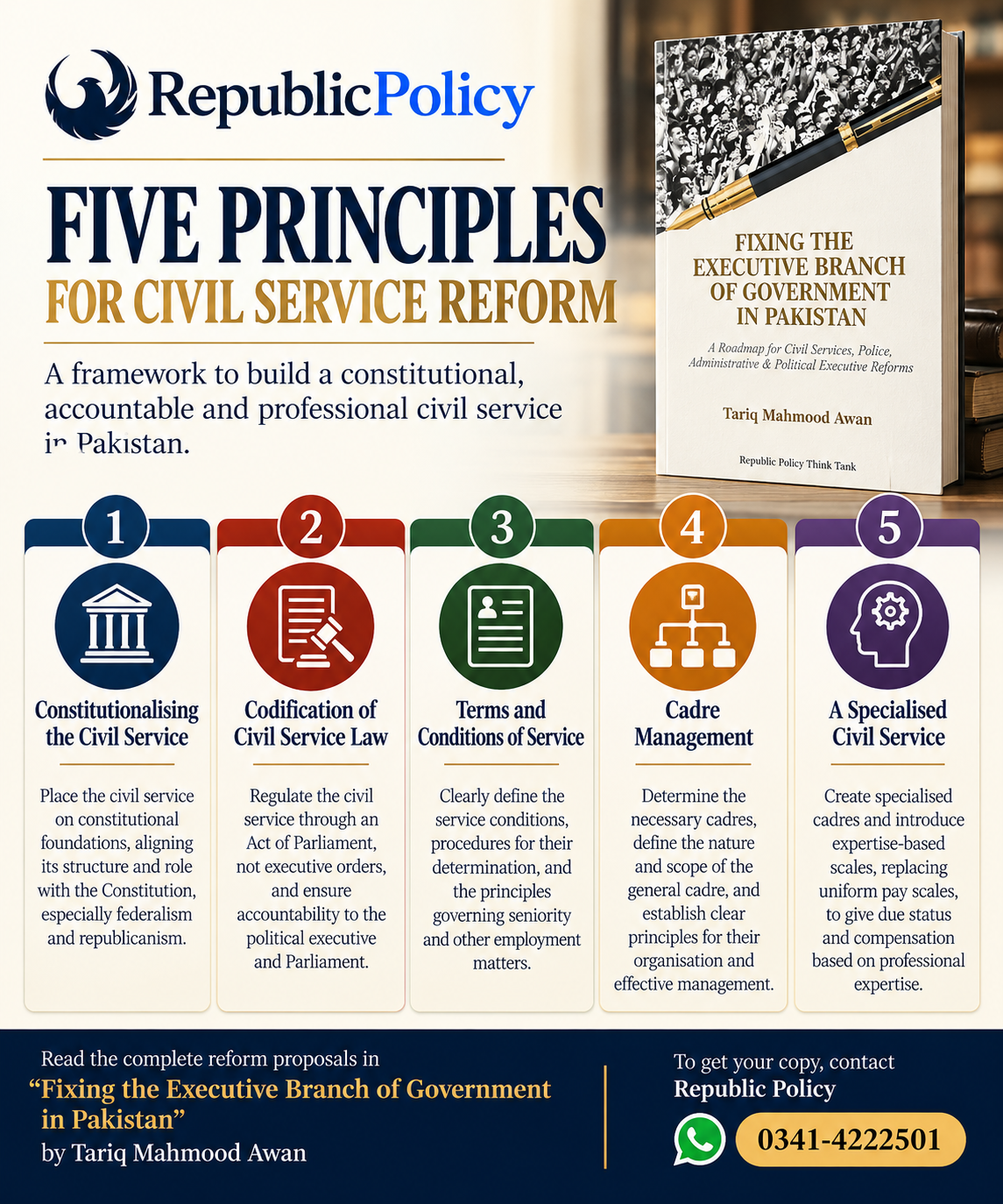
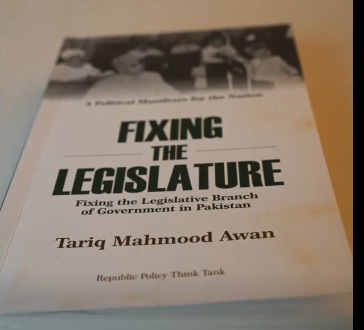
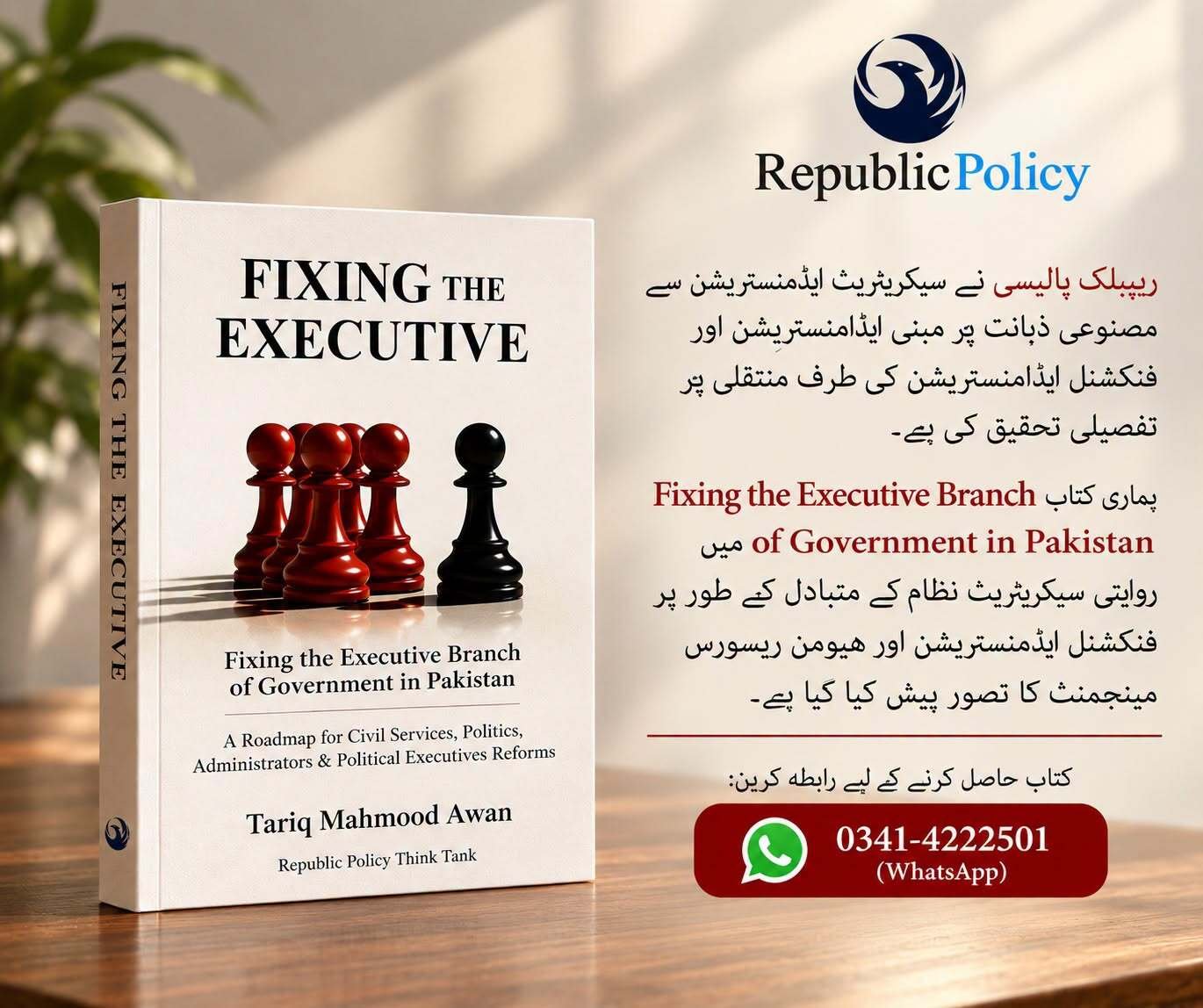
I have discussed these fundamental questions and problems in detail in my books Fixing the Executive and The Bureaucratic Coup.
If Pakistan is to move forward, the existing bureaucratic state must be transformed into a democratic state. By a democratic state, I do not mean transferring power to a few families; I mean transferring power to the people.