

Official Confirmation of High-Profile Detentions
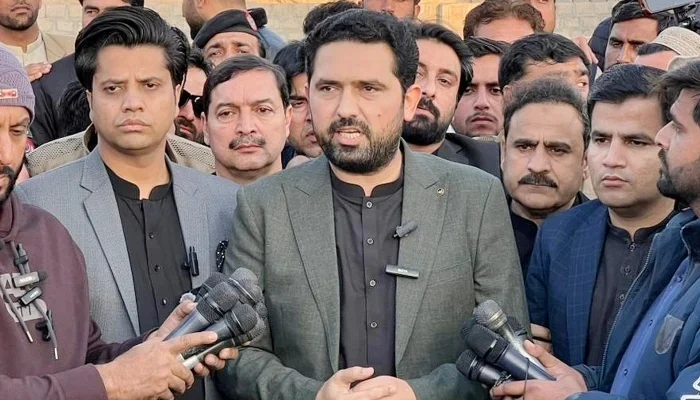
Federal authorities and senior police officials confirmed on Monday that Khyber Pakhtunkhwa’s non-functional Chief Minister, Sohail Afridi, alongside KP Assembly Speaker Babar Saleem Swati, MNA Junaid Akbar, and several provincial cabinet members, have been taken into preventive custody. The official confirmation comes a day after the federal government declared a state of emergency and imposed governor’s rule in Khyber Pakhtunkhwa under Articles 232 and 234 of the Constitution.
Legal Status and Law Enforcement Rationale
Minister of State for Interior Tallal Chaudhry formally confirmed the detentions, stating that the individuals were placed under preventive custody on Sunday. Chaudhry noted that while those facing criminal charges or pending cases will be formally processed through the legal system, individuals without pending matters will be released. Senior police sources further corroborated that at least eight high-ranking political figures were detained under preventive custody measures, aligning with earlier reports suggesting potential house arrests under Section 3 of the Maintenance of Public Order (MPO) ordinance.
PTI Decries Political Victimization Amid Escalating Friction
The Pakistan Tehreek-e-Insaf (PTI) leadership strongly criticized the detentions, linking them directly to the federal government’s constitutional intervention in the province. PTI spokesperson Sheikh Waqas Akram asserted that the arrest of the elected provincial leadership exposes the purely political motives of the Centre. Akram argued that the imposition of emergency rule and the subsequent arrests are designed to undermine democratic mandates and dismantle provincial autonomy rather than address regional security concerns.
Deepening Federal-Provincial Deadlock
The administrative crackdown and emergency declaration mark a dramatic escalation in the ongoing confrontation between the PML-N-led federal coalition and the PTI-administered provincial setup. Tensions have steadily mounted over institutional disputes, governance policy, and ideological friction regarding national counterterrorism strategies—disagreements that directly led to the collapse of formal bilateral negotiations earlier this month.
Contact Information
For access to Republic Policy’s research publications, policy briefs, and institutional risk assessments on Pakistani constitutional governance, connect via WhatsApp: 0341-4222501