

OPINION
International relations are no longer determined exclusively by military capabilities, economic resources and diplomatic negotiations. An equally important dimension of global politics is emerging: the competition among states to influence how international developments are perceived, interpreted and judged.
Every major international crisis produces competing explanations. Governments seek to establish the legitimacy of their actions, challenge the positions of their adversaries and secure international acceptance of their political objectives. Consequently, diplomacy increasingly involves not only managing relations between states but also influencing the understanding of international audiences.
This development extends beyond conventional public diplomacy. While public diplomacy primarily seeks to cultivate favourable relationships with foreign populations, strategic communication attempts to establish particular interpretations of political events. Through carefully constructed narratives, governments seek to influence international opinion, justify their decisions and strengthen their diplomatic positions.
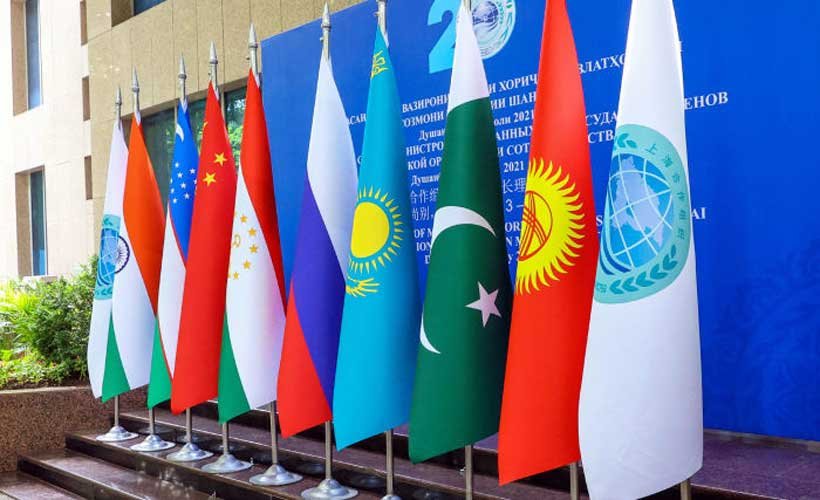
The rivalry between India and Pakistan illustrates this phenomenon. Their disagreements extend beyond territorial disputes and security concerns to competing representations of historical events, national identities and regional stability. During periods of military confrontation, both governments attempt to persuade international audiences that their respective positions are legitimate and defensible.
Similar dynamics are evident in the Russia-Ukraine conflict. Competing explanations concerning sovereignty, security and international obligations influence how governments and societies interpret the war. Meanwhile, China increasingly seeks to advance its understanding of global governance, whereas India employs the language of strategic autonomy to explain its independent foreign-policy choices.
However, the effectiveness of such narratives depends upon more than communication strategies. International credibility emerges when a state’s declared principles correspond with its actual policies. Contradictions between diplomatic statements and political behaviour can weaken even the most sophisticated communication campaigns.
Technological developments have further complicated this environment. Digital platforms allow governments to communicate directly with international audiences, but they also facilitate misinformation, fabricated evidence and competing interpretations. Journalists, researchers, civil society organisations and ordinary citizens now participate in shaping international perceptions.
For countries seeking greater diplomatic influence, the challenge is therefore institutional as much as communicative. Successful international engagement requires coherent policies, credible political conduct and sustained relationships with foreign societies.
Ultimately, the changing character of diplomacy demonstrates that international influence depends not simply upon what states accomplish but also upon how their actions are understood.
In an increasingly interconnected world, the ability to establish credible interpretations of international events has become an essential component of state power.