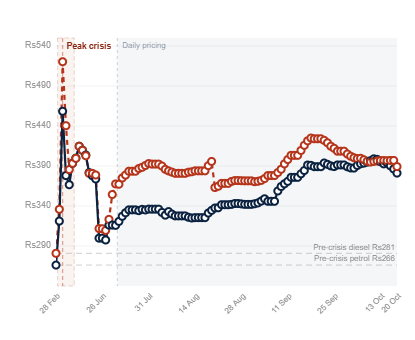

ISLAMABAD: The federal government on Monday announced a reduction in petroleum prices, lowering petrol by Rs5.16 per litre and high-speed diesel (HSD) by Rs7.69 per litre, offering some relief to consumers grappling with elevated fuel costs amid continuing geopolitical tensions in the Middle East.
According to a notification issued by the Petroleum Division, the revised prices will take effect on Tuesday, October 20. Petrol will now be available at Rs381.14 per litre, while high-speed diesel will cost Rs389.27 per litre.
Despite the latest reductions, taxation remains a substantial component of petroleum prices. The government continues to collect Rs114 per litre in taxes and duties on petrol and Rs100 per litre on diesel, maintaining a significant revenue stream from petroleum consumption.
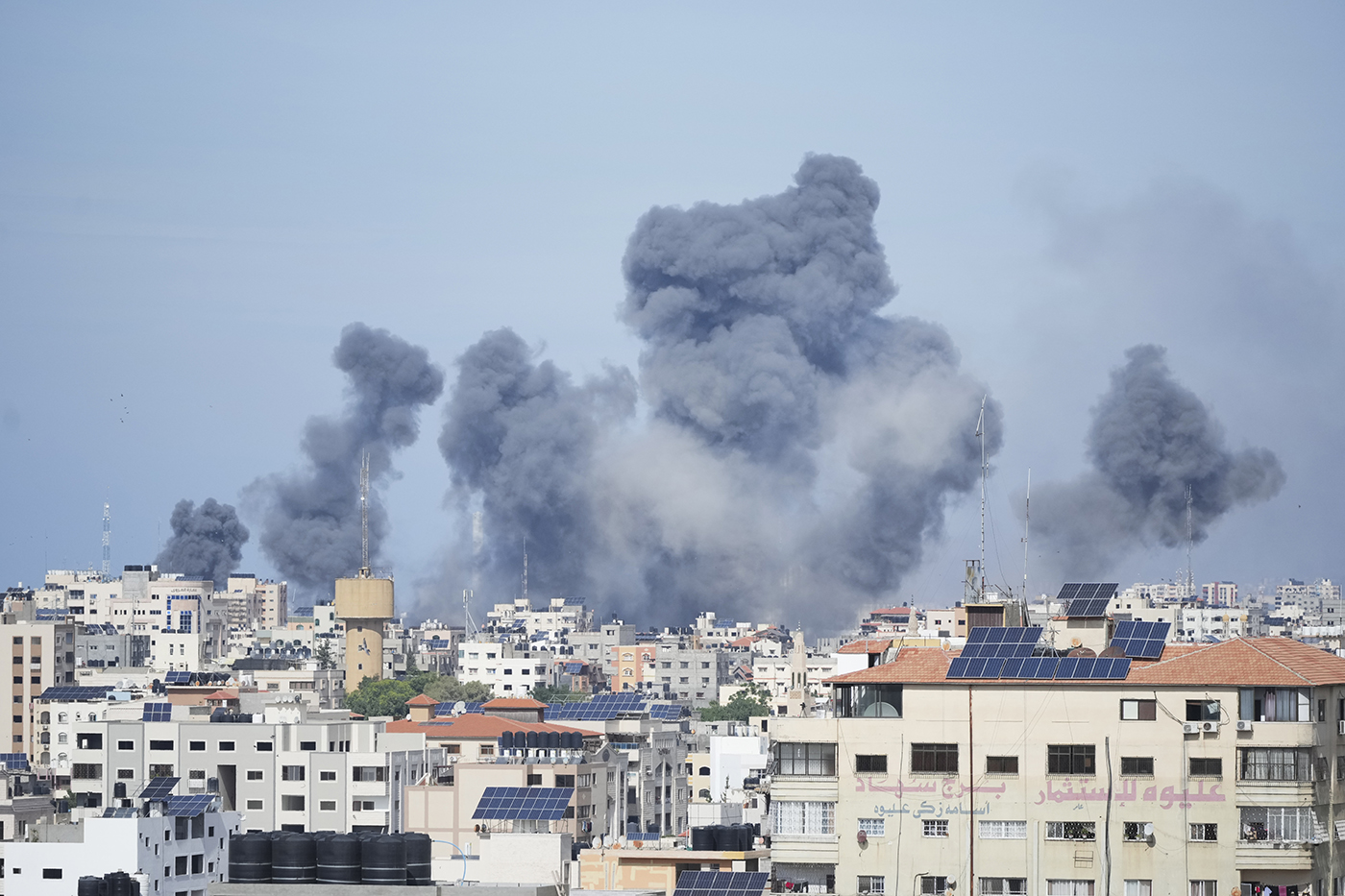
The downward revision follows months of extraordinary volatility in domestic fuel markets, largely driven by the conflict involving the United States and Iran and its consequences for international energy supplies.
High-speed diesel, which stood at approximately Rs281 per litre before hostilities erupted on February 28, climbed to a record Rs520.35 on April 3. Petrol experienced a similarly dramatic increase, rising from around Rs266 in early March to a peak of Rs458.41 per litre on April 3.
Although prices have retreated considerably from those peaks, they remain substantially higher than their pre-conflict levels, continuing to place financial pressure on households, businesses and the transport sector.
In response to the energy crisis, the government has introduced several conservation and austerity measures aimed at reducing petroleum consumption and limiting the economic consequences of international supply disruptions.
These measures include mandatory market closures by 9pm and a 50 per cent reduction in fuel allocations for official vehicles for three months.
The government has also sought to cushion vulnerable consumers against rising transportation costs. On September 13, Prime Minister Shehbaz Sharif announced a targeted relief initiative for motorcycle riders, rickshaw operators and owners of vehicles with engine capacities of up to 800cc.
Earlier, in April, the federal government had introduced subsidised fuel arrangements as part of broader efforts to mitigate the impact of escalating petroleum prices.
Meanwhile, Pakistan’s fuel-pricing mechanism has undergone significant changes in response to persistent fluctuations in international oil markets.
On July 17, Petroleum Minister Ali Pervaiz Malik announced that petroleum prices would be reviewed daily rather than weekly, citing renewed hostilities between Iran and the United States and the resulting instability in global energy markets.
Under the revised arrangement, the Oil and Gas Regulatory Authority (Ogra) was entrusted with determining daily petroleum prices in accordance with international market movements, following a decision by the federal cabinet and the prime minister.
Before the introduction of daily adjustments, the government had been revising petroleum prices weekly since early March, alongside measures intended to conserve fuel and prepare for potential disruptions to international oil supplies.
The economic implications of petroleum price adjustments extend well beyond motorists.
Petrol is predominantly consumed by motorcycles, rickshaws, private vehicles and other forms of small-scale transportation. Consequently, changes in its price directly affect household expenditure, particularly among low-income and middle-income communities.
High-speed diesel plays an equally important role in the wider economy because of its extensive use in freight transportation, commercial vehicles, power generation and industrial operations. Fluctuations in diesel prices can therefore influence transportation expenses, production costs and the prices of essential commodities.
Petrol and high-speed diesel also constitute the country’s principal petroleum revenue sources, with combined monthly sales estimated at approximately 700,000 to 800,000 tonnes. By comparison, monthly kerosene consumption stands at around 10,000 tonnes.
While the latest price reductions provide limited financial relief, the continued dependence of domestic fuel prices on international market conditions leaves Pakistan vulnerable to further energy shocks. The direction of future petroleum prices will remain closely linked to developments in the Middle East and fluctuations in global oil markets.