
Arshad Mahmood Awan
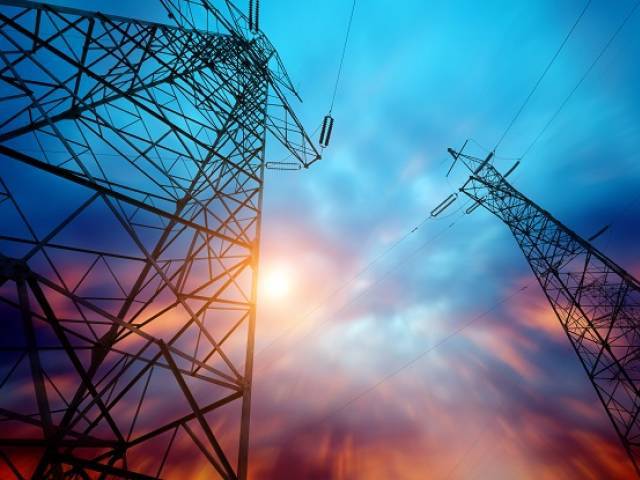
Recent incidents in Lahore and Kasur, where officials of the Lahore Electric Supply Company (Lesco) were allegedly attacked while trying to stop electricity theft, expose an uncomfortable truth. In Pakistan, the honest consumer is quietly paying for the dishonesty of others. Every stolen unit of power ends up on someone else’s bill, and that someone is usually the ordinary citizen who pays on time.
The details of these incidents are troubling. In Lahore, an inspection team detected electricity being stolen through an illegal direct connection at the premises of a defaulting consumer. What followed was an altercation at a Lesco office, after which police arrested a man and recovered a pistol. In Kasur, the situation was even worse. According to a company spokesperson, a Lesco team checking a mismatch between a meter number and its recorded reading was allegedly confronted by the consumer and five armed men. The officials were reportedly held at gunpoint, kept hostage and threatened with serious consequences.
These are not isolated quarrels between a utility and its customers. They reflect a wider culture in which some people believe they are above the rules and can use force to protect what they have taken illegally.
The timing makes this even more painful. Households across the country are struggling under heavy electricity bills, rising tariffs and a long list of surcharges. For many families, the monthly bill has become one of the biggest threats to their budget. In such a situation, power theft is not simply a crime against a distribution company. It is an injustice against every honest consumer who sacrifices other needs to keep the lights on.
The mechanics are straightforward. When electricity is stolen through bogus meters, illegal direct connections or other fraudulent methods, distribution companies lose revenue they are entitled to. Those losses do not disappear. Combined with operational inefficiencies and deeper systemic weaknesses, they are passed down the line and absorbed by the people who pay. So the question naturally arises: why should those who settle their bills every month pay so much, while others consume freely at their expense?
The use of weapons, threats and violence to block anti-theft operations is especially alarming. When an inspection team cannot do its job without risking their lives, the state’s writ is being openly challenged. Lesco’s inspection and recovery staff must be given proper security, including police escorts wherever needed, so they can carry out their duties without fear.
Let it be said plainly. No one has the right to assault public servants, take them hostage or threaten their lives to hide an illegal act. Such behaviour must carry strict legal consequences, whatever the offender’s wealth, influence or political connections. If the powerful are allowed to escape, the message to everyone else will be that the law is optional for those who can afford to defy it.
The response of the authorities must be firm but fair. Police should investigate these cases impartially, protect the teams working in the field and bring the guilty to justice. Lesco and other distribution companies, for their part, need to tighten monitoring, modernise their metering systems, carry out transparent inspections and pursue theft cases without favour or discrimination.
Fairness, however, cuts both ways. Every allegation must rest on credible evidence, and every accused person must be given due process. A crackdown that targets the weak while sparing the strong, or one that punishes without proof, would only deepen public distrust. The aim should be justice, not a show of force.
Enforcement alone will not solve the problem. Electricity theft survives in an environment of weak governance, poor oversight and, too often, collusion from within. The government and distribution companies must address these institutional failures, root out corruption among their own staff and stop the habit of passing the cost of theft and avoidable losses onto honest consumers. It is unfair to punish the many for the crimes of the few, and equally unfair to punish consumers for the failures of the institutions meant to serve them.
Transparency would go a long way in rebuilding trust. Regular public reporting on detected theft, amounts recovered and action taken against influential defaulters would show citizens that the law is being applied evenly. People are more willing to accept hardship when they believe the burden is being shared fairly.
Electricity theft is not a victimless offence. Its victims are the families who pay their bills, the businesses that struggle with high costs and the public servants who risk their safety to enforce the law. Those who steal must be held accountable. Only then will honest consumers stop being forced to subsidise the dishonesty of others.
The best-selling books of Republic Policy Think Tank, including the landmark book The Bureaucratic Coup, are available at Vanguard Books, Liberty Books, Readings, Kitab Sarai, Sang-e-Meel, Saeed Book Bank Islamabad, National Book Foundation, and others across Pakistan. Contact for home delivery: +92 341 4222501.