
REPUBLIC POLICY | INTERNATIONAL AFFAIRS & POLITICS
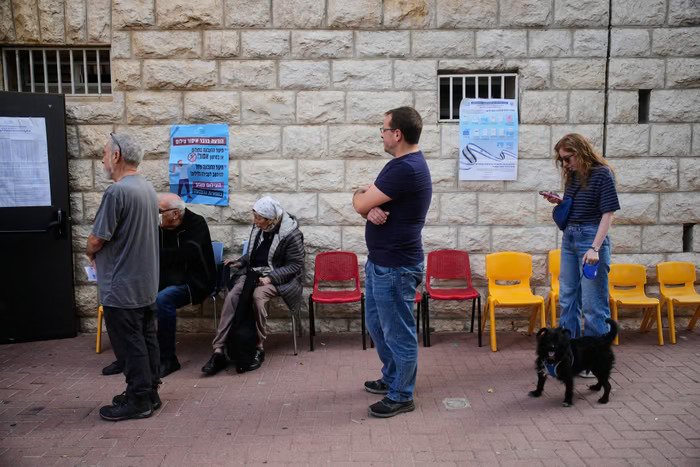
JERUSALEM, October 27, 2026: Israelis began voting on Tuesday in a closely contested parliamentary election that could determine Prime Minister Benjamin Netanyahu’s political future and reshape the country’s direction after three years of devastating regional conflict, deepening domestic divisions and growing international criticism.
More than 12,000 polling stations opened across Israel, with voters gathering early in Jerusalem and other cities to elect a new 120-member Knesset.
The election is the first since the Hamas-led attacks of October 7, 2023, and Israel’s subsequent military campaign in Gaza. It also follows escalating confrontations with Iran, mounting violence in the occupied West Bank and prolonged disputes over the independence of Israeli democratic institutions.
Opinion polls suggest that Netanyahu’s governing coalition could lose its parliamentary majority. However, opposition parties may also struggle to secure the 61 seats required to form a government, raising the possibility of difficult coalition negotiations.
The contest is therefore about more than determining the next prime minister. It represents a significant test of Israel’s political institutions, security policies and international relationships.
Netanyahu Faces His Most Difficult Electoral Challenge
Netanyahu, 76, is seeking another mandate after leading one of the most right-wing governments in Israeli history.
His political standing has been challenged by criticism of the security failures preceding the October 2023 attacks, the prolonged military campaign in Gaza and growing disagreements over his government’s approach to democratic institutions.
The prime minister also faces ongoing corruption proceedings involving three separate cases. He denies wrongdoing, and the proceedings remain unresolved.
US President Donald Trump has publicly supported Netanyahu and called for a pardon, including through an appeal to Israeli President Isaac Herzog.
Nevertheless, Netanyahu’s political future ultimately depends on the election results and his ability to assemble a parliamentary majority.
Israel’s fragmented political landscape means that even a strong showing by an individual party may not guarantee control of the government.
Gadi Eisenkot Emerges as Leading Opposition Challenger
Former Israeli military chief Gadi Eisenkot has emerged as Netanyahu’s principal challenger.
Eisenkot leads the centrist Yashar party and has built his campaign around political accountability, institutional integrity and criticism of Netanyahu’s leadership.
His military background gives him credibility among voters concerned about national security, while his relatively restrained public style distinguishes him from the incumbent prime minister.
Eisenkot has called for a comprehensive investigation into the failures that enabled the October 2023 attacks.
He also supports ending military service exemptions for ultra-Orthodox Jewish men, a longstanding source of political and social disagreement.
However, his positions on the Israeli-Palestinian conflict remain less clearly defined.
Although he opposes certain settlement expansion plans and has criticised the government’s management of the occupied West Bank, he has not endorsed a comprehensive two-state peace settlement.
His political appeal therefore rests substantially on promises of more accountable leadership rather than a fundamental transformation of Israel’s regional security policies.
Gaza War Dominates the Election’s International Significance
The consequences of Israel’s military operations in Gaza remain central to the election’s international significance.
The Hamas-led attacks of October 7, 2023, killed approximately 1,200 people in Israel, most of them civilians, and resulted in the taking of hostages.
Israel’s subsequent military campaign devastated Gaza, with the supplied reporting placing Palestinian fatalities at more than 75,000.
The scale of civilian deaths, displacement and destruction has generated widespread international condemnation.
A United Nations commission, human rights organisations and legal scholars have characterised Israeli conduct as genocide. Such findings and allegations remain matters of international legal and political scrutiny.
The conflict has also severely damaged Israel’s diplomatic standing, creating tensions with governments that have traditionally maintained close relations with the country.
For Palestinians, however, the election offers no direct opportunity to determine Israeli policies governing Gaza or the occupied West Bank.
This democratic imbalance remains a fundamental issue in assessing the election’s implications for regional peace.
Far-Right Parties Could Strengthen Their Influence
Although Netanyahu’s coalition faces the possibility of losing its majority, Israel’s broader political landscape appears to be shifting further towards the right.
National Security Minister Itamar Ben-Gvir and his Jewish Strength party are expected to remain influential.
A poll published by Israel Hayom on October 16 projected nine parliamentary seats for Ben-Gvir’s party, compared with eight for the Democrats, a successor to Israel’s historic Labor movement.
The figures illustrate the changing ideological balance within Israeli politics.
Younger Jewish voters appear particularly receptive to right-wing and nationalist political messages.
According to a Channel 12 survey cited in the reporting, approximately three-quarters of first-time Jewish voters identified as right-wing or centre-right.
Analysts associate this trend partly with prolonged insecurity, the collapse of earlier peace initiatives and the influence of nationalist political discourse.
The growing strength of far-right parties could complicate efforts to advance negotiations with Palestinians or reverse settlement expansion.
West Bank Policies Face International Scrutiny
Israeli settlement expansion and settler violence in the occupied West Bank have become increasingly contentious international issues.
Under Netanyahu’s government, far-right political figures have exercised considerable influence over policies affecting the territory.
International criticism has intensified following reports of violence against Palestinian communities and the expansion of Israeli settlements.
Several governments have considered or introduced measures targeting individuals associated with extremist settler activity.
Eisenkot has criticised the transfer of significant authority over West Bank affairs to far-right minister Bezalel Smotrich and has indicated that he would reverse aspects of the arrangement.
However, his broader support for Israeli settlements raises questions about how substantially an opposition-led government would change existing policies.
The distinction between administrative changes and meaningful political transformation is therefore likely to remain important after the election.
Election Outcome Could Shape Middle East Diplomacy
The vote comes amid an unstable regional environment following military confrontations involving Israel, Iran and neighbouring countries.
The conflict has disrupted energy markets, increased diplomatic tensions and contributed to wider economic uncertainty.
Any new Israeli government will face difficult decisions concerning relations with Washington, regional security arrangements, Gaza’s future and the occupied Palestinian territories.
A continuation of Netanyahu’s leadership could reinforce existing political priorities, while an opposition victory might introduce changes in governing style and diplomatic engagement.
Neither outcome, however, automatically guarantees progress towards a negotiated Israeli-Palestinian settlement.
The composition of the next coalition will be crucial in determining whether Israel pursues political accommodation or continues its present security-centred approach.
A Defining Test for Israel’s Political Future
Approximately seven million Jewish Israelis and 1.7 million Palestinian citizens of Israel are eligible to participate in Tuesday’s election, according to the supplied reporting.
Their votes will determine the parliamentary balance, although coalition negotiations may ultimately decide who governs.
The immediate questions concern Netanyahu’s political survival and the opposition’s ability to form a viable administration.
The deeper questions involve democratic accountability, the consequences of prolonged conflict and Israel’s relationship with the wider international community.
The election may change Israel’s leadership, but its historical significance will depend on whether the next government can address the political and security crises that have increasingly defined the country since October 2023.
As voting continues, the possibility of a fragmented parliament leaves Israel facing an uncertain political future at a moment when the consequences of its decisions extend far beyond its borders.