
REPUBLIC POLICY | NATIONAL SECURITY & FOREIGN AFFAIRS
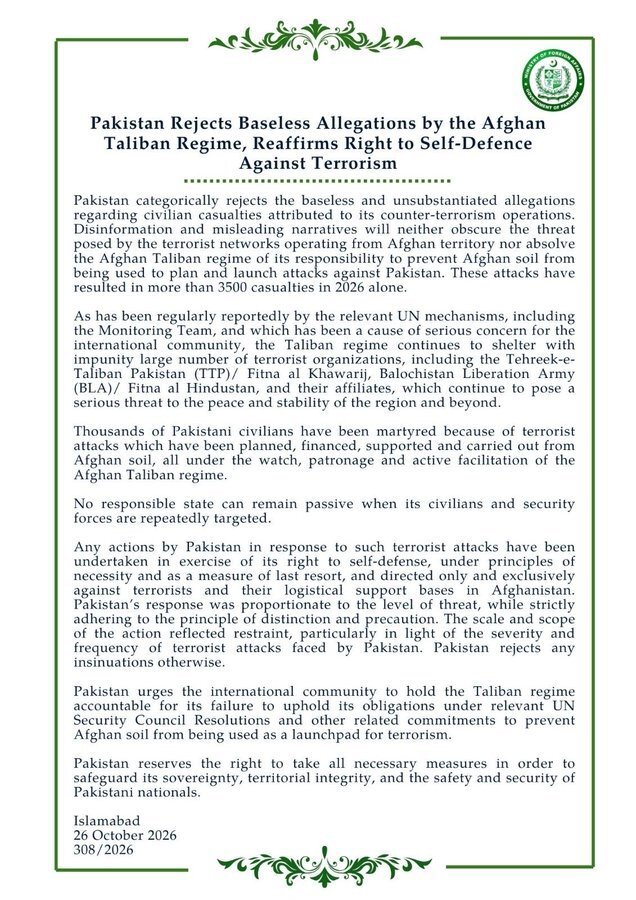
ISLAMABAD: Pakistan has firmly rejected allegations by Afghanistan’s Taliban administration that its counterterrorism operations have caused civilian casualties, insisting that its military actions across the border have been limited, proportionate and directed exclusively against terrorist networks threatening Pakistani security.
In a statement issued on Monday, the Foreign Office described the allegations as baseless and unsupported by evidence, maintaining that Islamabad had exercised restraint despite repeated attacks originating from Afghan territory.
The statement reflects the continuing deterioration in relations between Pakistan and Afghanistan, where disagreements over cross-border militancy, military operations and civilian protection have become central sources of diplomatic tension.
The latest exchange followed claims by an Afghan Foreign Ministry spokesperson, who reportedly told CNN that Pakistani military strikes had killed or injured 1,119 Afghan civilians since late 2021.
Pakistan rejected the allegation. The competing claims have not been independently established in the information available, leaving the civilian impact of the operations a significant point of dispute between the two governments.
Pakistan Cites Growing Threat From Afghan-Based Militants
The Foreign Office maintained that terrorist organisations operating from Afghanistan continue to threaten Pakistan’s security and regional stability.
It accused the Taliban administration of failing to prevent Afghan territory from being used to plan, support and launch attacks against Pakistan.
According to the statement, attacks originating from Afghan territory have caused more than 3,500 casualties in Pakistan during 2026.
The ministry did not provide a detailed breakdown of that figure in the statement, and the number remains a claim attributed to Pakistani authorities.
Islamabad specifically identified Tehreek-i-Taliban Pakistan (TTP), the Balochistan Liberation Army (BLA) and affiliated organisations as groups allegedly benefiting from sanctuary and support inside Afghanistan.
The Foreign Office further alleged that thousands of Pakistani civilians had been killed in attacks planned, financed or facilitated from Afghan territory.
It accused the Taliban authorities of allowing militant networks to operate despite repeated Pakistani demands for action.
The Afghan Taliban administration has disputed allegations concerning its responsibility for attacks in neighbouring countries.
For Islamabad, however, the central issue remains whether Kabul is taking effective and verifiable steps to prevent armed groups from using Afghan territory against Pakistan.
Islamabad Defends Military Action as Self-Defence
Pakistan maintained that its cross-border operations were undertaken in response to terrorist attacks and represented measures of self-defence rather than an attempt to target Afghanistan’s civilian population.
The Foreign Office said its actions were guided by necessity and employed only as a last resort.
According to the ministry, the operations targeted terrorist personnel and logistical support facilities inside Afghanistan.
It stressed that Pakistani forces had observed the principles of distinction and precaution, which are central to international humanitarian law and require parties to armed conflicts to distinguish between military objectives and civilians while taking feasible measures to minimise civilian harm.
The ministry also maintained that the scale of its operations reflected restraint, particularly given the frequency and severity of attacks Pakistan says it has experienced.
These assertions, however, remain part of Pakistan’s official account. The legality of particular cross-border operations and their compliance with international law depend on the circumstances and evidence surrounding each action.
The Foreign Office insisted that Pakistan could not remain passive while its citizens and security personnel continued to face attacks.
It also reaffirmed the country’s right to protect its sovereignty, territorial integrity and population.
United Nations Report Adds to Security Concerns
Pakistan’s concerns over militant activity in Afghanistan have also featured in United Nations reporting.
A monitoring report prepared under a UN Security Council mandate, covering December 16, 2025, to June 9, 2026, linked continued Taliban support for the TTP to an increase in the frequency and lethality of terrorist attacks in Pakistan.
The report also acknowledged that Kabul had taken some initial measures to restrict the group’s activities.
The findings provide important international context for Pakistan’s security concerns, although they do not independently establish the accuracy of every allegation made by Islamabad or resolve disputes over civilian casualties.
Pakistan has repeatedly urged the Taliban administration to dismantle militant sanctuaries, particularly those associated with the banned TTP.
Pakistani officials maintain that these demands have not produced sufficient results.
The dispute has consequently moved beyond routine diplomatic disagreement, increasingly affecting border security, military relations and prospects for regional cooperation.
September Clashes Deepened Bilateral Tensions
Relations between the neighbouring countries deteriorated further during September following another series of cross-border confrontations.
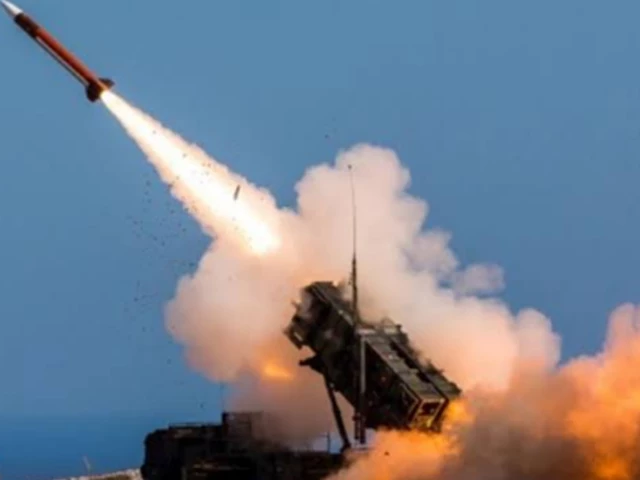
Pakistan carried out airstrikes in border areas after terrorist attacks in Khyber Pakhtunkhwa, describing the operations as calibrated responses against militant infrastructure.
Subsequent incidents included reported drone incursions from Afghan territory. Pakistani authorities said the drones were intercepted and shot down.
Islamabad later conducted additional rounds of retaliatory airstrikes.
These developments intensified the security confrontation and renewed concerns about the potential for further military escalation.
For communities living near the border, recurring hostilities create uncertainty over personal safety, movement and livelihoods.
The wider diplomatic challenge is equally significant. Pakistan and Afghanistan share geographical, commercial and social connections that make prolonged confrontation costly for both countries.
Without effective mechanisms for addressing security complaints and investigating disputed incidents, competing allegations risk deepening mistrust.
Pakistan Rejects Allegations of Supporting Anti-Taliban Groups
The latest Foreign Office statement follows another dispute involving former United States envoy Zalmay Khalilzad.
Over the weekend, Pakistan’s information ministry rejected Khalilzad’s allegation that Islamabad was supplying weapons to Afghans fighting the Taliban.
The ministry described the claim as misleading and unsupported.
It also challenged the Taliban administration’s assertion that it lacked the capacity to contribute to insecurity beyond Afghanistan’s borders.
Pakistani officials accused Kabul of diverting attention from concerns about militant organisations operating within Afghan territory.
The exchange illustrates how the dispute increasingly involves not only military developments but also competing diplomatic narratives about responsibility for regional instability.
Regional Stability Requires Accountability and Dialogue
The Foreign Office urged the international community to hold the Afghan Taliban administration accountable for what Islamabad described as failures to fulfil international commitments concerning terrorism.
At the same time, allegations of civilian casualties remain serious and require credible examination, regardless of which government advances them.
Independent verification, transparent reporting and adherence to international legal obligations are essential to establishing confidence in competing accounts.
Pakistan’s security concerns and Afghanistan’s allegations concerning civilian harm represent distinct issues that require evidence-based assessment rather than political assertions alone.
The broader challenge is to prevent terrorist violence while avoiding further deterioration in relations between two neighbouring countries.
Pakistan has reaffirmed its determination to defend its citizens and territorial integrity. Whether the present confrontation can move towards lasting security will depend on effective action against militant networks, credible accountability for military operations and renewed diplomatic engagement.