
Editorial | Republic Policy
Pakistan’s civil service debate is burdened by a historical contradiction that deserves far greater scrutiny: the Civil Service of Pakistan (CSP) was abolished under the administrative reforms introduced by Zulfikar Ali Bhutto, yet the language, institutional practices and claims of continuity associated with the old service have survived. The continued use of the expression “CSP officer” is more than a question of terminology. It raises fundamental questions about the legal foundations of Pakistan’s civil services, the authority of administrative rules and the persistence of institutional privilege.
The Civil Service of Pakistan was established in 1954 through the Composition and Cadre Rules. These rules provided the framework for a federal service whose officers occupied important positions in the central and provincial administrations. However, the legal and constitutional basis of this arrangement requires closer examination. The central argument advanced by research into the origins of the service is that its creation was not founded on a clearly identifiable constitutional provision or a formal agreement between the federation and the provinces. If this account is correct, the circumstances surrounding its establishment raise serious questions about the legitimacy of the administrative arrangements imposed during that period.
The year 1954 was already a turning point in Pakistan’s constitutional and political history. The dissolution of the Constituent Assembly by Governor General Ghulam Muhammad and the growing concentration of authority in the executive profoundly weakened the country’s developing democratic institutions. The establishment of the CSP must therefore be examined within this wider context of bureaucratic expansion and executive centralisation. The question is not merely how a service was created, but whether its creation reflected a lawful and mutually agreed institutional settlement or an exercise of administrative power that bypassed the constitutional process.
This historical distinction matters because the civil service is not simply an employment structure. It is an instrument through which the state exercises authority. Its composition, recruitment, jurisdiction and relationship with elected governments must rest on a defensible legal foundation.
A major institutional break came with the administrative reforms introduced by Zulfikar Ali Bhutto in 1973. The CSP was abolished as part of a wider restructuring of the civil services. The previous arrangements were replaced by a unified framework of occupational groups, common training and a revised system of recruitment and administration. Twelve occupational groups emerged under the new structure, fundamentally changing the organisation of the federal civil service.
Yet the institutional transition raises an unresolved question: if the CSP was abolished, what exactly survived, and on what legal basis?
The continued description of serving and retired officers as “CSP officers” illustrates the persistence of an inherited institutional identity. Historically, the term referred to membership of a specific service. Its continued use after that service’s abolition can therefore create confusion between the former CSP, the post-reform occupational groups and the present-day civil service structure. Professional terminology should reflect the law and the actual institutional arrangements, not merely inherited convention.
The evolution of the District Management Group (DMG), subsequently incorporated into the All-Pakistan Unified Group (APUG) framework and renamed the Pakistan Administrative Service (PAS), makes the issue even more significant. The question raised by this historical account is why rules associated with the former CSP continued to feature in the administrative framework after the service itself had been abolished. This requires a careful legal examination of the relevant rules, subsequent amendments, transitional arrangements and the statutory authority under which the present system operates.
Abolition of a service does not automatically invalidate every rule previously associated with it. Legal continuity can be maintained through transitional provisions, amendments or subsequent legislation. But neither can the continued application of an old administrative framework be justified simply because it has existed for decades. Each provision must be examined against the authority under which it was originally made and the legal changes that followed.
This is where Pakistan’s civil service debate needs to move beyond institutional nostalgia and administrative convention. The issue is not whether individual officers deserve recognition for their professional contributions. It is whether the state has clearly established the legal foundations of the institutions through which public authority is exercised.
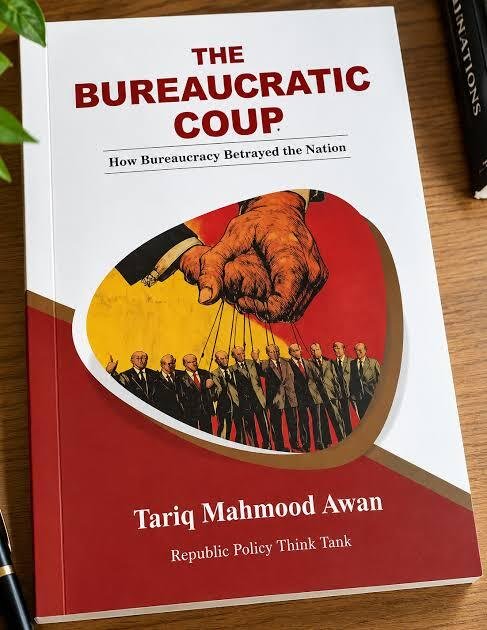
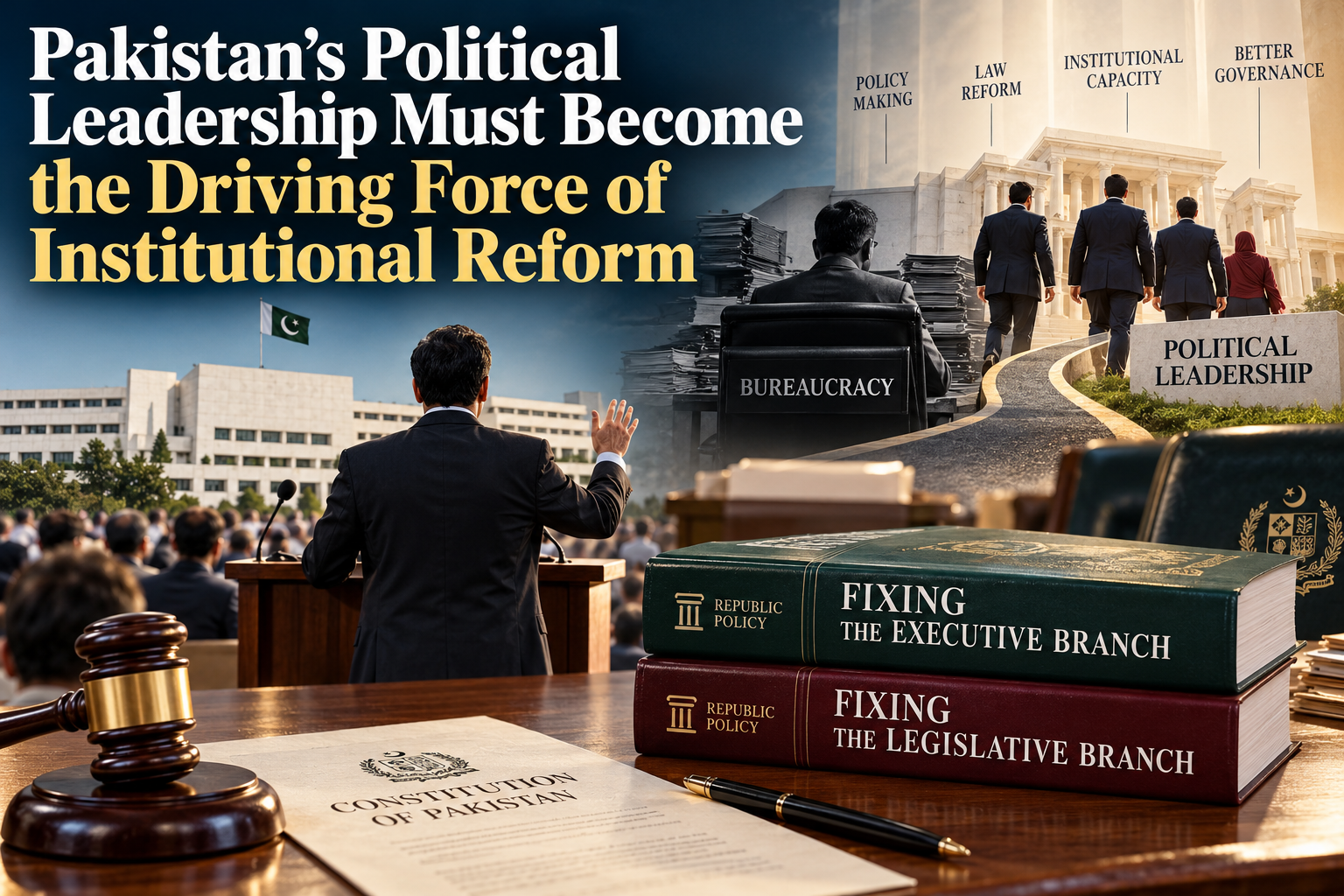
Research into the history of Pakistan’s civil services suggests that the events surrounding the creation of the CSP, its relationship with provincial administrations and its eventual replacement in 1973 deserve a comprehensive historical and legal audit. The research presented in Fixing the Executive Branch of Government in Pakistan and The Bureaucratic Coup examines this institutional history and raises questions about the use of administrative mechanisms to consolidate bureaucratic authority. The author characterises the wider history as a form of white-collar crime. That is a serious allegation, and it should be tested against documentary evidence, legal records and the decisions of the relevant authorities rather than treated as an established legal finding.
Republic Policy believes that Pakistan needs an evidence-based reassessment of its civil service architecture. The federal and provincial governments should commission an independent review of the 1954 Composition and Cadre Rules, the legal instruments introduced in 1973, the subsequent evolution of DMG and APUG, and the legal foundations of the present Pakistan Administrative Service. The review should establish which provisions remain operative, which were superseded, and whether any existing arrangements lack adequate statutory or constitutional authority.
The findings should be made public. Where inconsistencies or legal deficiencies are identified, the government should introduce corrective legislation and clarify the relationship between federal and provincial services. Parliament and the provincial assemblies must have a meaningful role in determining the institutional arrangements that govern public administration.
Pakistan cannot build a professional, accountable and constitutionally balanced civil service on inherited assumptions. The continued use of the term “CSP officer” may appear to be a minor matter of language, but the questions behind it concern the evolution of state power, the rule of law and the relationship between bureaucracy and democracy.
A service may be abolished by reform, but its institutional legacy can survive for generations. Pakistan must establish whether that legacy rests on law, legitimate continuity or administrative convention.
Slideshow
Slide 1 — The CSP Question
Why does the term “CSP officer” remain in use decades after the Civil Service of Pakistan was abolished?
Slide 2 — The 1954 Foundation
The Composition and Cadre Rules created the CSP. Their legal and constitutional foundations deserve renewed scrutiny.
Slide 3 — A Turning Point in 1973
Bhutto’s reforms abolished the old service and reorganised the civil administration into occupational groups.
Slide 4 — What Survived?
The continued use of CSP terminology raises questions about institutional identity and legal continuity.
Slide 5 — From DMG to PAS
The evolution of the District Management Group into the Pakistan Administrative Service demands a clear account of its legal foundations.
Slide 6 — Beyond Administrative Convention
Longstanding rules and practices must be tested against constitutional authority and subsequent legislation.
Slide 7 — A Case for Institutional Audit
Pakistan needs an independent review of the 1954 rules, the 1973 reforms and the legal structure of its present civil services.
Get our Books: 0341-4222501