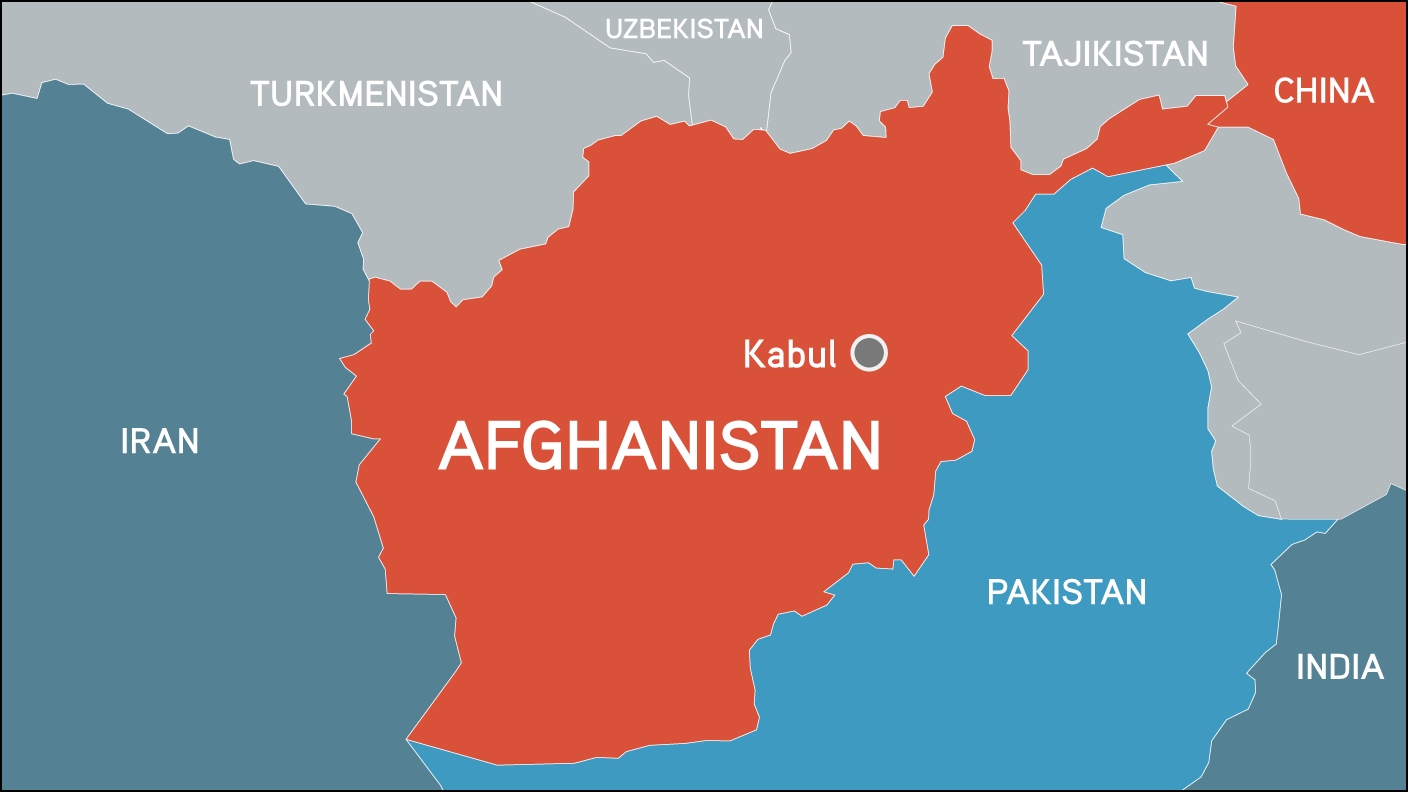

Air quality reaches hazardous levels across Punjab as satellite data reveal extensive agricultural fires. An independent assessment suggests that weather, rather than policy measures alone, accounted for much of Lahore’s reported improvement in October.
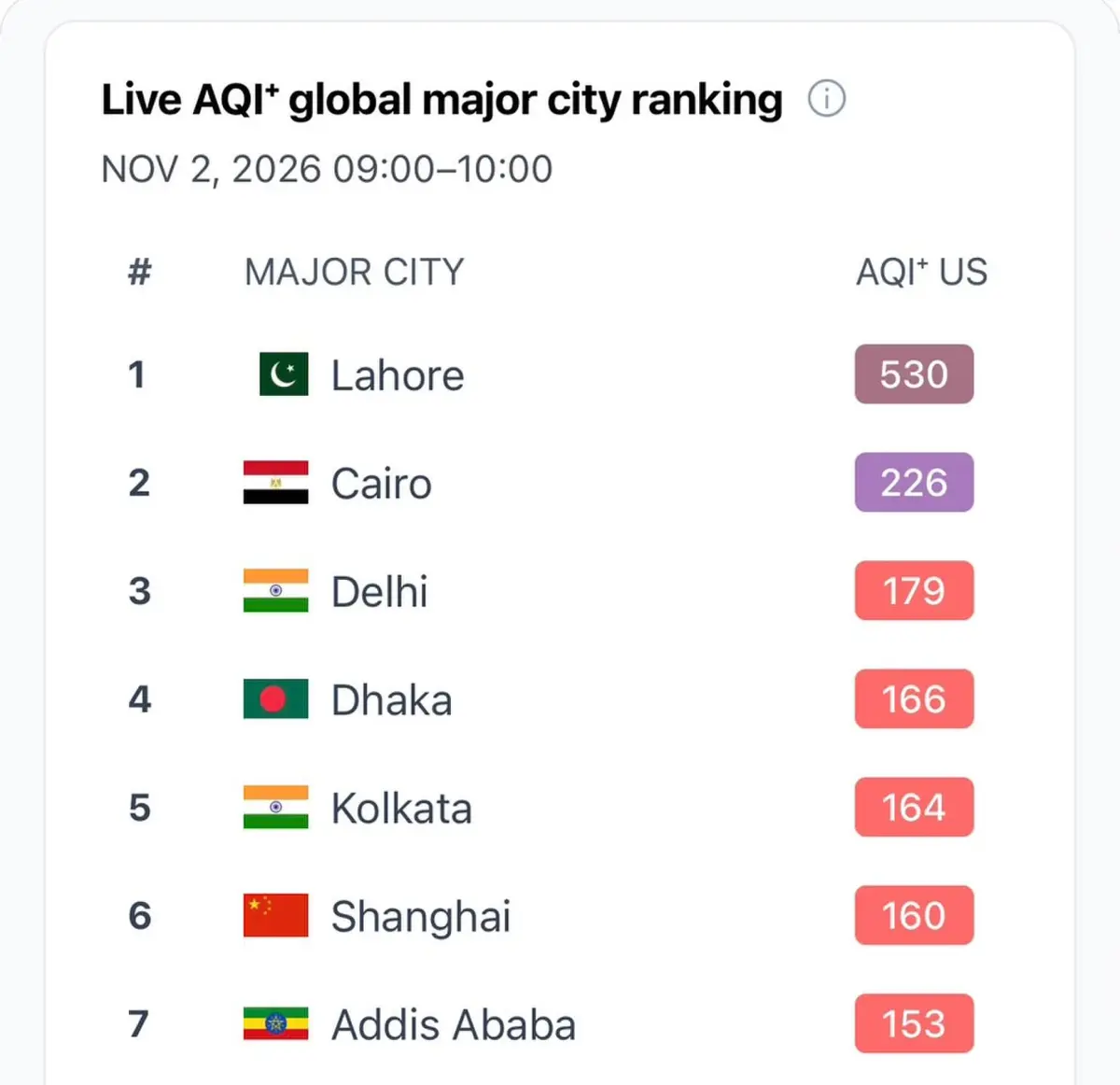
LAHORE — Lahore’s air pollution reached hazardous levels on Monday, with the Air Quality Index (AQI) crossing 530 and concentrations of fine particulate matter (PM2.5) rising to 343 micrograms per cubic metre, according to air quality monitoring platform IQAir. The deterioration extended beyond the provincial capital, with several other Punjab cities also recording exceptionally high pollution levels.
At 8am, IQAir recorded an AQI of 535 in Lahore, placing the city in the hazardous category. PM2.5 concentrations stood at 343µg/m³. These microscopic particles are particularly dangerous because they can penetrate deep into the lungs and enter the bloodstream.
The crisis was not confined to Lahore. IQAir’s live ranking of Pakistani cities placed five Punjab cities among the country’s six most polluted urban centres on Monday morning. Gujranwala recorded an AQI of 606, followed by Lahore at 509, Faisalabad and Multan at 310 each, and Sialkot at 260. Peshawar ranked sixth, with an AQI of 216.
Subsequent hourly updates recorded Gujranwala at 675 and Lahore at 535, illustrating the rapid fluctuations in pollution levels across the region.
Agricultural Burning Adds to Punjab’s Pollution Burden
The deterioration coincides with a sharp increase in agricultural fire detections across Punjab. An analysis published by environmental monitoring platform HamariHawa, based on NASA satellite observations, identified 13,241 fire spots in Pakistani Punjab between October 1 and 29, compared with 3,158 in Indian Punjab — approximately 4.2 times as many.
Around 92 per cent of the detected fires in Pakistani Punjab were located on agricultural land and were likely associated with crop-residue burning.
The scale and concentration of these incidents are particularly significant. Some 6,655 fire spots — approximately half the monthly total — were detected during the final seven days of October. October 29 recorded the highest number, with 1,327 detections.
Okara accounted for the largest number of fire spots, at 2,144, followed by Gujranwala with 1,011 and Nankana Sahib with 1,003.
These findings point to extensive agricultural burning across the rice-growing belt surrounding Lahore. Smoke from crop-residue fires combines with emissions from transport, industry and other sources, adding to the region’s overall pollution burden. Weak winds and atmospheric inversions can further restrict the dispersion of pollutants, allowing hazardous concentrations to accumulate close to the ground.
The pattern highlights an important dimension of Punjab’s air-quality challenge: pollution is not simply an urban problem. Its sources extend across a wider agricultural and industrial landscape, requiring coordinated action beyond municipal boundaries.
How Much of Lahore’s October Improvement Was Policy-Driven?
The latest deterioration also raises questions about claims that Lahore experienced its cleanest October in five years.
A new analysis by the Pakistan Air Quality Initiative (PAQI) offers a more qualified assessment. According to the initiative, average PM2.5 concentrations across 26 monitoring sites declined by 27 per cent in October 2026 compared with the same month last year.
However, after accounting for meteorological conditions, the estimated improvement fell to just four per cent.
PAQI attributed a substantial part of the decline to weather conditions, particularly a deeper nighttime atmospheric mixing layer that allowed pollutants greater space to disperse. The remaining improvement reflected the combined effects of government measures, changes in agricultural burning and other pollution sources. The analysis, however, could not establish the individual contribution of each factor.
More importantly, the decline did not mean that air quality had reached safe levels. PAQI reported that PM2.5 concentrations exceeded Pakistan’s prescribed daily limit on every day of October.
The initiative’s forecast, issued on November 1, projected PM2.5 concentrations to rise to 149µg/m³ by Wednesday, November 4 — approximately 49 per cent above October’s average.
Punjab Senior Minister Marriyum Aurangzeb had shared data with Dawn in October showing that Lahore’s average US AQI (PM2.5) stood at 180.5 in October 2026, compared with 204.6 in 2025, 213 in 2024 and approximately 193–195 in 2022 and 2023. Her data indicated that October 2026 was the only year among the five in which the city did not record an AQI above 300, with the highest reading reaching 262 on October 31.
PAQI’s assessment does not negate the reported decline. It does, however, underline the importance of distinguishing between improvements resulting from public policy and those arising from favourable environmental conditions.
From Emergency Responses to Institutional Capacity
The latest readings expose a fundamental challenge in environmental governance: a temporary improvement in air quality is not the same as a sustained reduction in pollution.
When meteorological conditions improve, pollution concentrations may fall without a corresponding structural reduction in emissions. Conversely, unfavourable weather can quickly reverse apparent progress. This makes it essential to evaluate environmental policy through long-term emissions data, consistent monitoring and independently assessed outcomes rather than isolated AQI readings.
Punjab’s pollution challenge also demands coordination across sectors. Agricultural burning, industrial emissions, transport pollution and urban expansion cannot be addressed through disconnected administrative interventions. Satellite monitoring can identify fire hotspots, but detection must be followed by timely enforcement, workable alternatives for farmers, industrial compliance and effective transport policies.
Equally important is the capacity of public institutions to convert environmental data into preventive action. Monitoring systems must be reliable, enforcement agencies must have clearly defined responsibilities, and policy outcomes must be publicly evaluated.
The central issue, therefore, is not merely how polluted Lahore becomes during a particular week. It is whether the institutions responsible for environmental protection can consistently reduce the sources of pollution, respond to regional risks and demonstrate measurable results.
With November bringing another deterioration in air quality, the latest readings and satellite fire detections serve as a reminder that Punjab’s smog crisis cannot be resolved through seasonal campaigns alone. It requires sustained institutional coordination, credible enforcement and a long-term strategy that treats clean air as a matter of public health and effective governance.
Republic Policy | Governance. Institutions. Public Policy.
Source: Based on reporting and data cited in Dawn, IQAir, HamariHawa, NASA satellite observations and the Pakistan Air Quality Initiative (PAQI).