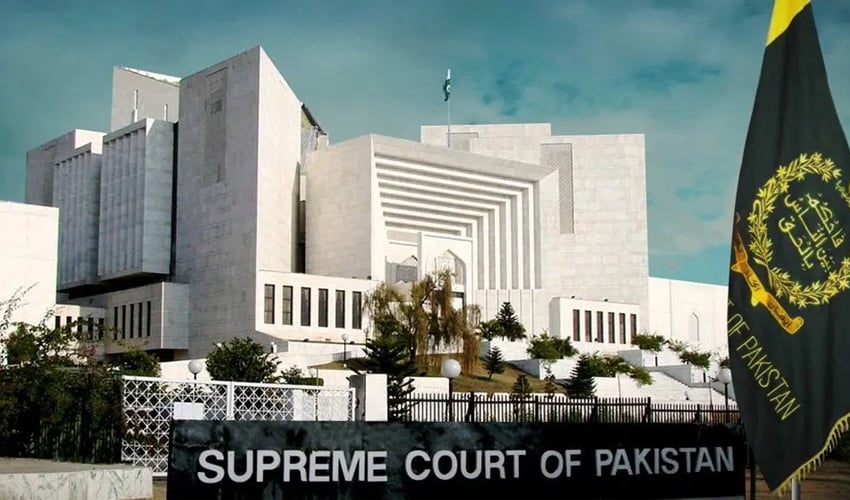

ISLAMABAD: The Supreme Court has ruled that serious misconduct by a civil servant in his private life, including violence against his wife, can constitute service misconduct even when the act takes place outside office hours and has no direct connection with official duties.
Dismissing a petition filed by an Intelligence Bureau (IB) employee, the apex court held that acquittal in a criminal case does not automatically invalidate departmental proceedings where misconduct has been independently established through evidence.
The case concerned Jawad Abbasi, who served as a cook in the IB and was accused of setting his wife on fire. He challenged the Federal Service Tribunal’s decision upholding the departmental penalty of compulsory retirement.
In a judgment authored by Justice Shahid Waheed, with Justice Ayesha A. Malik as a member of the bench, the court observed that the dignity of women is a fundamental constitutional value. It held that a civil servant’s conduct within the home may also bear upon his suitability for public office and the reputation of the institution he serves.
The court rejected the notion that violence becomes a private matter merely because it occurs within the home. It observed that under the Civil Servants (Efficiency and Discipline) Rules, 2020, conduct unbecoming of a civil servant or prejudicial to service discipline may amount to misconduct even when committed outside the workplace.
The judgment also clarified the distinction between the evidentiary requirements of criminal trials and departmental proceedings. An FIR, by itself, cannot establish misconduct or justify a departmental penalty. However, where an independent inquiry produces evidence supporting the charges and the employee is afforded a fair opportunity to defend himself, departmental action may proceed irrespective of the outcome of a criminal case.
In this case, the inquiry officer examined 13 witnesses in the employee’s presence and allowed him to cross-examine them. The departmental proceedings, the court observed, independently established the charges, including the allegation of violence against his wife and an attempt to portray the incident as her suicide.
The court explained that criminal and departmental proceedings serve different purposes and operate under different standards of proof. An acquittal means that criminal guilt has not been established beyond reasonable doubt; it does not necessarily determine whether the conduct alleged has been established under the applicable service rules.
The judgment further noted that the employee had been given an opportunity to present his defence. Considering the nature and gravity of the misconduct established through the inquiry, the court found the penalty of compulsory retirement proportionate.
Finding no legal error, violation of due process or substantial question of law of public importance, the Supreme Court refused leave to appeal and dismissed the petition.
The ruling underscores that the standards governing public service conduct are not confined to behaviour within government offices. While an FIR or an unproven allegation cannot, on its own, justify disciplinary action, conduct established through a lawful and fair departmental inquiry may carry consequences under the civil service disciplinary framework, even when it occurs in an employee’s private life.
Republic Policy | Governance. Institutions. Public Policy.