
Prime Minister’s Office directs special task force to finalise recommendations on tariff rationalisation; telecom companies cite a 197 per cent rise in electricity costs since 2018 and warn that expensive power threatens investment in 5G, fibre connectivity and AI-ready data centres.
ISLAMABAD: The federal government has taken a step towards extending industrial electricity tariffs to Pakistan’s telecommunications sector, with the Prime Minister’s Office (PMO) directing a special task force to finalise recommendations on the proposed framework, including its financial implications and a mechanism for absorbing the difference between existing commercial and industrial power rates.
The development follows a joint appeal by the chief executives of Jazz, CMPak (Zong), PTMIL (Ufone and Telenor) and Pakistan Telecommunication Company Limited (PTCL), seeking government intervention to provide industrial electricity tariff treatment to licensed telecommunications infrastructure.
In its direction, the PMO asked the task force to consult the Power Division and Finance Division and prepare comprehensive recommendations for consideration by the federal government. The exercise is expected to determine how the proposed tariff adjustment can be implemented without creating an unsustainable financial burden elsewhere in the power sector.
The telecom operators argue that the industry has repeatedly been recognised as an industrial sector under government policies and legislation but continues to face commercial electricity rates. They maintain that this inconsistency has increased operating costs and weakened the financial viability of investment in the country’s digital infrastructure.
$2 billion investment at stake
At the centre of the industry’s demand is its proposed investment of approximately $2 billion over the next three years in 5G network deployment and fibre connectivity expansion.
Telecom operators are also investing in AI-ready, Tier-III data centres to support the growing computing, storage and connectivity requirements of Pakistan’s digital economy.
However, the companies argue that rising electricity costs threaten the commercial sustainability of these investments. The expansion of 5G networks, increased data consumption and deployment of artificial intelligence services are expected to raise the electricity requirements of telecommunications infrastructure substantially.
According to the operators, commercial electricity tariffs applicable to telecom sites have increased by approximately 197 per cent since 2018, while fuel costs have risen by around 300 per cent. During the same period, average revenue per user (ARPU) has declined by approximately 22 per cent, while companies have also faced an additional five per cent withholding tax burden.
The industry believes that this combination of higher operating expenses and declining average revenues is making it increasingly difficult to maintain existing networks while financing the next phase of digital expansion.
The companies contend that industrial tariff treatment would provide financial relief and allow them to redirect savings towards 5G deployment, rural connectivity and fibre-to-the-home (FTTH) expansion.
Policy and legal basis for industrial tariff treatment
The telecom operators have based their demand on existing government policies and legislative provisions that, according to the industry, recognise telecommunications as an industrial undertaking.
They have cited the Mobile Cellular Policy, 2004, and a notification issued by the Ministry of Industries and Production on April 20, 2004, which classified telecommunications as an industry.
The companies have also referred to the Finance Act, 2021, through which Section 2(29C) of the Income Tax Ordinance was amended to expressly include PTA-licensed telecommunications operators within the definition of an industrial undertaking for taxation purposes.
Another argument concerns a regulatory precedent established by the National Electric Power Regulatory Authority (NEPRA). On November 9, 2018, the regulator extended industrial electricity tariffs to dairy and poultry farms. The telecom companies argue that their infrastructure deserves comparable treatment, given its significance to economic activity, national connectivity and technological development.
They have further referred to a policy directive issued by the Ministry of Information Technology and Telecommunication on January 6, 2026, in connection with the International Mobile Telecommunications (IMT) spectrum auction. Under the directive, a joint task force was mandated to examine industrial electricity tariffs for the telecom sector, alongside smart-grid solutions and dedicated power feeders to address prolonged electricity outages.
Task force examines tariff reform and power reliability
A task force headed by the Secretary of the Ministry of Information Technology and Telecommunication was constituted on June 29, 2026, to examine the proposed industrial tariff arrangement and related energy infrastructure requirements.
Its membership includes the Chairman of the Pakistan Telecommunication Authority (PTA), representatives of the Power Division and NEPRA, telecommunications operators, distribution companies (DISCOs) and Member Telecom of the Ministry of IT and Telecommunication.
The task force held its first meeting on August 4, 2026, under the chairmanship of the Special Secretary of the ministry, with participation from relevant government departments, DISCOs and industry representatives.
The latest direction from the Prime Minister’s Office seeks to move the process towards a concrete policy recommendation, particularly by requiring an assessment of the financial implications and a mechanism for managing the tariff differential.
The decision is significant because any reduction in electricity rates for telecom infrastructure will have implications for the existing power tariff structure and the financial position of distribution companies. The government will therefore need to determine how the proposed concession can be accommodated without shifting disproportionate costs onto other electricity consumers.
Industry proposes safeguards against misuse
To address possible concerns about the misuse of industrial tariff concessions, the telecom companies have proposed a restricted eligibility framework under the certification of PTA.
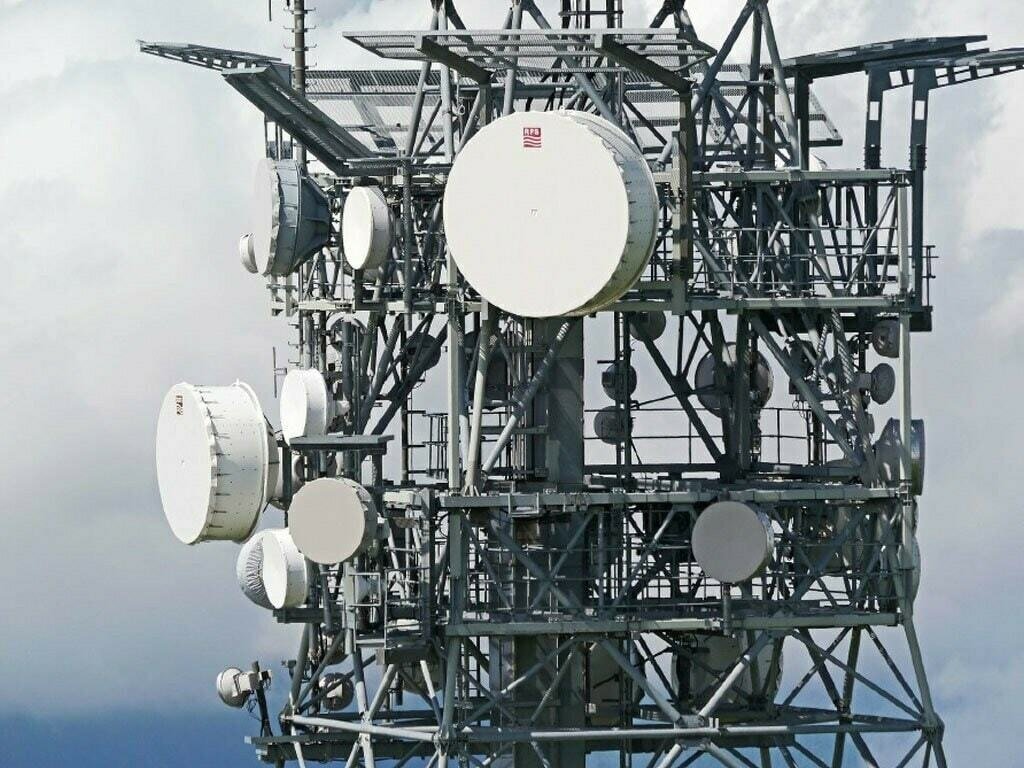
The proposed arrangement would cover essential telecommunications infrastructure, including cellular towers, base transceiver stations (BTS), core hub sites, mobile switching centres, exchanges, AI and cloud data centres, FTTH nodes and network operating centres.
Corporate administrative offices, customer service centres, franchises and retail outlets would remain outside the proposed concession.
The operators have also pledged that savings generated through tariff rationalisation would be reinvested directly into 5G expansion, rural connectivity and fibre network development.
The companies have proposed two possible routes for implementation. The federal government could issue a policy directive extending industrial electricity tariffs to eligible telecommunications infrastructure. Alternatively, if the existing regulatory framework requires a separate classification, a dedicated consumer category titled ‘Digital/Telecom Infrastructure’ could be introduced with industrial electricity rates.
They have also requested that electricity distribution companies be directed to implement the revised category within a clearly defined timeframe.
Grid utilisation and the solar shift
The telecom industry’s proposal also presents a potential benefit for electricity distribution companies.
Operators argue that high commercial electricity rates have encouraged telecom infrastructure providers to increasingly rely on solar energy and other off-grid arrangements to control operating expenses. They estimate that tariff rationalisation could reduce the growth of off-grid solar operations from 15 per cent to between five and seven per cent, while increasing grid utilisation by an estimated 15 to 20 per cent.
According to industry projections, higher electricity consumption from the national grid could help offset potential revenue losses for DISCOs within two to three years through increased sales and better utilisation of existing capacity.
These figures, however, are industry estimates and have not been independently verified. Their accuracy and the likely impact on distribution companies will need to be assessed by the government and relevant regulators before any policy decision is made.
A test for Pakistan’s digital economy
The proposed tariff reform comes at a critical stage in Pakistan’s digital transformation. The expansion of 5G, artificial intelligence, cloud computing and fibre connectivity requires not only technological investment but also reliable and competitively priced electricity.
The government’s decision to seek recommendations from the task force indicates that the issue has moved beyond an industry demand towards formal policy consideration. However, the final outcome will depend on whether the proposed concessions can be reconciled with the financial realities of the power sector.
The challenge is to develop a transparent tariff framework that supports essential digital infrastructure without creating unjustified privileges or additional costs for other consumers. If approved with clear eligibility criteria, regulatory oversight and enforceable reinvestment commitments, the arrangement could strengthen the investment environment for telecommunications and accelerate Pakistan’s digital infrastructure development.
For now, telecom operators are awaiting a final government decision that could determine the cost structure of their next phase of investment and the pace at which Pakistan advances towards a more connected, technology-driven economy.