
At a major investment forum attended by delegations from 60 countries, Pakistan has promised predictable policies, institutional support and security to international mining companies. But attracting capital will be only the beginning. The real challenge is to build a transparent regulatory system, develop domestic processing industries, distribute economic benefits fairly and turn mineral discoveries into lasting national prosperity.
ISLAMABAD: Pakistan is making an ambitious attempt to reposition its mineral resources as a foundation for economic transformation, presenting its deposits of copper, gold, iron ore, coal, salt, gemstones and other critical minerals to an international audience of investors, mining companies and financial institutions.
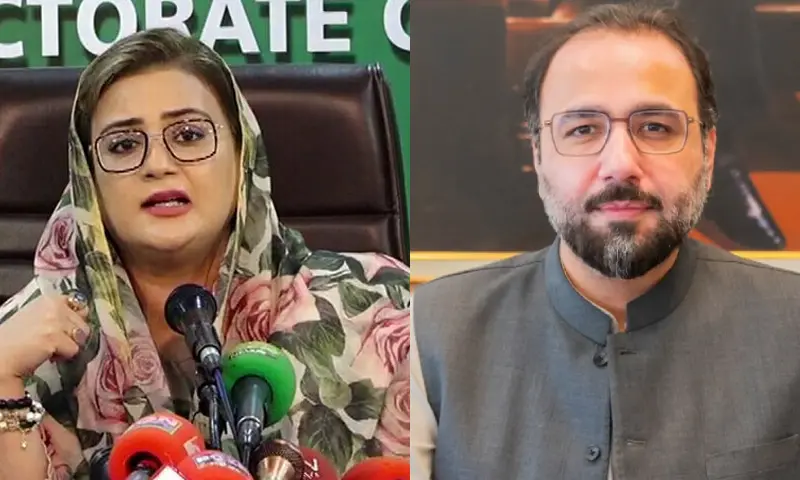
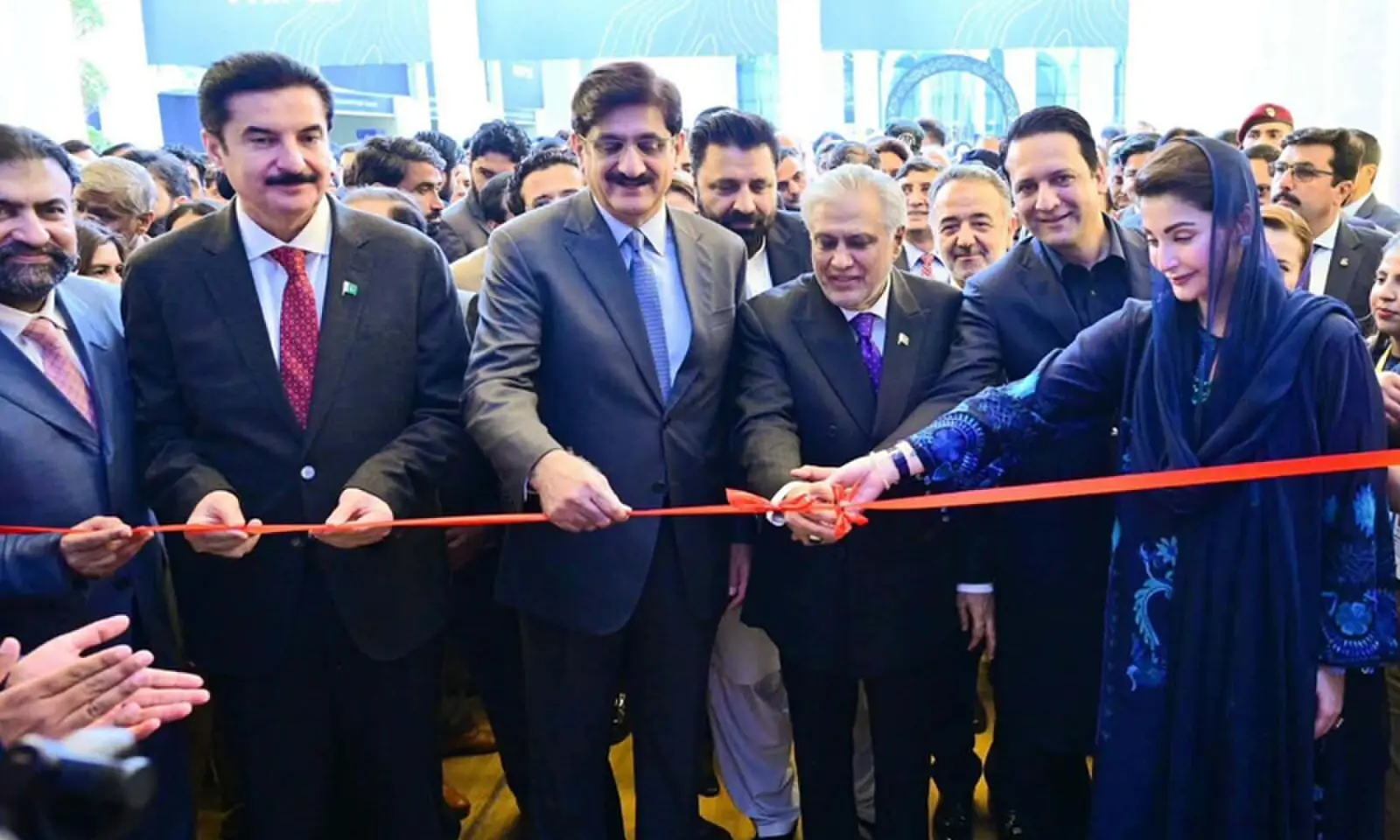
At the Pakistan Minerals Investment Forum 2026 (PMIF26), which opened in Islamabad on Thursday, Deputy Prime Minister and Foreign Minister Ishaq Dar and Finance Minister Muhammad Aurangzeb sought to persuade international investors that Pakistan was ready to move beyond the longstanding promise of its geological wealth and establish itself as a competitive destination for mineral exploration and development.
The scale of the gathering reflected the government’s ambition. According to the state-run Oil and Gas Development Company Limited (OGDCL), which organised the event, the opening day attracted delegations from 60 countries, 122 exhibitors and more than 5,000 participants, including diplomats, international financial institutions and representatives of the global mining industry.
Leaders from all four provinces, Azad Jammu and Kashmir and Gilgit-Baltistan also presented their mineral resources and investment opportunities, turning the forum into a national showcase of Pakistan’s geological potential.
Yet behind the investment announcements and political assurances lies a much larger economic question: can Pakistan transform its mineral wealth into productive capacity, export competitiveness and broad-based prosperity, or will its resources remain another unrealised promise of the national economy?
The answer will depend less on the size of the country’s mineral deposits than on the quality of its institutions, the consistency of its policies and its ability to develop industries around the resources it extracts.
The investment proposition: Policy certainty and institutional credibility
Inaugurating the forum and its international exhibition, Ishaq Dar reaffirmed the government’s commitment to establishing a predictable and investor-friendly environment for the mining sector. He described mineral development as a strategic national priority, arguing that the sector could diversify exports, strengthen the industrial base and mobilise domestic and foreign investment.
“Our ambition is clear: to develop Pakistan’s mineral resources responsibly, strengthen our industrial base, diversify our exports, empower our provinces and communities and establish Pakistan as a competitive and trusted partner in the global minerals economy,” Dar said.
His message addressed a fundamental concern confronting international investors: geological potential alone does not make a country an attractive mining destination. Mining projects require substantial upfront capital, long development periods, reliable infrastructure, predictable taxation, enforceable contracts and confidence that regulatory conditions will not change arbitrarily.
Pakistan’s ability to offer these assurances will ultimately determine whether international interest translates into actual investment.
The government has identified the Tethyan Metallogenic Belt, which contains significant copper and gold potential, as one of the country’s major geological assets. It has also highlighted deposits of iron ore, chromite, lead, zinc, coal, rock salt, marble, gypsum and gemstones.
The Reko Diq copper-gold project in Balochistan was presented as an important example of international collaboration, national participation and provincial ownership. The project has become central to Pakistan’s efforts to demonstrate that large-scale mineral development can attract international expertise while involving domestic institutions and provincial stakeholders.
The global economic environment offers an additional opportunity. Demand for minerals used in renewable energy technologies, electric vehicles, battery storage, advanced manufacturing and digital infrastructure is reshaping international supply chains. Countries possessing significant reserves of these materials are increasingly important to the industrial strategies of major economies.
For Pakistan, the opportunity is considerable. But participating in this emerging minerals economy will require more than announcing deposits and inviting companies to invest. It will require the capacity to explore, extract, process and market resources according to international standards.
From mineral extraction to industrial transformation
Finance Minister Muhammad Aurangzeb placed the mining sector within the broader framework of Pakistan’s economic stabilisation and structural reform agenda.
In his keynote address, he cited improvements in the country’s fiscal and external position, including a fiscal deficit at a 22-year low, three consecutive years of primary surpluses and foreign exchange reserves of approximately $21.5 billion, equivalent to more than three months of import cover.
He also referred to recent credit rating improvements and Pakistan’s renewed access to international capital markets as indicators of improving investor confidence.
However, Aurangzeb acknowledged that macroeconomic stability alone would not guarantee sustainable growth. Maintaining the gains, he argued, required structural reforms and a decisive shift from consumption-led expansion towards an export-oriented economy.
Mining, in this context, could become an important source of foreign exchange, investment and industrial development.
The distinction is significant. A country that merely extracts and exports raw minerals captures only a limited portion of the potential economic value of its resources. A country that develops processing facilities, engineering capabilities, manufacturing industries and specialised services around those resources can generate substantially broader economic benefits.
Pakistan must therefore approach mining as an industrial policy rather than simply an extractive activity.
Copper extraction, for example, can support the development of downstream industries associated with electrical equipment, cables, construction materials and industrial manufacturing. Iron ore can contribute to domestic steel production, while mineral processing can create opportunities in chemicals, engineering and specialised manufacturing.
This approach would also create employment beyond the mining sites themselves, expanding opportunities for skilled workers, engineers, technicians, logistics providers and domestic suppliers.
Aurangzeb emphasised that the government had facilities for profit and dividend repatriation and that stronger domestic investment would be essential to attracting foreign capital. The underlying challenge, however, is to ensure that the investment environment remains credible over the entire life cycle of mining projects.
Investors need confidence not only when they enter a market but also when they expand operations, transfer technology, repatriate legitimate earnings and negotiate regulatory obligations.
Provinces at the centre of the mineral economy
One of the most important features of PMIF26 was the participation of provincial leadership. The mineral resources being presented to international investors are distributed across different regions, making federal-provincial coordination indispensable to the development of the sector.
At a session titled Provincial Prospectivity to Prosperity, political leaders outlined their respective resource bases and offered incentives to prospective investors.
Punjab Chief Minister Maryam Nawaz invited investors to explore the province’s mineral potential, announcing interest-free financing arrangements, concessional land leases and one-window facilities. She said revenue generated by the provincial Mines and Minerals Department had increased from Rs10 billion to Rs40 billion in just over two years.
Among the resources highlighted were emeralds, marble, granite, gold, gemstones, copper, pink salt and iron ore. She announced financing of up to Rs5 billion, with the provincial government bearing the interest cost, alongside incentives for eligible investors in designated industrial estates.
Maryam Nawaz also referred to placer gold deposits identified in Punjab’s rivers, where surveys are under way to establish their quantities. She highlighted Chiniot’s estimated 261.5 million tonnes of iron ore, describing its potential contribution to domestic steel production.
Sindh Chief Minister Murad Ali Shah said the province had identified 27 minerals and was pursuing scientific exploration, responsible mining and value addition. He described Thar coal as a major provincial asset and highlighted public-private partnerships and cooperation with Chinese companies.
Sindh also presented its regulatory framework, open auction process for mineral concessions and Business One Stop Shop portal as mechanisms for improving investor access and administrative facilitation.
Balochistan Chief Minister Sarfraz Bugti invited investors to participate in developing the province’s mineral and energy resources, assuring them of a secure operating environment. The province’s importance is particularly pronounced because of its copper and gold deposits and the strategic significance of Reko Diq.
Khyber Pakhtunkhwa Governor Faisal Karim Kundi similarly invited domestic and international companies, promising security and one-window facilitation.
Azad Jammu and Kashmir Prime Minister Iftikhar Ali Gillani highlighted untapped resources including ruby, tourmaline, topaz, granite, coal and bauxite. He invited companies with expertise in high-altitude mining and said the region was aligning its mining legislation with the broader regulatory framework being developed across Pakistan.
Gilgit-Baltistan Chief Minister Amjad Hussain also presented opportunities involving precious minerals, metals, dimension stones and placer gold. He acknowledged, however, that poor connectivity and energy shortages remained serious obstacles to investment.
These presentations demonstrate the geographical breadth of Pakistan’s mineral potential. They also expose the governance challenge: different jurisdictions must develop compatible rules, transparent licensing procedures and coordinated infrastructure policies if the country is to offer investors a coherent national investment environment.
The institutional foundations of investor confidence
The government also announced institutional initiatives intended to improve the quality and accessibility of geological information.
Petroleum Secretary Hamed Yaqoob Sheikh highlighted the launch of the National Mineral Data Centre, Geological Survey of Pakistan Geoportal and Agreement Exchange. These initiatives are expected to strengthen institutional capacity, improve access to geological information and facilitate cooperation among public authorities and investors.
Their importance should not be underestimated. Reliable geological data reduces uncertainty during exploration and helps investors assess the commercial viability of deposits before committing substantial capital.
The forum’s technical sessions consequently focused on financing early-stage exploration, developing new mining projects and strengthening geological survey cooperation. Representatives of the Asian Development Bank, International Resources Holding, Globacore Minerals and M. Klein and Company participated in discussions on exploration financing.
Separate sessions involving the Geological Survey of Pakistan and geological institutions from Germany, Türkiye and China explored data sharing, technical cooperation and ways to reduce exploration risks.
The international exhibition brought together major companies, including Barrick Mining Corporation, China Molybdenum, Komatsu, Siemens, ABB, Metso, Weir, Xinhai, Mari Energies and Pakistan Petroleum Limited, among others.
However, institutional announcements will matter only if they translate into practical improvements. Geological information must be credible and accessible, mining agreements must be transparent, and licensing decisions must follow predictable procedures. A digital portal cannot compensate for weak enforcement, overlapping jurisdictions or discretionary administration.
The questions investors and citizens will ask
Pakistan’s mineral ambitions cannot be assessed exclusively through the volume of investment it attracts. The quality and distribution of the resulting economic benefits will be equally important.
Mining projects have long development cycles and substantial environmental and social implications. They require land, water, energy, transport infrastructure and the participation of local communities. Without credible environmental safeguards and meaningful consultation, even commercially viable projects can encounter resistance and prolonged disputes.
The country’s mineral strategy must therefore establish clear standards for environmental protection, water management, rehabilitation of mining sites and community participation. Local populations should not merely bear the costs of extraction; they must share in its economic benefits through employment, skills development, infrastructure and public revenues.
Provincial ownership must also be accompanied by institutional accountability. Resource-rich regions need transparent mechanisms for distributing royalties, monitoring agreements and ensuring that revenues contribute to local development.
Equally important is the development of domestic technical capacity. Pakistan cannot build a competitive mining industry indefinitely dependent on imported expertise, machinery and specialised services. International partnerships should facilitate technology transfer, professional training and the emergence of domestic suppliers capable of participating across the mineral value chain.
The government must also ensure that the proposed investor-friendly environment does not become a framework of discretionary concessions. Tax incentives, land arrangements and special facilities should be governed by transparent eligibility criteria, measurable investment commitments and enforceable public-interest obligations.
From potential to prosperity
The Pakistan Minerals Investment Forum has provided an important platform for presenting the country’s geological resources to the international investment community. The participation of delegations from 60 countries, more than 5,000 attendees and 122 exhibitors demonstrates the level of international engagement surrounding Pakistan’s mineral sector.
But the success of the forum will not be measured by attendance figures, speeches or investment pledges. It will be measured by exploration activity, commercially viable projects, capital actually deployed, exports generated, domestic industries established and jobs created.
Pakistan has spent decades discussing the promise of its mineral wealth. The next phase must be defined by the capacity to govern that wealth effectively.
The country needs a coherent national minerals policy, professionally managed regulatory institutions, transparent agreements, reliable infrastructure and a stable relationship between federal and provincial governments. It must also move decisively towards domestic processing and industrial value addition rather than treating mineral extraction as an end in itself.
Above all, mineral development must serve a larger national economic purpose. It should strengthen exports, expand productive capacity, create opportunities for local communities and reduce the economy’s vulnerability to recurring external financing pressures.
Pakistan’s geological resources offer an opportunity, not an automatic guarantee of prosperity. Whether that opportunity becomes a foundation for economic transformation will depend on the institutions built around it.
The real measure of success will not be how much mineral wealth Pakistan can display to the world, but how much lasting economic value it can create from it.