
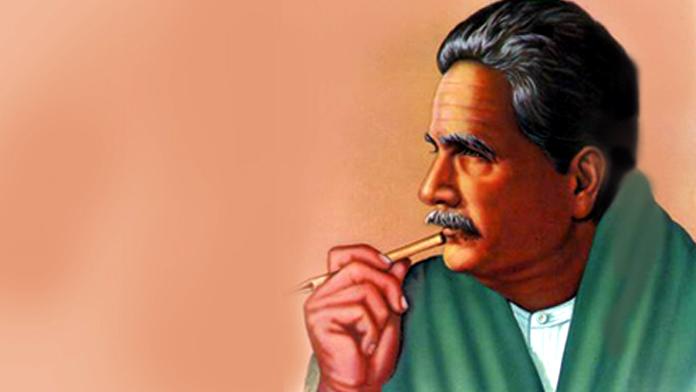

LAHORE, November 9, 2026: A dignified Change of Guards ceremony was held at the mausoleum of Dr Allama Muhammad Iqbal in Lahore on Monday, as Pakistan marked the 149th birth anniversary of its national poet and philosopher. A contingent of the Pakistan Navy formally assumed honorary guard duties from Pakistan Rangers Punjab, renewing a national tribute to one of the most influential intellectual figures in the country’s history.
The ceremony brought together a longstanding military tradition and the remembrance of a thinker whose poetry, philosophy and political ideas helped shape the intellectual foundations of the Pakistan Movement. The naval contingent took over responsibility for guarding the mausoleum for the day, marking the ceremonial transfer from the outgoing Rangers personnel.
Pakistan Navy Station Commander Lahore, Commodore Misbah-ul-Amin, attended the event as the chief guest. He was accorded a guard of honour on the occasion.
The ceremony was held at Mazar-e-Iqbal, situated in Hazuri Bagh near the historic Badshahi Mosque in Lahore. The mausoleum is among the country’s most significant national memorials and remains a place of public homage to the poet whose ideas continue to occupy an important place in Pakistan’s literary, philosophical and political traditions.
A ceremonial tribute to the national poet
The Change of Guards ceremony is a formal expression of respect for the national poet. The transfer of honorary duties from Pakistan Rangers Punjab to the Pakistan Navy gave the occasion a distinct ceremonial character, with the naval contingent assuming responsibility for the protection and honour guard at the mausoleum.
Such ceremonies are not merely military formalities. They connect national institutions with the country’s historical memory and provide a public occasion to recognise individuals whose contributions helped shape its political and cultural identity. The participation of the Pakistan Navy also reflects the role of the armed forces in national commemorations and the preservation of ceremonial traditions at important national sites.
The chief guest, Commodore Misbah-ul-Amin, represented the Pakistan Navy at the event. His presence underscored the institution’s participation in paying tribute to Allama Iqbal, whose intellectual influence extended well beyond poetry into questions of political identity, self-determination, education and social renewal.
Allama Iqbal: The poet and philosopher behind a national vision
Born in Sialkot on November 9, 1877, Muhammad Iqbal emerged as one of the most prominent Urdu and Persian poets and philosophical thinkers of the twentieth century. He received his early education in Sialkot before continuing his studies in Lahore. He later travelled to Europe, studying at Cambridge and completing doctoral research at the University of Munich. His academic training, engagement with Western philosophy and deep understanding of Islamic intellectual traditions shaped a body of work that addressed the spiritual, political and social challenges of his age.
Iqbal’s contribution cannot be confined to his literary achievements. His poetry explored the relationship between the individual and society, the importance of intellectual independence, the dignity of human beings and the capacity of communities to shape their own future. His concept of Khudi, commonly understood as the development and strengthening of the self, became a central theme in his philosophical thought.
His major works in Urdu and Persian, including Bang-e-Dara, Bal-e-Jibril, Zarb-e-Kalim and Asrar-e-Khudi, continue to be read and discussed across generations. Through poetry, he sought to awaken intellectual curiosity, challenge passivity and encourage a sense of responsibility among individuals and societies.
Iqbal’s political thought also holds a significant place in the history of the subcontinent. In his presidential address to the All-India Muslim League at Allahabad in December 1930, he articulated a vision for a consolidated Muslim political unit in the north-western parts of the subcontinent. His ideas contributed to the intellectual development of the demand for a separate Muslim homeland, although he died in 1938, nine years before Pakistan came into existence in 1947.
A national memorial in the heart of Lahore
Lahore was the city in which Iqbal spent much of his professional and intellectual life. After returning from Europe, he practised law and remained closely associated with the city’s academic and literary circles. He died in Lahore on April 21, 1938, and was buried near the Badshahi Mosque, in the historic Hazuri Bagh.
The mausoleum, built in red sandstone in 1951, stands as a permanent memorial to his contribution. Its location within one of Lahore’s most historically significant settings gives it a distinctive place in the country’s cultural landscape. The monument is protected under Pakistan’s antiquities legislation and is visited by people who come to pay their respects to the poet and philosopher.
The mausoleum is more than a place of burial. It represents the relationship between national memory and public space, preserving the presence of a historical figure whose ideas remain part of Pakistan’s continuing conversation about identity, society and the future of the state.
Iqbal’s relevance beyond commemorative ceremonies
The annual observance of Iqbal’s birth anniversary provides an opportunity to revisit his intellectual legacy. His writings addressed questions that remain relevant to contemporary societies: the relationship between individual freedom and collective responsibility, the importance of education, the dangers of intellectual stagnation and the need for political and social renewal.
For Pakistan, remembering Iqbal also invites reflection on the distance between the aspirations expressed in his work and the challenges facing the country today. His emphasis on self-respect, intellectual independence and purposeful action continues to offer material for debate in educational institutions, literary circles and public life.
His political vision is similarly relevant to discussions about citizenship, constitutional government and the responsibilities of the state. Iqbal’s intellectual legacy is not limited to the historical circumstances in which Pakistan emerged. It also raises broader questions about how a society can build institutions capable of translating its aspirations into public outcomes.
The Change of Guards ceremony at his mausoleum offers a visible expression of national respect. But the lasting value of such commemorations lies in keeping his ideas alive through education, research, public discussion and an engagement with the intellectual questions he raised.
Monday’s ceremony, with the Pakistan Navy assuming honorary guard duties from Pakistan Rangers Punjab, thus marked more than a routine ceremonial transition. It provided another occasion for the country to honour its national poet and revisit the contribution of a thinker whose influence remains woven into Pakistan’s history and cultural identity.
As the naval contingent took up its position at the mausoleum, the ceremony renewed a simple but enduring national tribute: respect for the poet whose words and ideas helped shape the imagination of a country.