
(Himayat Ullah:
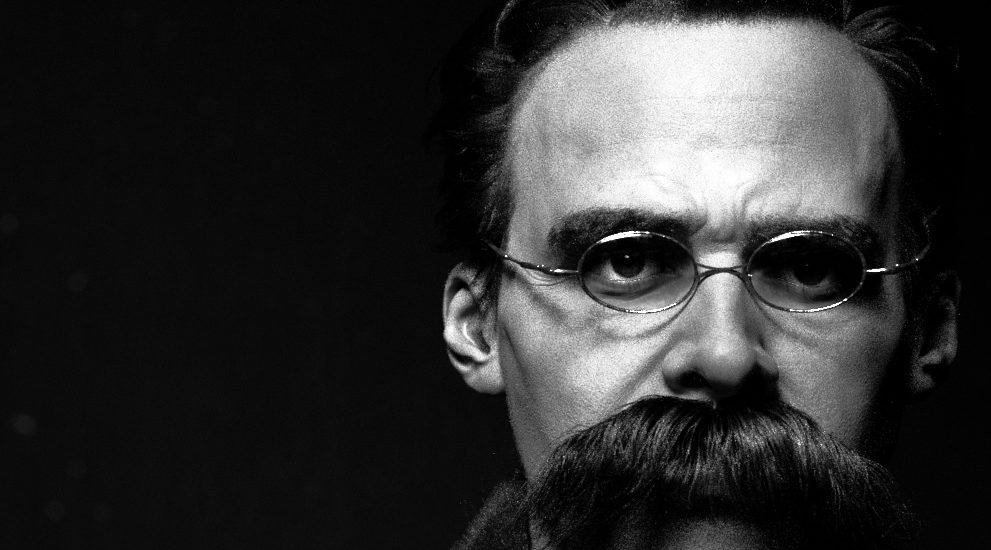
Friedrich Nietzsche, a prominent German philosopher of the late 19th century, stood as a profound intellectual in his time yet faced persistent misinterpretations. Many erroneously associate him with nihilism, distorting his famous declaration “God is dead” out of context. This misrepresentation reached a troubling point when Adolf Hitler and the Nazis claimed Nietzsche as a significant influence.
Nietzsche, however, served as a discerning societal critic, striving to unveil the concealed motives inherent in religion, morality, and philosophy. Regardless of agreement or dissent, his scrutiny of societal constructs yielded valuable insights.
The concept of the death of God encapsulated in Nietzsche’s expression, “The God is deceased,” has been misconstrued by detractors of the Death of God theology. They interpret it literally, suggesting the once-existing Christian deity has now ceased to be. In reality, Nietzsche contended that Christian beliefs became untenable in the post-Enlightenment era, rejecting the notion that individuals historically anchored morality and value in Christianity or God.
Nietzsche’s perspective didn’t advocate for the abrupt eradication of religion; he acknowledged its merits in offering meaning, community, and explanations. However, he foresaw that the absence of God could lead society into nihilism, a belief in nothing and a life devoid of meaning.
With the rise of scientific advancements in the post-Enlightenment era, Nietzsche argued that philosophy, science, art, music, and the humanities could replace religion in providing meaning.
The term “übermensch,” meaning “Superman” or “Overman,” conveyed Nietzsche’s vision of an individual transcending humanity. The Übermensch, according to Nietzsche, creates their own meaning and values independently of external influences, addressing the existential quandary of life’s meaning. Despite being more of a visionary concept than a concrete theory, Nietzsche cited historical figures like Napoleon, Goethe, and Julius Caesar as examples close to the Übermensch.
Nietzsche attributed the absence of the Übermensch to an incomplete human evolution, envisioning it as the ultimate stage in human development.
In “Thus Spoke Zarathustra,” Nietzsche portrayed humans as a tether between the evolutionary beginning embodied by apes and the culmination represented by the Übermensch. This metaphorical rope bridges the two, suspended over an abyss.
Recognizing the Übermensch as a challenging ideal for many, Nietzsche introduced Amor Fati, the love of fate, as an alternative path to finding meaning. Embracing every circumstance, difficult or distressing, becomes a Stoic practice, fostering personal growth and resilience. Amor Fati suggests that obstacles and barriers, much like oxygen in a fire, can serve as fuel propelling individuals toward their fullest potential.
At the core of Nietzsche’s philosophy is the realization that rules, laws, and morals are social constructs. Embracing this understanding empowers individuals to become architects of their destiny, living in alignment with personal values and unlocking their full potential.
“If you cannot live beyond or above the law — a task incumbent upon the philosopher to scrutinize all laws — if you find that challenge too formidable, then you must forge a new law or seek refuge in madness.” — Friedrich Nietzsche.
Adhering to the values Nietzsche espouses — immersing oneself in the humanities, embracing the present moment, and deriving meaning through self-creation — becomes a potential avenue to unearth the Übermensch, Nietzsche’s prescription for purpose.
(Himayat Ullah: The writer is an engineering graduate from UET.)
Please, subscribe to the YouTube channel of republicpolicy.com