
Pareshe Fatima
William Butler Yeats’ poem ‘The Second Coming’ is a chilling masterpiece that vividly describes a world teetering on the brink of collapse. It’s a poem that not only critiques the societal and spiritual decay that Yeats perceived in the aftermath of World War I, but also captivates the reader with its powerful imagery and symbolism, drawing them into its dark and prophetic world.
A World in Disarray:
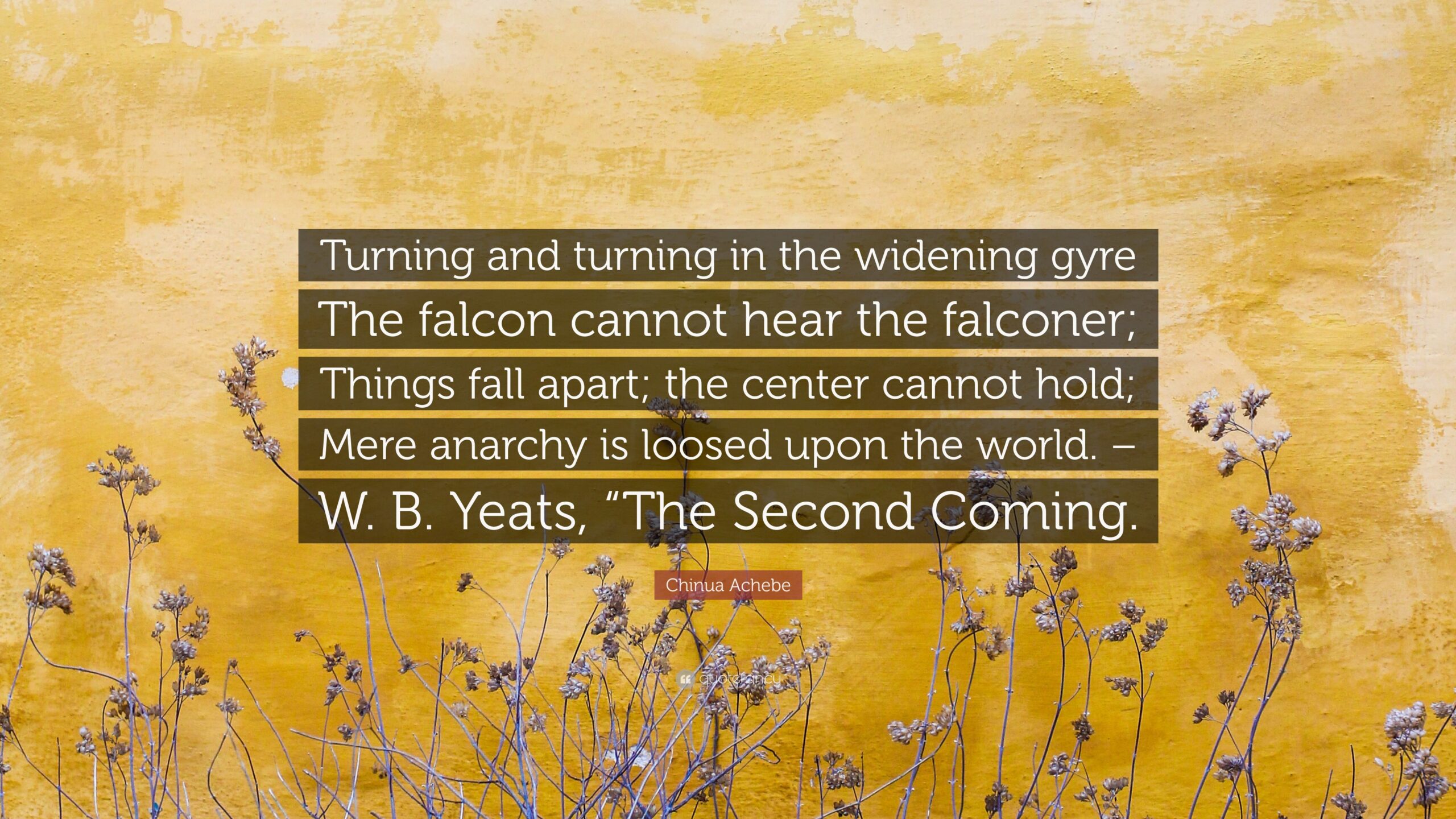
The poem opens with a sense of disorientation and fragmentation. The cyclical movement of the “widening gyre” suggests a loss of stability and control. The falcon, a symbol of order and authority, can no longer hear the falconer, representing a breakdown in communication and leadership. This breakdown leads to a descent into chaos: “Things fall apart; the centre cannot hold.” The once-defined social and moral structures are crumbling, unleashing “mere anarchy” upon the world. This structure, with its repetition and escalating tension, mirrors the poem’s theme of societal disintegration.
Loss of Innocence and Conviction:
The poem further portrays a profound moral decay. “The ceremony of innocence is drowned,” suggesting a loss of traditional values and ethical principles. Civilization, with its rituals and traditions, is no longer able to restrain the darker aspects of human nature. This breakdown in morality is accompanied by a crisis of faith. “The best lack all conviction,” signifying a widespread disillusionment with traditional belief systems. The world is left with a void, a space readily filled by the “passionate intensity” of the worst elements within society. Yeats’ use of vivid and evocative language, such as ‘drowned’ and ‘passionate intensity ‘, heightens the poem’s emotional impact and underscores its themes.
Anticipation of a Cataclysmic Event:
In the face of such despair, Yeats yearns for a transformative event, even if it brings destruction. The title of the poem, ‘The Second Coming’, is a reference to the biblical prophecy of the return of Christ, a momentous event that would herald the end of the world as we know it. Yeats uses this allusion to underscore his anticipation of a similar, potentially apocalyptic, event that will reshape the world order.
The Arrival of the Beast:
The poem’s central image emerges from the “Spiritus Mundi,” a realm of collective unconsciousness. This concept, drawn from Carl Jung’s theories, represents a shared pool of human experiences and archetypes. In the poem, it serves as a source of the monstrous figure, with the body of a lion and the head of a man, that rises from the desert sands. This terrifying beast embodies the unleashed forces of chaos and destruction. Its “blank and pitiless gaze” reflects a complete absence of empathy or remorse.
Symbolism and Interpretation:
The poem’s symbolism is layered and open to interpretation. The desert setting, for instance, can be seen as a barren wasteland devoid of life and hope, a reflection of the post-war world. The ‘indignant desert birds’ might represent the remnants of the old order, protesting the rise of the beast. The ‘twenty centuries of stony sleep’ could be a reference to Christianity, suggesting that the established religion has failed to provide solace or guidance in this time of crisis. These symbols, and their various interpretations, contribute to the poem’s rich and multi-faceted meaning.
The Unborn Threat:
The poem concludes with a chilling ambiguity. The ‘rocking cradle’ suggests the birth of something new, but whether it’s a saviour or a harbinger of further destruction remains shrouded in uncertainty. The final line, ‘What rough beast, its hour come round at last, slouches towards Bethlehem to be born?’ leaves the reader pondering the nature of this new arrival and its potential impact on humanity’s future, inviting them to reflect on the complexities of the world and its future.
Enduring Relevance:
Written in the aftermath of a cataclysmic war, ‘The Second Coming’ resonates with a sense of disillusionment and a yearning for a new order. While its historical context is undeniable, the poem’s themes of societal disintegration, loss of faith, and the rise of extremism strike a chord even in the 21st century. The poem serves as a stark reminder of the consequences of societal decay and the ever-present potential for chaos to erupt from a world on the brink, making it a compelling and relevant piece of literature for our times.
Pl, subscribe to the RP channel.