
Dr Bilawal Kamran
There is something deeply wrong with a healthcare system that harms the very people who come to it for help. In Pakistan, this is not a hypothetical failure. It is a documented, measurable, and continuing reality. Citizens walk into hospitals and clinics seeking relief from illness and walk out carrying a viral infection far more dangerous than the ailment that brought them there. In most cases, they will not know what happened to them until years later, when the damage is already irreversible. This is not the collateral risk of a developing healthcare system struggling under limited resources. It is the direct consequence of a medical culture that has been allowed to operate without accountability for far too long.
The transmission routes for Hepatitis C and Hepatitis B in Pakistan are not mysterious. Reused syringes, unsafe blood transfusions, improperly sterilised instruments: these are practices that medical science condemned decades ago and that responsible healthcare systems eliminated through training, regulation, and enforcement. In Pakistan, they remain alarmingly common. The facilities most likely to engage in them are not obscure rural outposts operating beyond the reach of any oversight. Many are active, functioning clinics in populated areas, patronised daily by patients who have no way of knowing that the equipment being used on them has already passed through another human body. The patients trust the system. The system repays that trust with infection.
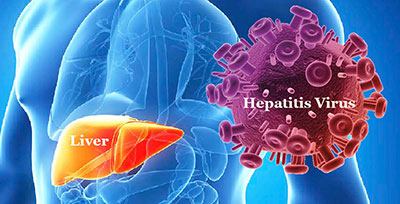
The consequences of this failure are reflected in numbers that should disturb every level of government. Pakistan carries one of the heaviest Hepatitis C burdens in the world, with somewhere between 9.8 and 10 million active cases. When Hepatitis B is included, the combined count of infected individuals rises to between 13.8 and 15 million. These are not estimates drawn from modelling exercises. They represent real people, the majority of whom, somewhere between 70 and 75 per cent, have no idea they are infected. This is perhaps the most dangerous dimension of the crisis. A person unaware of their infection cannot seek treatment, cannot protect those around them, and continues to live with a virus quietly destroying one of the body’s most vital organs.
Hepatitis C is a particularly insidious disease precisely because it refuses to announce itself. The liver, unlike the heart or the lungs, does not signal its distress loudly or immediately. For years, even decades, the virus can replicate and cause progressive damage without producing symptoms that would prompt a visit to a doctor. By the time clinical signs emerge, the liver may already be scarred, approaching failure, or at the threshold of cancer. In a country where routine outpatient care remains financially and geographically inaccessible for a large proportion of the population, expecting citizens to present voluntarily for hepatitis screening in the absence of symptoms is not a healthcare strategy. It is wishful thinking dressed in policy language.
A central driver of this epidemic is the extraordinary scale of unlicensed and unregulated medical practice. Pakistan is estimated to have over 600,000 quack doctors operating across the country. These are individuals practising medicine without formal qualifications, running clinics without regulatory oversight, and treating patients who often have no alternative but to trust them. The economics of such practice create a predictable incentive structure. Proper sterilisation costs money. Single-use syringes cost money. Maintaining any standard of clinical hygiene requires investment that cuts into already thin margins. The result is a systematic prioritisation of cost over safety, in which millions of patients are exposed to potentially fatal infections with every procedure. Allowing this ecosystem to persist is not a policy oversight. It is a policy choice, and it is killing people.
The government is not entirely without response. A programme targeting the elimination of Hepatitis C by 2050 was launched, and there have been isolated enforcement actions against facilities found responsible for mass infections. Last year’s crackdown on a Punjab hospital linked to 331 children contracting HIV was widely covered and publicly condemned. But a pattern has emerged that is now familiar enough to name. Authorities identify a crisis, announce an intervention, generate headlines, and then allow the underlying conditions to continue unchanged. The children who contracted HIV in that Punjab hospital are still living with the consequences. The unlicensed clinics that put them at risk are, in most cases, still open. The structural tolerance for dangerous medical practice has not been broken.
What is needed is not another programme or another announcement. It is sustained, unglamorous, and unglamorous institutional action on multiple fronts simultaneously. The closure of unlicensed clinics cannot be an event. It must be a permanent enforcement commitment backed by criminal consequences for repeat offenders. Screening must be scaled to reach not just urban populations with access to tertiary facilities, but rural communities, low-income neighbourhoods, and all those populations that have historically been invisible to the healthcare system. Treatment access must follow screening, because diagnosing a population that cannot afford the cure achieves nothing except the documentation of suffering.
Hepatitis C is a curable disease. That fact, which would be cause for straightforward optimism in a well-functioning system, is a source of particular anger in Pakistan’s context. The tools to address this crisis exist. The medical knowledge exists. The treatments exist. What has been missing is the institutional seriousness to treat this epidemic as the emergency it is, rather than as a background condition of Pakistani life that successive governments have learned to live with. That tolerance must end. The liver does not negotiate with neglect, and neither should the state.