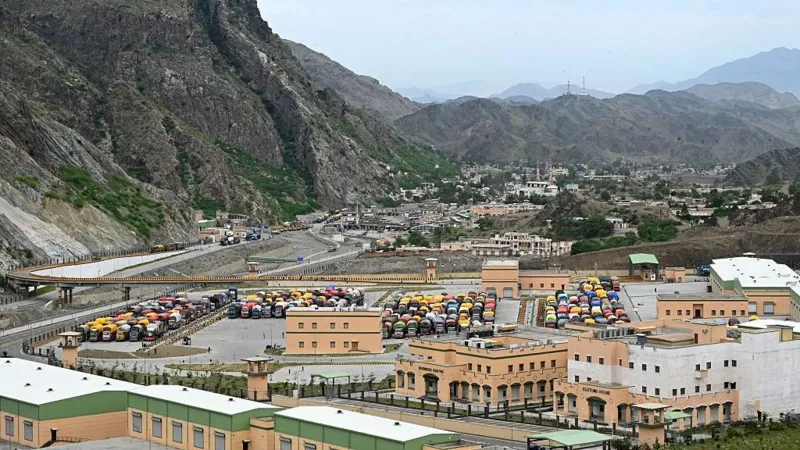

The Arrival at Zero Point: Crossing Into the Unknown At the Torkham border crossing, universally referred to as “Zero Point,” weary elderly individuals leaning on crutches and young children clutching livestock walk alongside hundreds of displaced families, marking a grim transition between two arduous lives. Among those arriving is 35-year-old Nazia, born and raised in Pakistan, who finds herself entering Afghanistan for the first time. Accompanied by two of her children, she approaches registration desks adorned with white-and-black Taliban banners, observing with quiet foreboding that while it is technically her homeland, she is entering a nation where many lack basic sustenance. Her family’s story mirrors millions of others: within the past year alone, her eight sisters and their children were expelled from either Pakistan or Iran, forming part of what has become the world’s largest cross-border population shift.
Systematic Expulsions and Expanding Security Sweeps Decades of conflict, economic collapse, and the Taliban’s return to power in August 2021 driven millions of Afghans to seek safety or livelihoods in neighboring countries. Today, however, intensified government crackdowns in both Islamabad and Tehran against undocumented migrants have triggered mass repatriations. While international law and human rights monitors note that these expulsion drives increasingly target even documented individuals holding official Proof of Registration cards, host authorities continue to push forward with deportations without sign of slowing.
An Unprecedented Humanitarian Scale Data from the United Nations High Commissioner for Refugees (UNHCR) confirms that over six million Afghans have returned since late 2021, with over a million displaced within this year alone. UNHCR officials stationed at the border describe the movement as historically unprecedented, comparing the volume of returnees to the entire population of a small nation. Near the border, vast tented encampments of worn tarpaulin and plastic shelters—erected by humanitarian organizations—serve as temporary transit points for families arriving with no homes, land, or financial resources. For many elders who fled decades ago during the Soviet-Afghan War, as well as younger generations born entirely abroad, the forced return represents not a homecoming, but a sudden exile into unfamiliar territory.