
Arshad Mahmood Awan
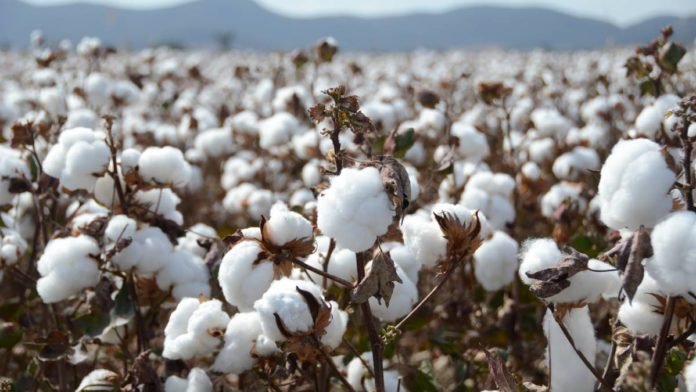
Pakistan’s cotton economy is not dying quietly. It is unravelling in full public view, with every import order and every missed harvest confirming what honest observers have said for years: this is not bad luck. It is the accumulated consequence of policy failure, institutional neglect and a political culture that prefers short-term fixes over structural reform. The country that once ranked among the world’s top cotton producers is now importing the fibre it needs to keep its own textile industry alive. That reversal is as dramatic as it is avoidable.
The scale of the crisis is no longer deniable. Pakistan recently placed an order for 206,000 bales of American cotton — nearly the entire volume the United States sold in that single week. Imports from Brazil are climbing in parallel. What makes these figures alarming is not their size alone but their timing. This cotton is being sourced before the domestic crop has even arrived. When a country must turn to foreign markets to bridge the gap between harvests, it has ceased to function as an agricultural producer in any meaningful sense. The supply chain is no longer merely strained. It is structurally broken.
The consequences ripple outward in every direction. Cotton imports cost Pakistan billions of dollars in precious foreign exchange. For an economy that has lurched from one balance-of-payments crisis to the next, that sustains itself on thin reserves and borrowed confidence, this is not a sectoral concern. It is a national emergency. The textile industry, which accounts for the bulk of Pakistan’s export earnings, depends on affordable and reliable cotton supply. When that supply must be imported at international prices, margins compress, competitiveness erodes and export performance suffers. The farmer, the mill worker, the textile exporter and the finance ministry are all caught in the same descending spiral.
The cycle is self-reinforcing and deeply dangerous. Shrinking domestic output leads to higher imports. Higher imports drain foreign exchange. External pressure leads to demand compression, credit tightening and reduced capacity for textile exports. And reduced textile exports close the circle by weakening the very earnings that might have financed agricultural recovery. Pakistan has been trapped in this loop for years, and the political response has been largely rhetorical. Every budget season brings promises of agricultural revival. Every harvest season brings disappointment.
The root causes are well understood, even if they are rarely addressed with adequate seriousness. Cotton yields in Pakistan have stagnated for decades. The country relies on outdated seed varieties that are susceptible to pests, sensitive to climatic variation and incapable of competing with the high-yield genetics available to farmers in India, China or Brazil. The Cotton Research Institutes that should be generating improved varieties have been chronically underfunded, politically interfered with and institutionally weakened. The result is that the farmer standing in the field today is working with tools that belong to an earlier era.
Water availability compounds the problem. Cotton is a thirsty crop, and Pakistan’s irrigation infrastructure has deteriorated significantly. Water theft, canal inefficiencies and the absence of modern water management have reduced the reliability of supply to cotton-growing areas in Punjab and Sindh. Climate change is making this worse, with unpredictable monsoon patterns and rising temperatures adding new layers of risk to an already fragile cultivation environment.
Input costs have become prohibitive. Energy tariffs, fertiliser prices and the cost of pesticides have risen sharply, squeezing farmer margins to the point where switching to less demanding crops becomes the rational choice. Sugarcane, with its guaranteed procurement and political patronage, continues to pull land and water away from cotton. The cropping choices of Pakistani farmers are not irrational. They reflect the incentive structures that policy has created. Change the incentives, and the choices will follow.
Reform, then, must begin with honesty about what has gone wrong and must proceed with institutional seriousness rather than seasonal announcements.
The first priority is seed. Pakistan must invest heavily in the development and certification of high-yield, pest-resistant cotton varieties suited to its specific agro-climatic conditions. The Cotton Research Institutes must be insulated from political appointment and commercial interference, adequately funded and held accountable for delivering measurable improvements in varietal performance. This is not a glamorous reform, but it is foundational. No amount of subsidy or price support can compensate for a crop that cannot compete biologically.
The second priority is water. Drip irrigation, water pricing reform and the rehabilitation of canal infrastructure must be pursued aggressively in cotton-growing districts. Water conservation technology must be made accessible to smallholders, not just large farms. Without reliable water, seed improvement alone will not rescue yields.
The third priority is price and procurement certainty. Farmers need to know before planting that their cotton will find a buyer at a price that covers their costs and leaves a margin. A credible, transparent and timely support price mechanism — free from the delays and corruption that have historically plagued its implementation — would go a long way toward reversing the flight from cotton to other crops.
The fourth priority is input cost relief. Energy tariffs for tube wells and processing facilities must be rationalised. Fertiliser and pesticide subsidies must be targeted at cotton farmers rather than distributed through leaky, politically driven mechanisms. The financial stress across the cotton value chain is real, and it requires real relief, not committee reports.
The fifth priority is institutional protection. Agricultural research bodies, provincial seed authorities and cotton-specific development programmes must be protected from political encroachment, bureaucratic inertia and the patronage networks that have historically distorted their functioning. Pakistan cannot build a competitive cotton sector on institutions that change direction with every government.
The crisis Pakistan faces in its cotton economy is not the product of forces beyond its control. It is the product of choices — choices to delay, to neglect, to manage short-term pressures at the cost of long-term capacity. Those choices can be reversed. The question is whether the political will exists to reverse them before the damage becomes irreversible. Pakistan cannot afford to find out the hard way that it waited too long.