
Pareeshe Fatima
Charles Dickens:
Despite being considered the greatest novelist of the Victorian era, Charles Dickens’ life and work have also been subject to considerable critical scrutiny. Here are some key points:
Positive aspects:
- Social commentary: Dickens’ novels famously exposed the social injustices and hardships faced by the poor and working class in Victorian England. He challenged societal norms and advocated for reform, raising awareness of issues like child labor, poverty, and the plight of the underprivileged.
- Exceptional character creation: Dickens’ characters are unforgettable, often eccentric and deeply human. His masterful use of humor, pathos, and vivid descriptions bring them to life and allow readers to connect with their struggles and triumphs.
- Storytelling prowess: Dickens’ novels are captivating and skillfully crafted, weaving intricate plots, suspenseful narratives, and emotional journeys. His use of language is rich and engaging, drawing readers into the world he creates.
Critical aspects:
- Oversimplification and melodrama: Some critics argue that Dickens’ characters and situations can be melodramatic and one-dimensional, lacking the complexity and nuance of real life. His stories can sometimes feel formulaic, relying on exaggerated emotions and simplistic moral lessons.
- Sentimentality and Victorian values: Dickens’ writing often reflects the sentimental values of his time, which some readers find outdated and overly sentimental. His emphasis on moral absolutes and clear-cut good versus evil characters can be seen as simplistic and lacking in ambiguity.
- Limited scope and personal bias: Critics argue that Dickens’ focus on social injustices was primarily directed towards the plight of the urban poor, neglecting other marginalized groups and social issues. His personal biases and beliefs are also evident in his writing, potentially influencing his portrayal of certain characters and situations.
A Tale of Two Cities:
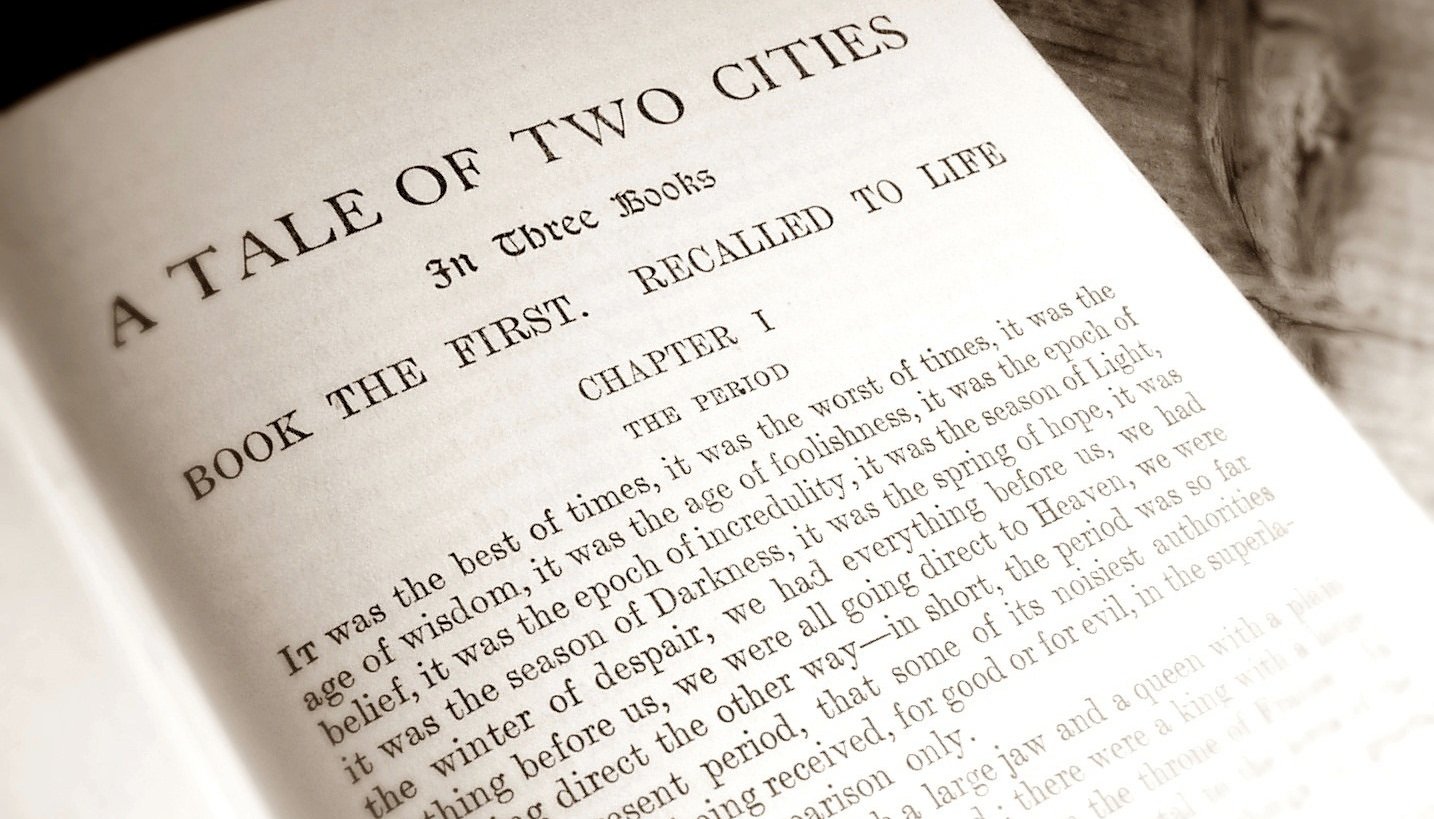
Published in 1859, A Tale of Two Cities is one of Dickens’ most celebrated novels and a classic of English literature. However, it has also been subject to various critical evaluations:
Strengths:
- Historical setting and context: Dickens effectively portrays the contrasting realities of pre-revolutionary Paris and London, creating a vivid and immersive atmosphere. He captures the political and social tensions of the time, adding depth and historical context to the narrative.
- Suspenseful plot and dramatic events: The novel features a captivating storyline filled with intrigue, romance, and sacrifice. Dickens masterfully builds tension and suspense, keeping readers engaged throughout the story.
- Universal themes and powerful emotions: The novel explores timeless themes of love, loss, sacrifice, and redemption. Dickens’ characters face profound challenges and make difficult choices, evoking strong emotions and prompting readers to reflect on the complexities of human nature.
Criticisms:
- Historical inaccuracies and romanticization: Critics point out historical inaccuracies and romanticized portrayals of certain events and figures. The novel’s focus on individual narratives can overshadow the broader historical context and social realities of the French Revolution.
- Character development and symbolism: Some argue that the characters are not fully developed and lack the depth and complexity seen in other Dickens’ works. The symbolic elements of the story can be seen as heavy-handed and detract from the narrative’s emotional impact.
- Melodramatic elements and sentimentalism: The novel’s reliance on melodrama and sentimental moments can feel exaggerated and outdated to some contemporary readers. The clear-cut moral messages and idealized characters may not resonate with audiences accustomed to more nuanced portrayals.
In conclusion, Charles Dickens remains a literary giant whose work continues to resonate with readers today. However, his life and writing are not without their critics. A Tale of Two Cities exemplifies both the strengths and weaknesses of Dickens’ writing, captivating audiences with its historical setting, suspenseful plot, and universal themes while also being criticized for its historical inaccuracies, character development, and reliance on melodrama.