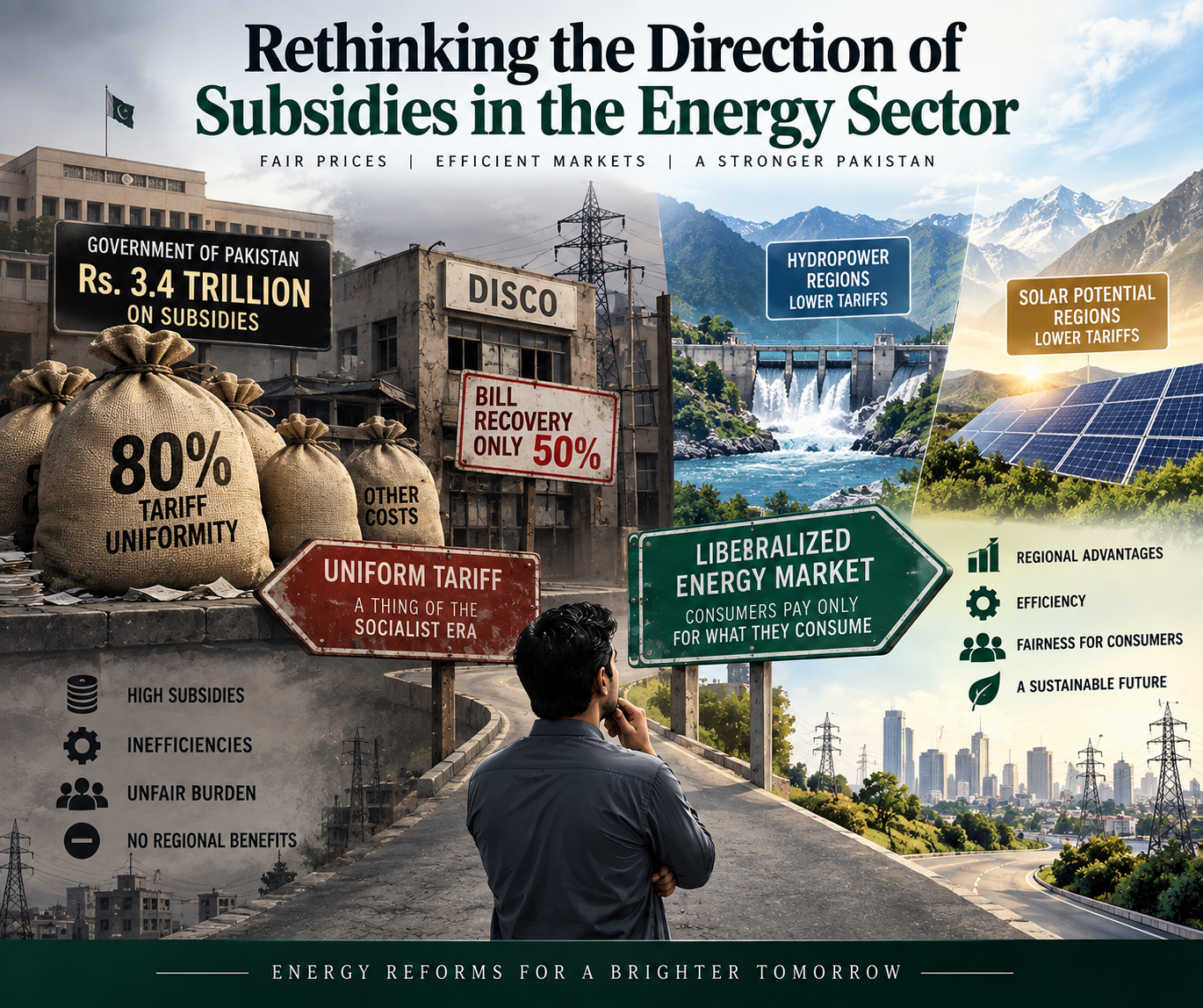

The findings of Republic Policy, PIDE, Pakistan & Accounting, and NEPRA reveal some disturbing realities about Pakistan’s energy sector. The Government of Pakistan spends nearly Rs3.4 trillion on subsidies, yet these subsidies do little to ease the burden on ordinary consumers. Nearly 80 per cent of this amount is used to maintain uniform electricity tariffs across regions, even though some DISCOs collect barely 50 per cent of the bills they charge.
Leading research organisations, including Republic Policy, therefore recommend liberalising the energy market. Uniform tariffs belong to the socialist era. Consumers should have the right to pay only for the electricity they consume rather than bearing the financial burden created by inefficiencies elsewhere.
Uniform tariffs also ignore the geographical advantages of different regions in energy production. Areas with significant hydropower potential should benefit from cheaper electricity generated through hydropower, just as regions with strong solar potential should benefit from lower-cost solar energy.
Similarly, if a DISCO suffers losses because of inefficiency, those losses should be dealt with within that system. Consumers in efficient regions should not be required to pay for the failures and inefficiencies of DISCOs operating elsewhere.
Pakistan therefore needs to rethink not only the size of its energy subsidies but also their direction. The energy market should reward efficiency, recognise regional advantages and ensure that consumers pay for the electricity they actually consume.