Barrister Naveed Qazi
There is a part of Pakistan’s political history that receives far less attention than it deserves. The major political parties of this country have rarely treated democracy, constitutional supremacy and civilian rule as fixed ideological commitments. They have treated these principles as political necessities, summoned when convenient and abandoned when inconvenient. Whenever a party has been pushed out of power, whenever it has faced state interference, or whenever its relationship with the establishment has soured, the slogans of democracy, the sanctity of the vote, parliamentary supremacy and constitutional governance have suddenly grown loud. Yet the moment the doors of power reopened, the moment some accommodation became possible, the moment any path back to office appeared, those same parties have quietly walked back from the very positions they once defended with such conviction.
This is not the habit of one party alone. It runs, in different shapes and different intensities, through almost the entire political history of Pakistan. This is precisely why democracy in this country has so often functioned not as a permanent and unshakeable principle but as a political weapon, picked up and put down according to need. Democracy is remembered in opposition. The use of state power feels justified once office is regained. When political parties themselves fail to show consistent commitment to democratic principles, society at large cannot be expected to take democracy seriously either. The confusion does not begin in the public; it begins in the parties that claim to represent the public.
The truth is that the real test of constitutional governance, civilian supremacy and democratic commitment is not faced in opposition. It is faced in power. A party that continues to respect parliamentary supremacy, institutional autonomy, political tolerance, freedom of expression and the rule of law even after it has secured office is the only kind of party whose democratic credentials can be called credible. Without that consistency, democracy becomes nothing more than a slogan for gaining power or a cry of protest against losing it. Saying the right words in opposition costs nothing. Living by those words in government costs everything, and that is exactly why so few parties manage it.
There is, however, a new reality emerging in Pakistan’s political evolution, and it deserves to be stated plainly. The public, the intellectuals, the youth and the political workers of this country have grown considerably more aware than they once were. Slogans alone no longer satisfy them. Political conduct and practical behaviour are now being examined and weighed against the promises that produced them. It is no longer sustainable for a party to declare itself the champion of civilian rule while sitting outside government and then quietly set those same principles aside the moment power becomes available again. Political parties must be held accountable in the same manner that other state institutions are held accountable. Accountability cannot stop at the doorstep of a political party simply because that party happens to enjoy popular support at a given moment.
Strengthening democracy in Pakistan requires every political force to accept democratic principles as standing above temporary political interest, not as instruments to be used only when useful. The constitution, the rule of law, civilian supremacy and institutional balance must be considered important not selectively, not only when a party finds itself out of power, but at all times and in all circumstances. Democracy, after all, is not merely a method for acquiring power. It is, just as importantly, a system for keeping power within constitutional limits once it has been acquired. A party that forgets this second function while remembering only the first has not understood democracy at all; it has merely understood the part of democracy that is useful to itself.
The rigorous accountability of political parties should rest precisely on this foundation: how consistently did a party uphold democratic principles both while in power and while out of it. Consistency is the measure that matters, far more than any single statement made at any single moment. A party that defends the constitution loudly in opposition and defends executive convenience quietly in government has failed the test. Pakistan does not need more slogans. It needs principled politics that survives contact with power. The country has heard enough promises made from the opposition benches. What it has not seen enough of is those same promises honoured from the government benches, where they actually matter and where they are actually tested.
This gap between opposition rhetoric and governing conduct is, in many ways, the real story of Pakistan’s democratic struggle. It explains why institutions remain weak even after decades of elections. It explains why each transition of power arrives with fresh promises of reform that rarely survive the first year in office. And it explains why ordinary citizens have grown weary of slogans that change their meaning depending on who is saying them and from which side of the aisle. A democracy cannot be built on selective conviction. It cannot be sustained by parties that treat constitutional principle as a convenience rather than a commitment. Until political parties internalise this lesson, and until they apply the same standards to themselves that they demand of every other institution, the confusion between establishment and democracy will continue to define Pakistan’s political life, and the public will continue to pay the price for it.
The path forward is neither mysterious nor especially difficult to describe, even if it has proven difficult to walk. It requires political parties to mean, in government, exactly what they say in opposition. It requires consistency to replace convenience as the organising principle of political behaviour. And it requires citizens, increasingly aware and increasingly unwilling to be satisfied by slogans alone, to keep insisting on that consistency until it becomes the norm rather than the exception.
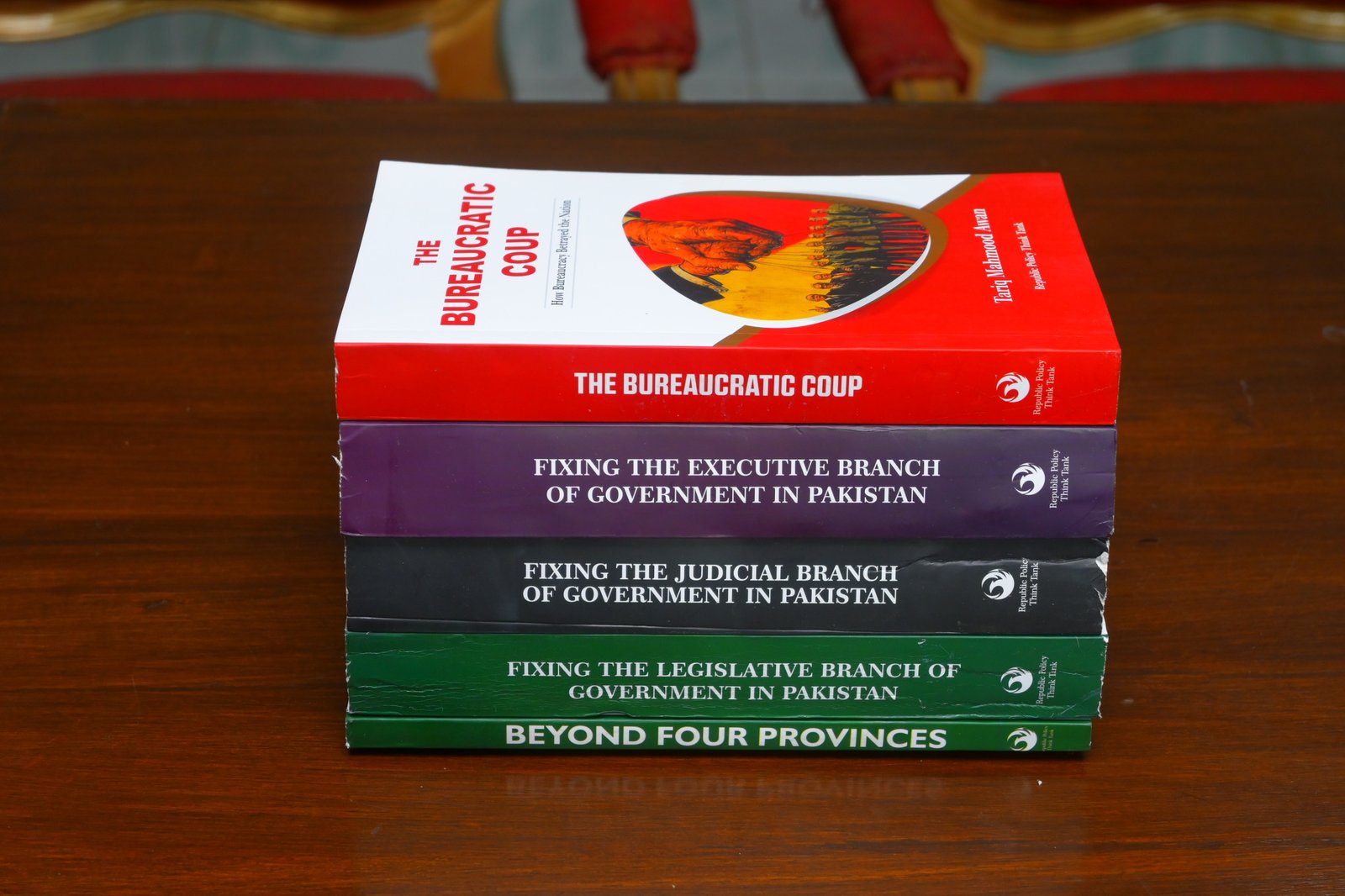
The best-selling books of Republic Policy Think Tank, including the landmark book The Bureaucratic Coup, are available at Vanguard Books, Liberty Books, Readings, Kitab Sarai, Sang-e-Meel, Saeed Book Stores, and others across Pakistan. Contact for home delivery: 0300 9552542.