
Masood Khalid Khan
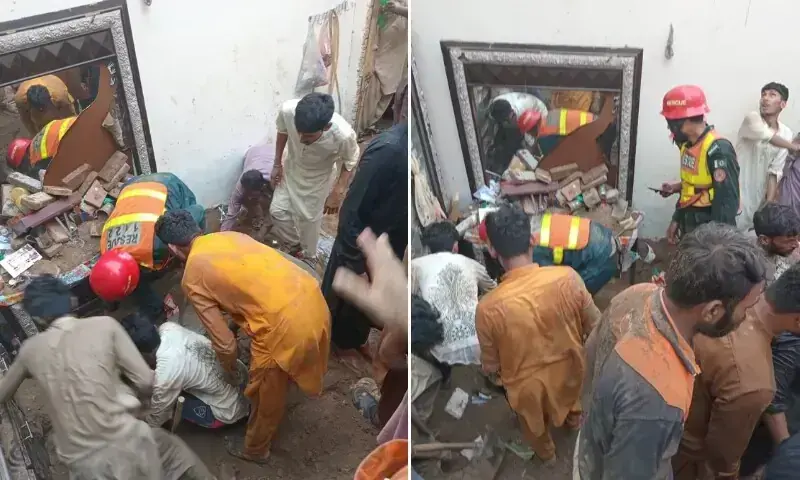
The roof that came down on a private tuition centre in Lahore’s Kahna area did not merely take the lives of at least fourteen children. It exposed, in the cruellest possible way, the hollowness of official assurances about safety, regulation, and the state’s commitment to its youngest citizens. This was not an accident in the true sense of the word. Accidents are unforeseeable. This was the entirely foreseeable consequence of negligence layered upon negligence, regulatory apathy compounding structural failure, until gravity itself delivered the verdict that human institutions refused to render.
Grief flowed swiftly from the country’s highest offices, as it always does. Condolence messages were issued. Sympathy was expressed. Yet sympathy, however sincerely felt, is not a substitute for accountability. It never has been. Words offered after the fact cannot rebuild what negligence destroyed, and they certainly cannot prevent the next collapse, the next classroom crushed under weight it was never engineered to bear. Unless the structural causes of this tragedy are confronted honestly, condolences will simply become the ritual accompaniment to the next preventable disaster, and the one after that.
The first and most damning question demands an answer without delay: why were children being taught inside a building where construction work remained unfinished? Preliminary reports suggest labourers were actively working on the premises when the roof gave way. If this is confirmed, it reveals a mindset in which the safety of young lives was treated as a secondary concern, subordinate to convenience, subordinate to cost, subordinate to the simple unwillingness to pause operations until the structure was sound. No administrative excuse can soften the weight of that failure.
Equally troubling is the silence of the regulatory apparatus that should have caught this danger long before it became fatal. Building codes exist precisely to prevent such catastrophes. Punjab’s development authorities, chief among them the Lahore Development Authority, carry the statutory responsibility of ensuring that structures meet safety standards before they are occupied, let alone filled with children. Yet enforcement remains sporadic at best and absent at worst. Buildings rise without proper approval. Facilities operate without inspection. Educational centres function inside structures never certified fit for the purpose. The LDA and its sister bodies cannot continue treating enforcement as a discretionary exercise, invoked only after disaster forces their hand. Their mandate is prevention, not postmortem. If the authority possesses inspection powers, it must use them proactively, methodically, and without exception, particularly for buildings where children congregate daily.
This tragedy, painful as it is, is not an isolated incident. Roof collapses recur with grim regularity across Pakistan, especially during the monsoon season, when weakened structures buckle under seasonal stress that proper construction would have withstood without difficulty. Each collapse tells the same story: substandard construction, inadequate inspection regimes, and a governing culture in which regulation is treated as an inconvenience to be negotiated rather than a mandate to be enforced. If criminal negligence is established in the Kahna case, as it very well may be, the individuals responsible, whether builders, owners, or the officials who failed to intervene, must face prosecution without exception and without the customary erosion of accountability that so often follows such tragedies in this country.
But punishment after the fact addresses only the symptom. The government must go further and commission a comprehensive audit of private schools, tuition centres, and informal educational facilities operating out of residential and commercial buildings across Punjab. Development authorities must be tasked, explicitly and urgently, with identifying every structure housing children that has not been certified safe, and with closing those that fail to meet minimum standards until remediation occurs. This is not bureaucratic overreach. It is the bare minimum owed to families who trust these institutions with their children’s lives.
Beneath the question of construction safety lies a deeper and more uncomfortable truth about the state of education in this country. The children who died in Kahna came from an underprivileged neighbourhood, their families reaching for supplementary tuition despite limited means, driven by an enduring belief that education remains the surest path toward a better future. That determination deserves admiration. It also stands as an indictment. Millions of parents across Pakistan continue to shoulder an obligation the Constitution places squarely on the state.
Article 25-A guarantees free and compulsory education to every child between the ages of five and sixteen. The very existence of countless informal tuition centres, many operating from unsuitable and unregulated premises, testifies to how far the public education system has drifted from that constitutional promise. Parents turn to these makeshift arrangements not out of preference but out of necessity, because the public system has failed to deliver the quality and access the Constitution demands.
There is a bitter irony here that cannot be overlooked. Even as the Constitution assigns responsibility for school education squarely to the state, the Punjab government has spent recent years transferring operational control of thousands of public schools to NGOs, private operators, and education foundations. Partnerships of this kind may have a limited role to play, but outsourcing cannot be allowed to become a substitute for public responsibility. Education is not an ordinary service that can simply be handed off. It is a constitutional obligation, one that demands sustained public investment, rigorous regulation, and unbroken oversight from the state itself, not delegation dressed up as reform.
The children of Kahna were failed long before that roof gave way. They were failed by unsafe construction, by regulatory bodies that looked elsewhere, and by an education system so threadbare that their families had no real alternative but to seek help in a building that was never safe to begin with. Their deaths must not be allowed to fade into the familiar rhythm of tragedy, statement, and silence. They must become the catalyst for a government, and for development authorities like the LDA, to finally place the safety and education of children above administrative convenience and bureaucratic complacency. Anything less dishonours the fourteen lives already lost.
The best-selling books of Republic Policy Think Tank, including the landmark book The Bureaucratic Coup, are available at Vanguard Books, Liberty Books, Readings, Kitab Sarai, Sang-e-Meel, Saeed Book Bank Islamabad, National Book Foundation, and others across Pakistan. Contact for home delivery: 0300 9552542.