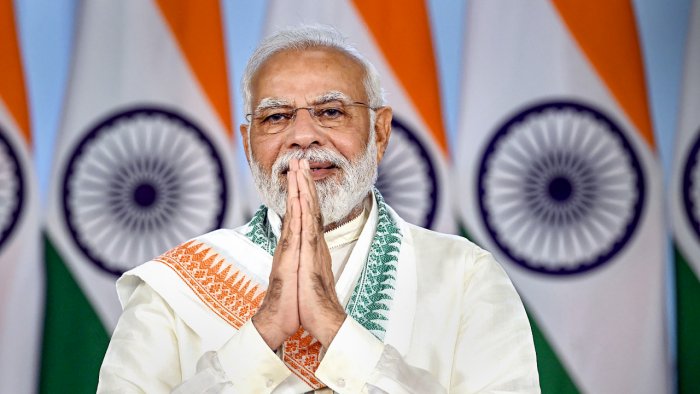

C. Raja Mohan
President Trump’s second term has put real strain on the US-India relationship. He has imposed tariffs on India, threatened secondary sanctions, drawn noticeably closer to Pakistan, and warmed considerably toward China, the country India regards as its foremost long-term military threat. Yet these tensions haven’t produced the rupture some predicted, nor forced a fundamental rethink of Indian foreign policy. Instead, New Delhi has pursued what might be called an “America plus” strategy, sustaining its US partnership while broadening ties with other powers, particularly American allies.
Prime Minister Narendra Modi has responded to Trump’s provocations with notable restraint, resisting pressure to pull away from Washington. India has continued trade talks, deepened defense cooperation, and expanded technological and commercial links with the US, while also sustaining the Quad security grouping, drawing closer to US allies, preserving ties with Russia, and working to ease tensions with China. This isn’t a retreat from Washington or a strategy of pure multialignment; India is trying to reduce its exposure to American unpredictability while still treating the US as its most consequential partner, largely because neither China nor Russia can match what Washington offers economically or as a counterweight to Beijing.
Growing Apart?
Through 2024, Modi and his BJP welcomed the prospect of Trump’s return, building on the warm personal rapport established during Trump’s first term, including joint rallies in Houston and Ahmedabad and expanded defense cooperation. That warmth initially continued into Trump’s second term: a February 2025 White House meeting produced an ambitious agenda spanning trade, defense, energy, and technology, with Modi cutting some tariffs on US goods and accepting deported migrants as gestures of goodwill.
The relationship soon soured, however. Trump claimed credit in May 2025 for ending a brief India-Pakistan military conflict, a claim India refused to acknowledge, maintaining its standard position that disputes with Islamabad require no outside mediation. Trump then grew closer to Pakistan’s army chief, Syed Asim Munir, elevating Pakistan’s standing by using it as a mediator with Iran and endorsing the trilateral security pact between Pakistan, Saudi Arabia, and Turkey.
Trump’s growing engagement with China compounded the strain. Where his first term emphasized building an Asian counterweight to Beijing through partnerships with Australia, India, Indonesia, and Japan, his second has involved extensive outreach to Xi Jinping, including loose talk of a “G-2” arrangement between Washington and Beijing, alongside a failure to convene the Quad’s annual summit, raising doubts about US commitment to the grouping.
Trade friction added further pressure. Tariffs imposed over India’s protectionism and its purchases of Russian oil struck many Indians as unfair, particularly since Washington had granted exceptions to itself and some European countries on Russian oil purchases, and the Biden administration had previously encouraged India’s Russian oil purchases under a price cap. By late 2025, India faced some of the steepest tariffs of any US partner, fueling a shift in Indian public opinion against Trump, with opposition leader Rahul Gandhi accusing Modi of capitulating to American pressure, and segments of the political class calling for closer ties with China and Russia instead.
Modi has largely resisted these calls. India finalized a new ten-year defense framework with the US last year, worked to preserve Quad cooperation by hosting a foreign ministers’ meeting after the leaders’ summit collapsed, and pushed through difficult trade negotiations despite resistance from India’s protectionist trade bureaucracy. Washington, for its part, has made modest gestures toward repair, including an August statement from its ambassador in New Delhi describing Kashmir as “an important part of India.”
Rough Start
Modi’s restraint partly reflects how long it took India to build a solid US relationship in the first place. For decades after independence, suspicion of Washington ran deep across India’s political, defense, and scientific establishments, reinforced by America’s Cold War alliance with Pakistan, India’s socialist leanings, and its closeness with the Soviet Union. The 2005 US-India civil nuclear agreement under Manmohan Singh and George W. Bush marked a genuine turning point, ending India’s nuclear isolation despite fierce domestic opposition from the BJP, the communist left, and elements within Singh’s own party.
Since becoming prime minister in 2014, Modi has worked deliberately to strengthen ties with Washington across three successive administrations, Obama, Trump, and Biden, pushing India’s bureaucracy and military establishment toward closer cooperation, concluding long-delayed defense agreements, reviving the Quad, and deepening technology cooperation, all while his domestic political dominance absorbed any backlash. By the time Trump returned to office, the relationship was underpinned by extensive ties between American businesses, universities, and the Indian diaspora, giving it a resilience that neither Trump’s volatility nor India’s historical wariness of Washington can easily unravel.
A Wandering Eye
Modi has nonetheless diversified India’s ties with other powers since 2014. Russia became India’s top oil supplier in 2023 and remains an important arms provider, even as its share of Indian arms imports has declined. Modi has also sought rapprochement with China, delayed by military standoffs in 2014, 2017, and 2020, but New Delhi is now working to ease tensions with Beijing, easing visa access for Chinese professionals, resuming direct flights, and loosening some investment restrictions, ahead of Xi Jinping’s first visit to India since 2019, expected in September.
Rather than describing this as multialignment, a more accurate framing is “America plus.” India has concentrated much of its strategic weight around the US, and where it has diversified, it has done so mainly through US allies, Australia, Canada, Japan, the UK, and European partners, reflecting the reality that neither China nor Russia can substitute for the US economically. US-India trade in goods and services reached $240 billion in 2025, running in India’s favor, while India’s goods deficit with China exceeded $110 billion the same year. China cannot match the US as a market or as a source of advanced technology, and Russia offers neither a comparable market nor access to cutting-edge tools like artificial intelligence.
India’s trade diplomacy reflects this tilt: having declined to join the China-dominated Regional Comprehensive Economic Partnership in 2019, New Delhi has instead signed free trade agreements with New Zealand, the UK, and the EU, expanded ties with Australia, and renewed talks with Canada. A landmark US-India trade deal finalized in February aims to lift bilateral trade to $500 billion by 2030, though Trump has yet to formally sign off on it and continues exploring new tariff measures.
On security, China remains India’s principal long-term rival, with a conventional military balance along their shared border favoring Beijing, which outspends India fourfold on defense, maintains a substantial presence in Tibet, and is expanding both its naval reach in the Indian Ocean and its defense ties with Pakistan. Washington provides India with intelligence access, advanced military technology, joint exercises, and a broader security network that neither China nor Russia could replicate; Moscow’s capacity to help balance China has diminished sharply since its 2022 invasion of Ukraine left it heavily dependent on Beijing.
India also recognizes that Washington has its own reasons to stabilize ties with China, but believes the deeper structural rivalry between the two powers, over technology, maritime power, and regional order, will persist regardless, meaning the foundation for US-India cooperation is likely to hold even if Trump softens toward Beijing.
Breaking Point
Modi has so far contained the damage from Trump’s approach, but his room for maneuver has limits. Proposed US legislation authorizing tariffs of up to 100 percent on countries buying Russian energy poses perhaps the most immediate threat; if enacted without an Indian waiver, it would hurt India’s economy and risk reviving dormant anti-American sentiment, particularly if India is targeted while other countries are exempted.
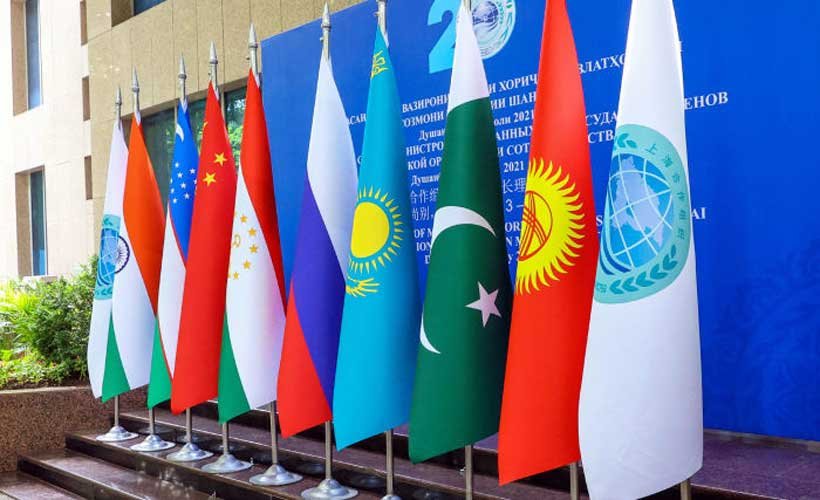
Modi’s political dominance has largely shielded his US approach from domestic criticism, but recent youth protests, sparked initially by leaked exam papers, have dented his aura of invulnerability. Should his domestic authority continue eroding, he may face growing pressure from both right and left over perceived deference to Trump, and could eventually find political value in defying Washington. Such sentiment might not produce a formal break, but could slow defense and technology cooperation, push India further toward hedging, potentially pressure Modi into border concessions to China in exchange for investment, reduce US arms purchases, and weaken India’s moderating role within BRICS and the Shanghai Cooperation Organization, including on efforts to challenge the dollar’s global dominance.
India hasn’t reached that point yet, and critics of Modi’s cautious approach to Washington have offered no convincing alternative for managing the growing power gap with China, since Beijing’s terms for lasting peace, including a border settlement favoring China and reduced US security ties, would come at too high a cost, and China has never helped another country’s economic or technological rise. For now, deepening ties with US allies while managing the relationship with Trump remains India’s most viable path forward.