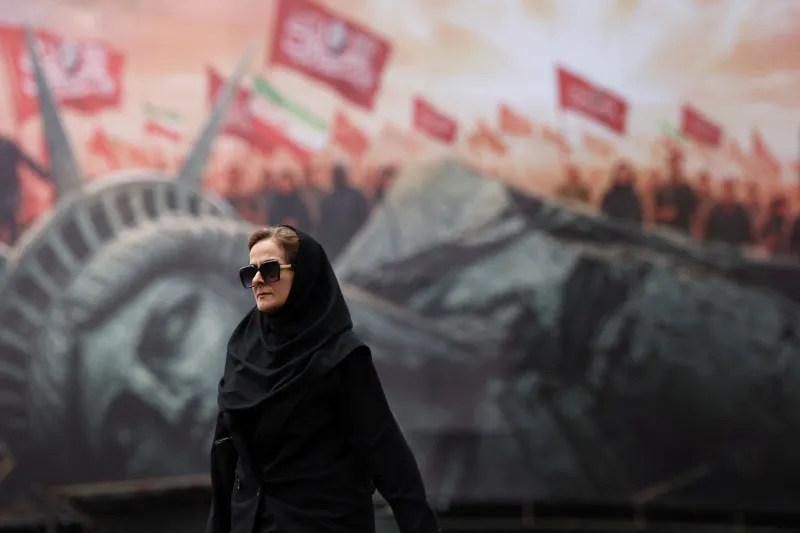

For nearly five decades, Iran has posed a persistent problem for successive US presidents, from the 1979 hostage crisis that damaged Jimmy Carter’s re-election chances to the Iran-Contra scandal that tarnished Ronald Reagan’s legacy to the deep controversy surrounding Barack Obama’s 2015 nuclear agreement with Tehran.
When President Trump launched military action against Iran in February, he framed it as a decisive break from this pattern, promising to succeed where past presidents had merely talked. Six months later, however, Trump finds himself facing a familiar kind of embarrassment, with the fallout threatening his party’s standing ahead of the midterms. His response has been to shift toward economic pressure, attempting to tighten a financial noose around Tehran. But as currently constructed, this campaign risks damaging American credibility more than it damages Iran’s economy.
The deeper argument is that Trump’s war isn’t actually a departure from past US strategy but rather the logical endpoint of it. Iran’s government has confounded Washington for decades in part because it behaves inconsistently, being ideological in its anti-American, anti-Israeli posture, yet capable of striking pragmatic deals when it serves Tehran’s interests, as seen in the 2015 nuclear agreement and its 2023 normalization with Saudi Arabia. Iran’s actual threat to US interests is similarly murky. Its nuclear ambitions and support for proxy militias genuinely endanger American interests and shipping, yet for most ordinary Americans, Iran remains a remote concern, one whose primary domestic impact from this war has been rising gas prices rather than any direct threat.
Washington’s typical response to this complexity has been to abandon nuance altogether and lean on pressure, built on two pillars: military threat and economic coercion, as the default strategy. Rather than resolving Iran’s contradictions, this approach has only deepened them. January’s domestic protests revealed genuine internal fragility inside Iran, yet the war that followed instead demonstrated resilience rather than collapse. Airstrikes weakened the regime militarily while simultaneously strengthening its domestic standing. Tehran clearly wants sanctions relief, but it has also learned that time favors its position and that controlling the Strait of Hormuz gives it real leverage to inflict costs in return.
The irony is that Trump’s stalled war has so badly weakened Washington’s pressure toolkit that future administrations may find the traditional playbook unusable. That, potentially, is the war’s only silver lining, forcing a genuine reckoning with 47 years of a flawed approach.
Our Way or the Highway
In 2006, Henry Kissinger argued that Iran’s leadership needed to decide whether it represented a nation or a cause, essentially choosing between rational engagement and revolutionary ideology. That framing has effectively guided US policy for decades: Washington wants Iran to abandon its revolutionary character, using a mix of limited incentives and substantial pressure, chief among them the threat of invasion, to force that outcome.
Tehran, however, has never seen the need to make such a binary choice, behaving as both a cause and a rational actor depending on circumstance. Despite its public defiance, the regime has consistently sought to avoid direct war with the US. Even founding leader Ayatollah Khomeini, who publicly dismissed fear of American military power, governed cautiously; in 1988 he ended the Iran-Iraq war after naval skirmishes with US forces raised fears that Washington might formally back Saddam Hussein. Similarly, after the 2003 US invasion of Iraq, Iran quietly pursued de-escalation with the Bush administration, including halting weapons development and sending informal emissaries to Washington.
During time spent on the Trump administration’s Iran negotiating team in early 2025, it became clear that Iranian negotiators were less focused on sanctions relief than on securing formal nonaggression commitments from the US and Israel, a reflection of Iran’s longstanding aversion to direct conflict, which is precisely why it built its network of regional proxies in the first place.
This year’s war, though, has taught Tehran three new lessons. First, that it can absorb devastating US and Israeli strikes, losing senior leadership and suffering major infrastructure damage, while retaining enough drone and missile capability to retaliate and disrupt shipping through Hormuz. Second, that Washington has no real appetite for ground troops on Iranian soil; ground operations to seize nuclear material were considered early in the war but never launched, judged too risky. That absence has effectively shown Tehran that regime change isn’t achievable through airstrikes alone and that even hawkish American voices haven’t seriously proposed the invasion that would be required. Third, and perhaps most consequential, Iran has gambled that it can outlast American resolve in a war of attrition, a bet that has so far paid off, since Tehran is willing to accept more domestic suffering than the American public is willing to tolerate for what many increasingly view as an optional, drawn-out conflict. Each time Trump has threatened escalation, rising energy prices have prompted retreat, meaning the credibility of further military threats has eroded substantially since the war began.
One-Way Ratchet
The second pillar of US strategy, economic coercion, tells a similar story. Some sanctions, particularly those targeting Iranian oil exports, have genuinely hurt Iran’s economy, but they have rarely achieved the underlying policy shifts they were designed to produce. Carter’s initial embargo after the 1979 embassy seizure ended deep US-Iran trade and defense ties but barely dented Iran’s exports elsewhere. Congress expanded sanctions further in 1996 and again in 2012, the latter cutting Iranian oil exports roughly in half almost overnight. Those measures eased under the 2015 nuclear deal, only to be reimposed by the US in 2018 after Trump’s withdrawal and by Europe in 2025 following a snapback mechanism.
The first Trump administration’s “maximum pressure” campaign was initially pitched as leverage toward a better nuclear deal. When that deal never materialized, sanctions became an end unto themselves, more than 3,000 designations now target nearly every facet of Iran’s government and economy, deliberately layered to be difficult to unwind, though many carry more symbolic than practical weight. Over time, sanctions became Washington’s default policy tool largely because they signal action without imposing direct costs on Americans.
In the current conflict, Trump has escalated economic pressure to unprecedented levels through a naval blockade of Iranian ports, a move that, notably, finally imposed real costs on Americans once Iran responded by closing the Strait of Hormuz and striking Gulf energy infrastructure, disrupting global shipping. Iran’s economy, already strained before the war, has suffered further under the blockade, yet Trump abandoned the first blockade after 66 days. He has since launched a second one, branding it on social media as the most severe economic campaign ever waged against a nation. It will undoubtedly hurt Iran, but recent history suggests it is unlikely to force Tehran’s capitulation. Instead, Iran appears poised to use its missile and drone capabilities to impose reciprocal economic costs, whether through Hormuz or against Gulf states, once again testing Trump’s tolerance for risk. The Islamic Republic, in short, believes it can outlast American economic patience just as it has outlasted American military pressure.
INSPIRED BY Nate Swanson’s Article published in the Foreign Affairs