
Foreign ministers and senior representatives from member states have arrived in the capital for the 30th ECO Council of Ministers meeting, with Pakistan seeking to strengthen regional connectivity, economic integration and multilateral cooperation under its 2026–27 chairmanship.
ISLAMABAD: Foreign ministers and senior diplomatic representatives from across the region have arrived in Islamabad as Pakistan hosts the 30th meeting of the Economic Cooperation Organisation (ECO) Council of Ministers on November 16–17.
The meeting brings together delegations from the organisation’s ten member states: Pakistan, Afghanistan, Azerbaijan, Tajikistan, Iran, Türkiye, Kazakhstan, Turkmenistan, the Kyrgyz Republic and Uzbekistan. The ministerial gathering is being held under Pakistan’s 2026–27 ECO chairmanship, with a focus on regional cooperation, connectivity and economic integration.
Ahead of the meeting, Deputy Prime Minister and Foreign Minister Ishaq Dar hosted a welcome dinner for foreign ministers and heads of delegations. According to the Foreign Office (FO), Dar welcomed the visiting representatives and highlighted the close ties among ECO member states. He reaffirmed Pakistan’s commitment to regional cooperation and shared aspirations for peace, progress and prosperity.
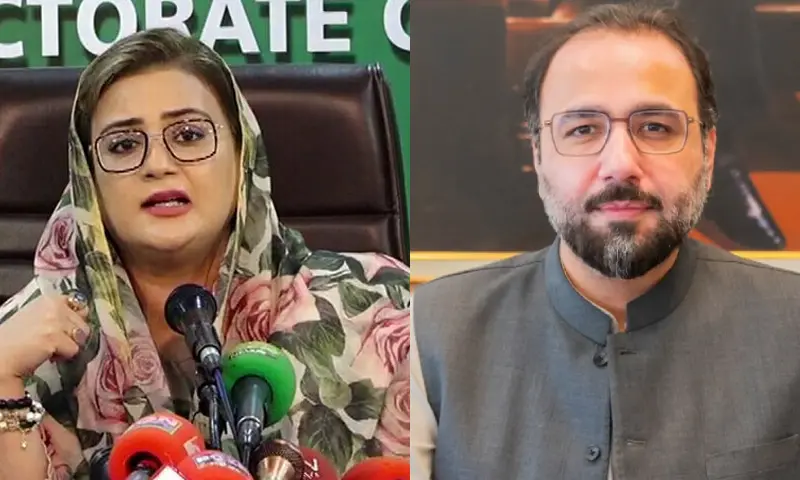
The dinner was attended by Information Minister Attaullah Tarar, Parliamentary Affairs Minister Dr Tariq Fazal Chaudhry, representatives of the ECO Secretariat, members of the diplomatic corps and senior Foreign Office officials.
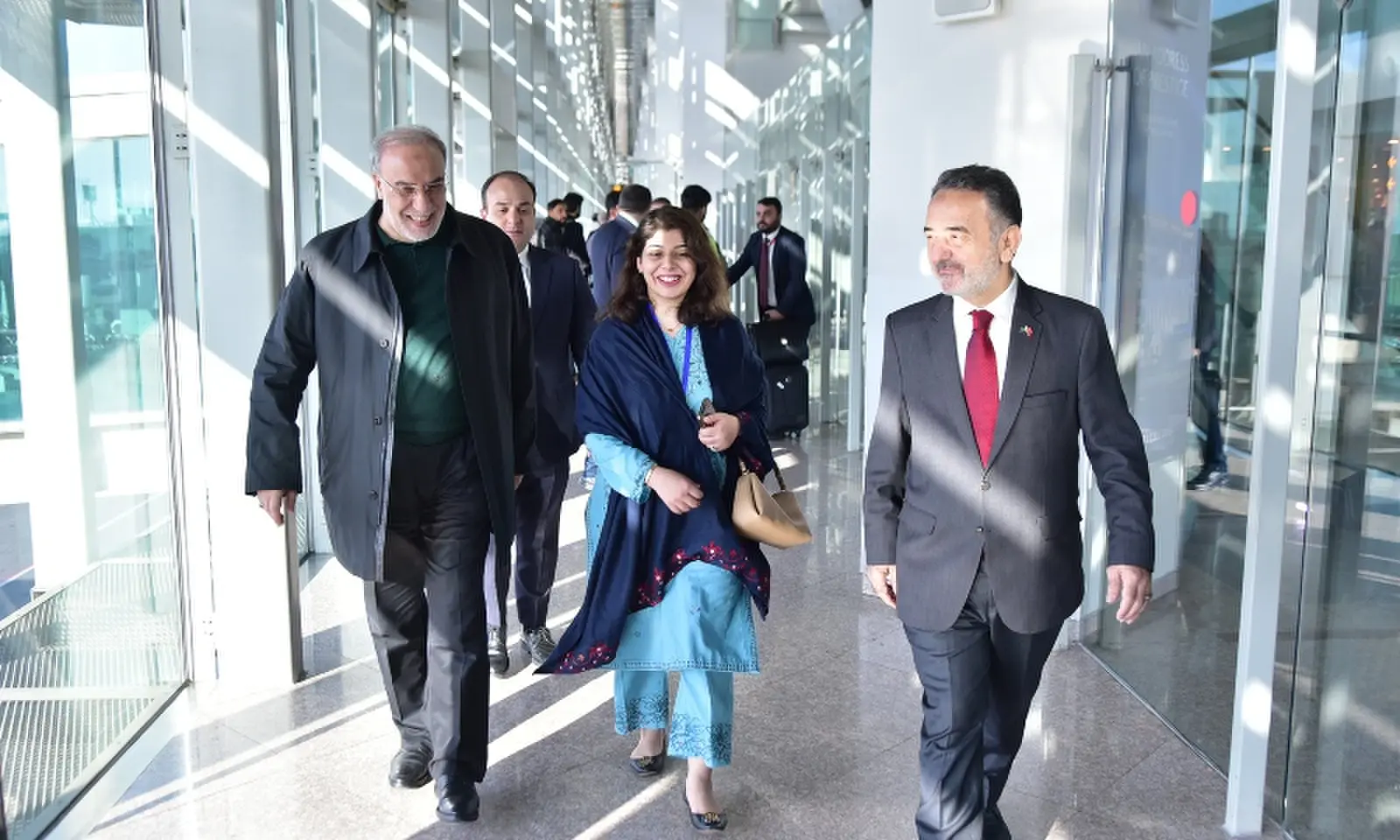
Among the visiting dignitaries were Shanghai Cooperation Organisation Deputy Secretary General Ahmad Saidmurodzoda, Organisation of Islamic Cooperation (OIC) Secretary General Ismail Ould Cheikh Ahmed, Turkish Deputy Foreign Minister Musa Kulaklikaya and Kyrgyz Deputy Foreign Minister Kairat Erkinovich Tursunkulov.
Azerbaijan’s Deputy Foreign Minister Elnur Mammadov, Kazakhstan’s Deputy Foreign Minister Arman Issagaliyev and Turkmenistan’s Foreign Minister Rashid Meredov also arrived in the capital. Iran’s Foreign Minister Abbas Araghchi landed in Islamabad later on Sunday, according to Iranian state media.
Meredov, who also serves as deputy chairman of Turkmenistan’s Cabinet of Ministers, was received by Pakistan’s ambassador to Turkmenistan and other officials. Foreign Minister of the Turkish Republic of Northern Cyprus Tahsin Ertuğruloğlu had arrived on Saturday.
Senior officials finalise ministerial agenda
Preparations for the ministerial meeting included a gathering of senior officials from ECO member states, chaired by ECO Secretary General Asad Majeed Khan.
According to the Associated Press of Pakistan, the officials reviewed the organisation’s activities and programmes, assessed the work of its subsidiary bodies and finalised the draft agenda and outcome documents for consideration by the ministers.
The Council of Ministers meeting is being chaired by Ishaq Dar and attended by foreign ministers and heads of delegations, alongside representatives of the ECO Secretariat and its subsidiary bodies.
Pakistan’s chairmanship is being pursued under the theme “Reviving Regionalism for a Resilient ECO”. The Foreign Office has identified regional connectivity, economic integration, stronger partnerships and sustainable development as central priorities.
Islamabad also aims to strengthen Pakistan’s position as a regional connectivity hub, facilitate logistics and supply chains, and contribute to shaping the region’s trade agenda.
Dar meets ECO Secretary General
On the sidelines of the meeting, Ishaq Dar held discussions with ECO Secretary General Asad Majeed Khan, emphasising the importance of regional cooperation, connectivity and economic integration.
Dar reaffirmed Pakistan’s commitment to hosting the ECO Summit in 2027 and appreciated the Secretariat’s efforts to advance the organisation’s agenda and support Pakistan’s priorities during its chairmanship.
According to the Foreign Office, the secretary general appreciated Pakistan’s arrangements, hospitality and coordination for the 30th Council of Ministers meeting. He also congratulated Pakistan on its upcoming chairmanship and its preparations to host the 2027 summit.
Both sides agreed to maintain close coordination to ensure the effective implementation of agreed initiatives and advance shared objectives of regional development and prosperity.
Pakistan and OIC discuss regional cooperation
Dar also met OIC Secretary General Ismail Ould Cheikh Ahmed, welcoming him on his first visit to Islamabad since assuming office earlier this year.
The deputy prime minister reaffirmed Pakistan’s commitment to strengthening the OIC as a unified and effective voice of the Muslim world and assured the secretary general of Islamabad’s continued support for the organisation’s objectives.
According to the Foreign Office, the OIC secretary general appreciated Pakistan’s diplomatic efforts during the Iran–US conflict to promote regional peace and stability. He also acknowledged Pakistan’s role in the organisation, including its contributions through the Committee on Scientific and Technological Cooperation (COMSTECH) to scientific and technological collaboration among member states.
The two sides agreed to maintain close cooperation within the OIC and reiterated their support for the peoples of Palestine and Jammu and Kashmir and their right to self-determination.
Regional connectivity remains the central challenge
The Islamabad meeting comes at a time when regional connectivity and economic integration remain important priorities for countries across Central and West Asia. The ECO provides an institutional platform for cooperation among states linked by geography, trade routes, energy resources and shared economic interests.
For Pakistan, the chairmanship offers an opportunity to strengthen its engagement with Central Asian economies and promote transport and trade connections linking the region with South Asia, the Middle East and wider international markets.
However, translating diplomatic commitments into practical economic outcomes will require sustained coordination among member states. Cross-border infrastructure, efficient customs procedures, reliable transport corridors, energy cooperation and predictable trade arrangements remain essential to expanding regional commerce.
Pakistan’s ambition to become a regional connectivity hub will similarly depend on effective implementation, investment and continuity in regional partnerships.
The 30th Council of Ministers meeting is expected to provide an opportunity for member states to review existing programmes, identify areas of cooperation and advance a shared regional agenda. The proposed ECO Summit in Islamabad in 2027 will offer a further platform to pursue these objectives at the highest political level.