F. Gregory Gause III
There is a temptation, in the middle of any war, to declare it historic. And by most measures, the conflict between the United States, Israel, and Iran has earned the label. For the first time, Iran and Israel have struck each other’s homelands directly, abandoning the shadow war of proxies and covert operations that defined their rivalry for decades. Washington and Tel Aviv have fought together against Tehran in a manner without real precedent. Iran has lost a supreme leader who governed for 36 years, along with much of the defence architecture built around him. The Gulf states, long insulated from the direct costs of regional conflict, have watched their airports, energy facilities, and hotels come under fire. Lebanon has once again been pulled into a war it did not choose.
By any conventional measure, this looks like transformation. The question worth asking, though, is whether it actually is.
Wars have a way of producing spectacle that outpaces substance. The assassination of a supreme leader is, by any standard, a seismic event. Yet Iran’s system was never built around the irreplaceability of a single man; it was built around the durability of an institution, the Supreme Leadership itself, backstopped by the Islamic Revolutionary Guard Corps, the Assembly of Experts, and a security apparatus designed precisely to survive shocks of this kind. Mojtaba Khamenei’s swift succession, however contested behind closed doors, suggests the system has done exactly what it was designed to do: absorb the loss and continue functioning. The regime has been wounded. It has not been dismantled.
Something similar can be said of the Gulf states. Their sudden exposure to direct attack marks a real and painful shift, but it is worth asking what, precisely, has changed in the underlying structure of the region rather than just its visible violence. For years, the Gulf monarchies pursued a strategy of economic diversification while quietly hedging their security bets, hosting American bases while simultaneously courting Beijing, deepening ties with Moscow, and, more recently, exploring defence arrangements that do not depend entirely on Washington’s goodwill. The burning airports and shattered hotels are not evidence that this hedging strategy failed. If anything, they are the clearest possible argument for why it existed in the first place. American protection, it turns out, comes with American entanglements, and entanglements have a cost when the shooting starts.
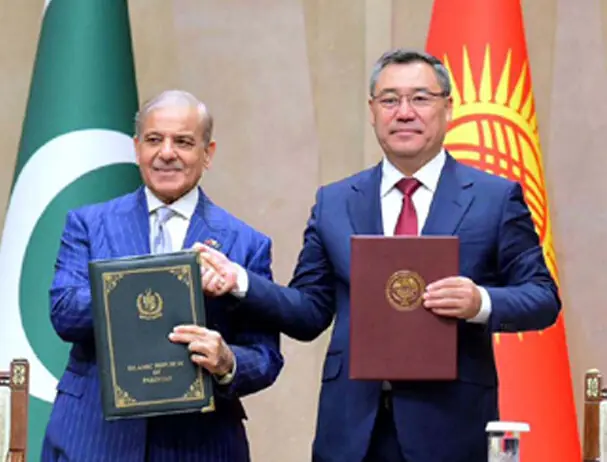
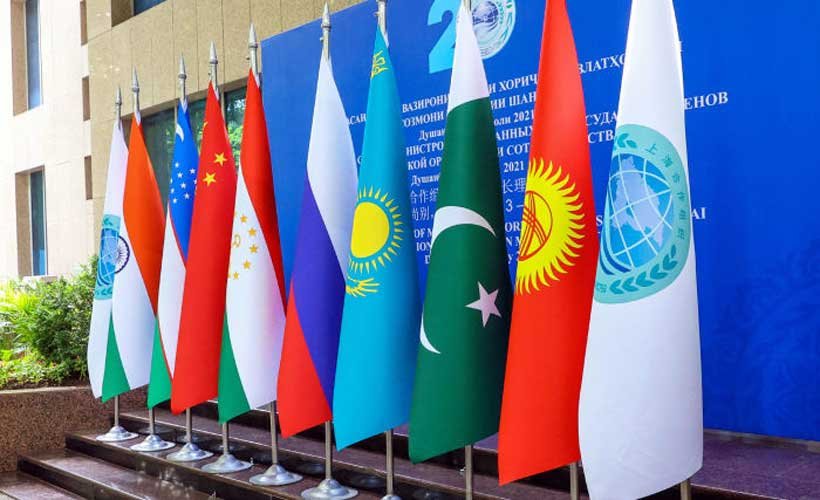
This is precisely the calculation that appears to be driving Pakistan, Saudi Arabia, and Türkiye toward their own new defence arrangement, signed in Makkah as this war grinds toward stalemate. Whatever the framers call it, and however carefully they insist it is not an axis or a bloc, the timing is not incidental. When the region’s traditional guarantor of security proves reluctant, or unable, to shield its partners from the consequences of hosting its forces, those partners begin looking elsewhere, including toward each other.
Hezbollah’s renewed entanglement in Lebanon tells a similar story of continuity dressed as novelty. Lebanon has been dragged into regional conflicts through its non-state actors for half a century. What differs this time is scale and simultaneity, not kind. The country’s fragile state apparatus, its confessional balancing act, and its dependence on outside patrons for both stability and instability remain fundamentally unchanged. The war has intensified old vulnerabilities rather than created new ones.
None of this is to diminish what has genuinely shifted. Direct homeland-to-homeland strikes between Iran and Israel do lower a threshold that once seemed unthinkable, and thresholds, once lowered, rarely rise back to their original height. The psychological and strategic precedent of this war will likely outlast its immediate battlefield outcomes.
But transformation, properly understood, requires more than dramatic imagery. It requires structural change: in alliances, in the distribution of regional power, and in the assumptions states make about who will protect them and at what price. On that count, the picture emerging from this war looks less like a rupture with the old Middle East and more like an acceleration of trends already well underway, a region hedging harder, trusting less, and increasingly willing to look past Washington for its security guarantees. The noise has been extraordinary. Whether the underlying order has genuinely changed remains, for now, an open question.