Zafar Iqbal
Stability Without Prosperity: Pakistan’s Budget and the Illusion of Recovery There is a peculiar cruelty to Pakistan’s present economic condition. The numbers, on paper, look respectable. The IMF programme is on track. Primary surpluses have been recorded. Inflation, once a raging emergency, has cooled to manageable levels. The PML-N government, now preparing its third federal budget, can point to macroeconomic indicators dramatically improved from the crisis figures of 2022-23 and claim, with some justification, a defensible record of economic management.
And yet, the ordinary Pakistani feels none of it. Industries operate well below capacity. Investment has stalled. Real wages remain crushed beneath years of accumulated inflation that eroded purchasing power faster than salaries could recover. Millions of young Pakistanis enter the labour market each year to find it cannot absorb them. Those with options are leaving — to the Gulf, to Europe, to anywhere that offers what Pakistan cannot: a future. This is not the portrait of an economy in recovery. It is the portrait of an economy that has been stabilised into stagnation. The distinction matters enormously, and the tragedy is that the government does not appear to understand it.
The budget about to be presented will almost certainly deepen this misunderstanding. Its architecture, by all credible accounts, is being designed not around the needs of Pakistan’s citizens but around the requirements of the International Monetary Fund. The Federal Board of Revenue faces a revenue target of Rs15.3 trillion, representing a fourteen percent increase over a figure already revised downward twice this year. The IMF has elevated this target to the status of a quantitative performance criterion, making it binding. The budget must therefore be built around a number, not a vision. It must deliver revenue compliance, not economic transformation. The government’s room to manoeuvre has been pre-emptively surrendered to an external creditor.
Within this constrained framework, there are reports of modest salary tax relief being considered. It is, at best, a symbolic gesture. Any revenue concession of this kind will create a gap that must be filled elsewhere, and budget-makers will fill it by raising costs in other directions — through indirect taxation, through utility price adjustments, through the thousand invisible ways in which the state extracts money from people who are already exhausted by extraction. The net result for the citizen is likely to be neutral at best and regressive at worst. This is what it looks like when a government mistakes IMF compliance for sound economic management.
The deeper problem, however, is structural and has persisted across multiple governments of different political persuasions. Pakistan’s growth model is fundamentally broken, and no budget built on stabilisation logic will repair it. The pattern is now so familiar it resembles a law of nature, though it is, in truth, a law of policy failure. Whenever economic activity accelerates beyond a modest threshold, imports surge. Pakistan is deeply dependent on foreign machinery, fuel, and raw materials. As demand rises, so does the import bill. Exports fail to keep pace. The current account deficit widens. Foreign exchange reserves come under pressure. The rupee weakens. The IMF is called. Austerity is imposed. The economy contracts. Stability is restored. And the cycle begins again.
This cycle will not be broken by the next budget. It cannot be broken by any budget designed to satisfy a creditor rather than restructure an economy. Breaking the cycle requires confronting the reasons why Pakistan’s exports have remained structurally weak for decades, why domestic industry cannot compete internationally, why foreign direct investment flows have remained anaemic despite repeated improvement campaigns, and why the tax base is so narrow that revenue targets require near-impossible growth rates to be achieved without strangling the productive economy.
None of these questions lend themselves to easy answers, but they do lend themselves to honest ones. Pakistan’s export base is limited because value-added manufacturing has never been adequately developed. Investment is weak because the cost of doing business — energy prices, regulatory burden, legal uncertainty, and the ever-present threat of policy reversal — makes capital flight more rational than capital commitment. The tax base is narrow because powerful economic actors have historically negotiated their exemptions while the salaried and documented middle class absorbs disproportionate burdens. Austerity without governance reform does not solve these problems. It simply suspends them until the next crisis.
It is necessary to state clearly what austerity, in Pakistan’s context, has actually delivered. It has delivered low-growth equilibrium. The economy is stable enough to avoid collapse but too weak to generate the jobs, investment, or opportunities that a growing population demands. This is not a success story with temporary discomfort. It is a managed decline dressed in the language of fiscal responsibility. Stability without structural reform is not sound policy. It is a crisis deferred, building pressure for an inevitable and more painful return.
The most honest critique of the upcoming budget is not that it lacks ambition — it is that it lacks imagination. A government that has survived a genuine economic emergency, rebuilt its IMF relationship, and achieved primary surpluses has earned the political capital to begin telling a different story. That story would acknowledge that stabilisation was necessary but insufficient. It would outline a credible path toward expanding exports, attracting investment, broadening the tax net fairly, reducing the cost of energy for productive industry, and reforming the governance structures that make Pakistan chronically vulnerable to external shocks.
Pakistan’s external account remains genuinely fragile. Oil price movements and remittance fluctuations can destabilise it quickly. Premature fiscal loosening carries real risks. These constraints are not imaginary, and responsible commentary must acknowledge them. But constraint is not the same as paralysis. Within the space available, choices can still be made about priorities: who bears the burden, which sectors are protected, which reforms begin now. The budget will reveal those choices clearly.
What the nation needs is a government willing to govern beyond the IMF review cycle, to plan beyond the next tranche, and to ask not merely whether the numbers satisfy an external programme but whether the economy is actually building the foundations for self-sustaining growth. Until that question becomes the organising principle of Pakistani economic policy, stability will remain an illusion — impressive in a spreadsheet, invisible in the lives of the people.
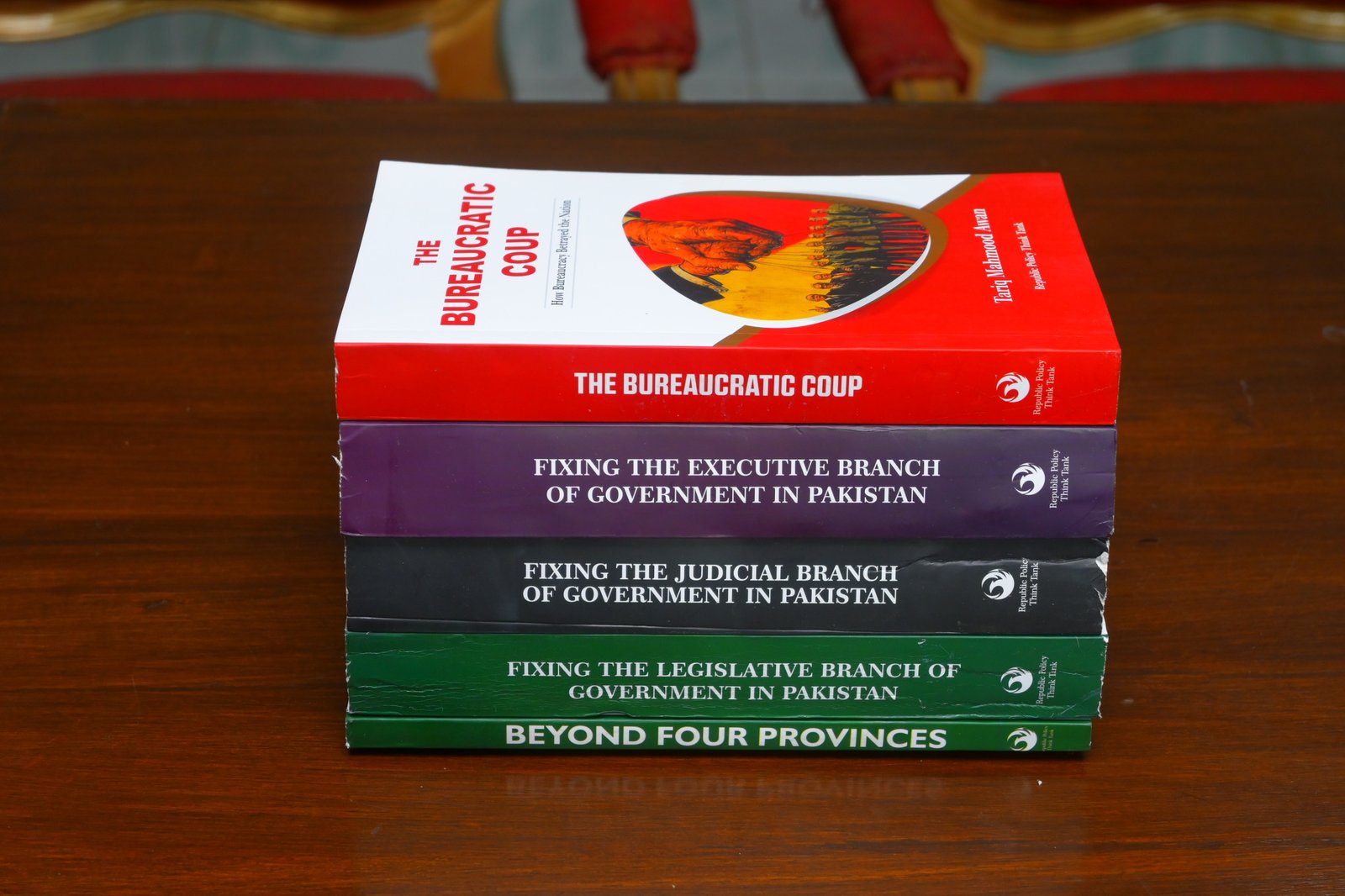
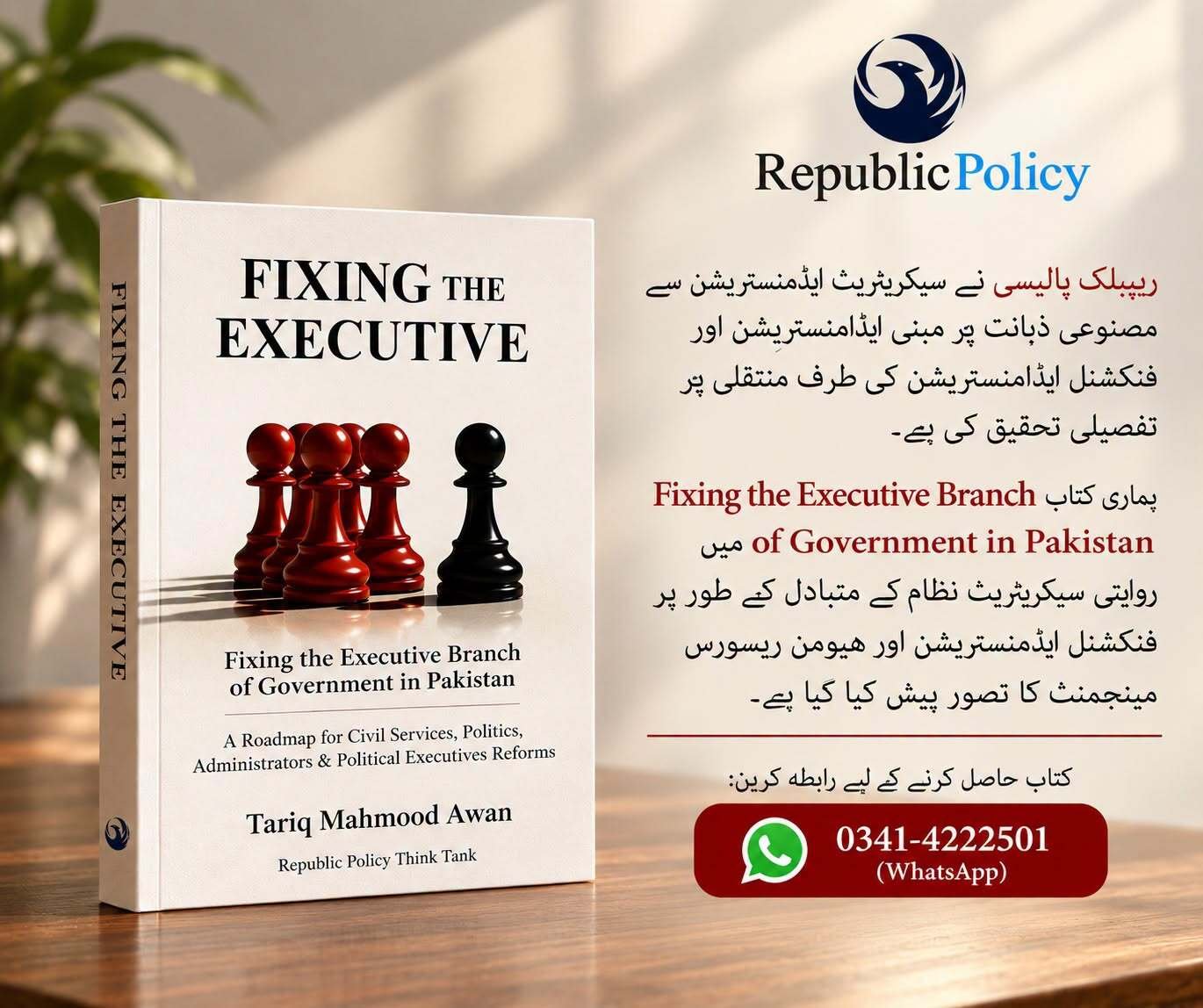
Republic Policy Think Tank’s governance reform books are available at Vanguard Books, Readings, Sang-e-Meel, and bookstores across Pakistan.