
Tahir Maqsood Chheena
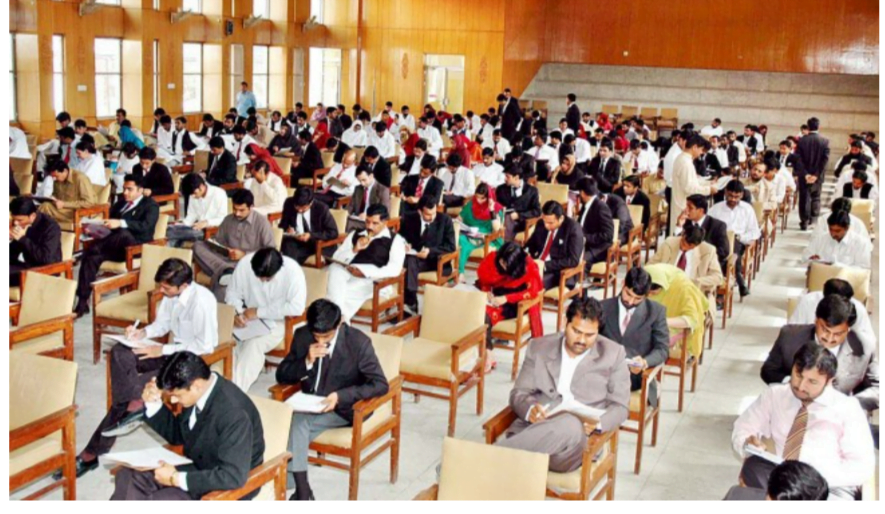
Every year, thousands of Pakistan’s brightest young minds abandon promising careers in medicine, engineering, law, and finance to spend years locked in preparation for a single competitive examination. The CSS — Central Superior Services exam — is treated not merely as a job application but as the entrance gate to a different world altogether. A world of authority, social elevation, state power, and lifetime privilege. This near-universal obsession with civil service tells you something important about Pakistan: that the bureaucracy is not simply an administrative machinery. It is the country’s most coveted social institution.
Understanding why requires looking honestly at what a civil service career actually delivers in Pakistan — and what it ultimately costs the state and the public.
The Beginning: Networks Before Service
The journey begins at the Civil Services Academy, where successful candidates undergo training designed to prepare them for administrative roles. But what happens at the Academy goes well beyond skill development. The bonds formed here — with batchmates, senior officers, instructors, and members of various service groups — constitute an informal architecture of influence that shapes the entire career ahead. This social capital, accumulated before a single day of real administrative work, later becomes the invisible currency determining who gets which posting, which foreign training, which promotion, and which mentor.
This is not incidental. It is structural. Pakistan’s civil service rewards relationships as much as it rewards results, and that dynamic is established from the very first days of professional life.
Early Postings: Authority Without Accountability
Initial field assignments — as Assistant Commissioner, ASP, or other administrative officers — give young bureaucrats their first direct encounter with state power. These early years are genuinely formative, offering practical experience that no classroom can replicate. But they also present the first major fork in the road. Many officers at this stage make strategic decisions about which political families, business networks, and senior bureaucratic figures to cultivate. Social and professional capital are consciously built. The work matters, but so does positioning.
The Middle Years: A Calculation, Not a Calling
A few years into the career, the focus of a typical civil servant shifts in ways that are rarely discussed openly. Good performance remains relevant, but it competes increasingly with the pursuit of better postings, stronger mentors, higher-profile Annual Confidential Reports, and access to advanced training programs — particularly those abroad. Foreign fellowships, executive education at international universities, and overseas assignments become crucial not just for professional development but for advancement within a system that values these credentials heavily.
Upon returning, the officer’s attention turns toward securing positions in federal secretariats, regulatory authorities, development project offices, public sector companies, financial institutions, or the offices of prime ministers and chief ministers. These postings are coveted because they offer direct access to budgets, procurement decisions, development funds, and international institutions. The proximity to money and policy is the prize. Public service increasingly becomes the vehicle rather than the destination.
At this stage, the civil servant’s network expands to include government clubs, policy forums, business leaders, politicians, media figures, members of the judiciary, and representatives of international development agencies. Some officers — though not all — develop financial interests in private business, real estate, or consultancy work through family members or close associates. The line between public responsibility and private interest begins to blur.
The Pivot: When Personal Gain Takes Over
The mid-career phase is arguably the most consequential and the most troubling. This is the point where many officers make a decisive calculation: whether to continue the traditional government career or redirect their accumulated connections and credentials toward international development programs, donor-funded projects, or other alternative opportunities. A significant number resign at this stage. Those who stay are often the ones with the patience and the networks to push toward senior federal and provincial positions.
What makes this period particularly damaging to the public interest is that it coincides with a shift in priorities that many officers make quietly and without acknowledgment. Efforts to secure foreign nationality for themselves or foreign education and settlement for their children intensify. The officer who once represented the Pakistani state before communities and citizens now increasingly looks outward — toward a life beyond Pakistan’s borders. Public interest, always competing with personal ambition, frequently loses the contest at this stage.
The Final Chapter: Revolving Doors and Conflicts of Interest
In the later years of their careers, senior civil servants often develop close working relationships with global financial institutions, international development partners, and foreign aid programs. These connections are professionally enriching and can serve legitimate policy purposes. But they also set the stage for post-retirement arrangements that raise serious questions about conflicts of interest.
After leaving government service, a significant number of officers move into consulting firms, development project management, international organisations, boards of public and private companies, and advisory positions with the same institutions they previously regulated or negotiated with. The revolving door between Pakistan’s civil service and the international development industry is well-established and almost entirely unregulated.
The Deeper Structural Failure
Beneath all of this lies a problem that makes every other failure worse. A typical civil servant in Pakistan undergoes thirty to forty transfers across a career spanning decades, working across sectors as varied as revenue administration, health, education, finance, agriculture, and urban development. In theory, this breadth produces versatile administrators. In practice, it produces officers who are shallow experts in everything and deep experts in nothing.
Institutional memory dissolves with every transfer. Policy continuity breaks down because the person responsible for implementing a programme today will likely be replaced before it concludes. Performance accountability is nearly impossible to establish when no officer stays long enough to be meaningfully judged by results. The system optimises for the career of the officer rather than the outcomes of the state.
Pakistan does not lack talented people in its civil service. What it lacks is a system that directs that talent toward genuine public purpose. Promotions must be anchored in specialisation, demonstrated policy outcomes, transparency, and institutional continuity — not in networking, posting choices, and accumulated privilege. Until that changes, the CSS will continue to attract Pakistan’s best minds and redirect them away from serving the public and toward serving themselves.
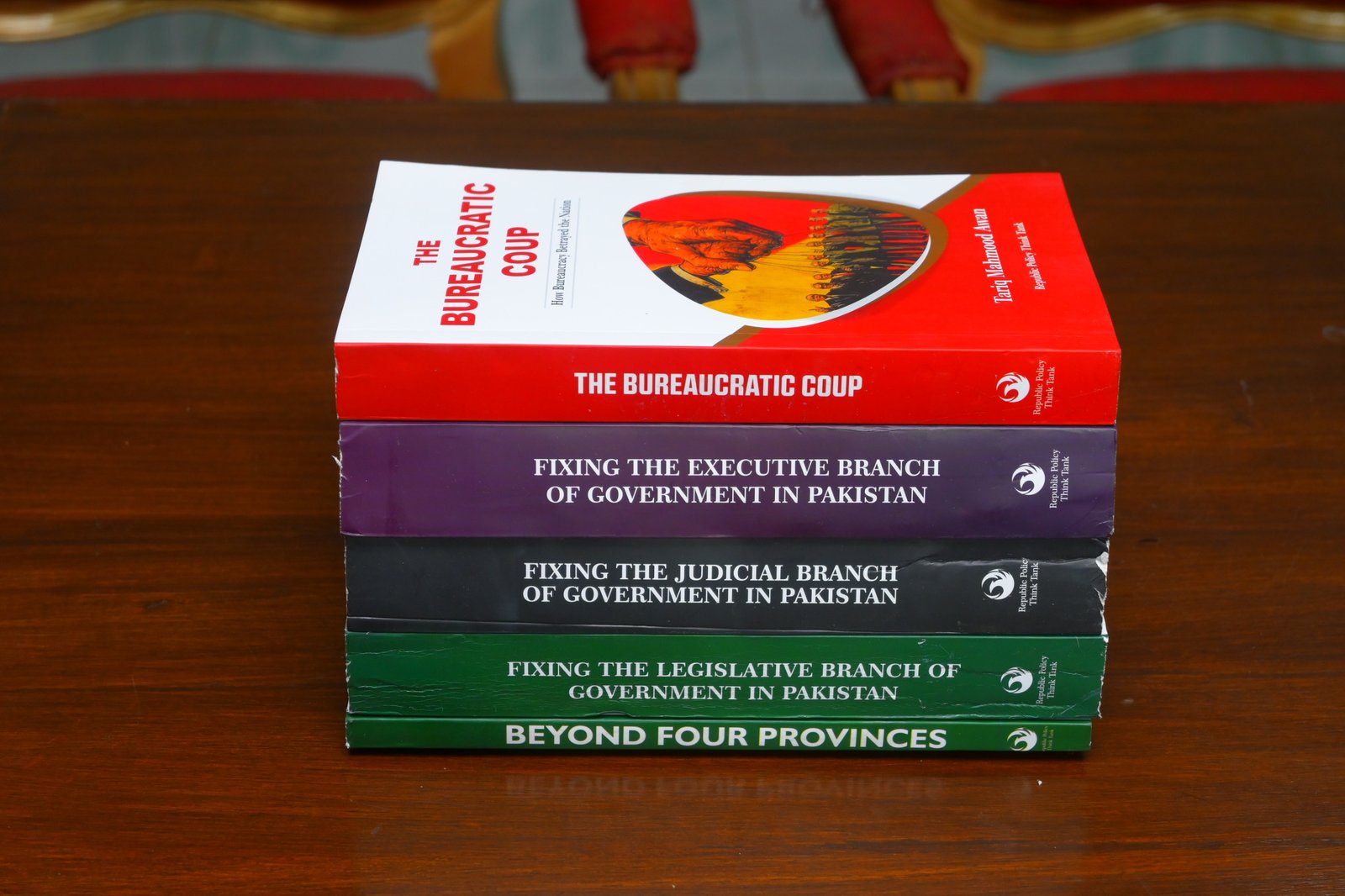
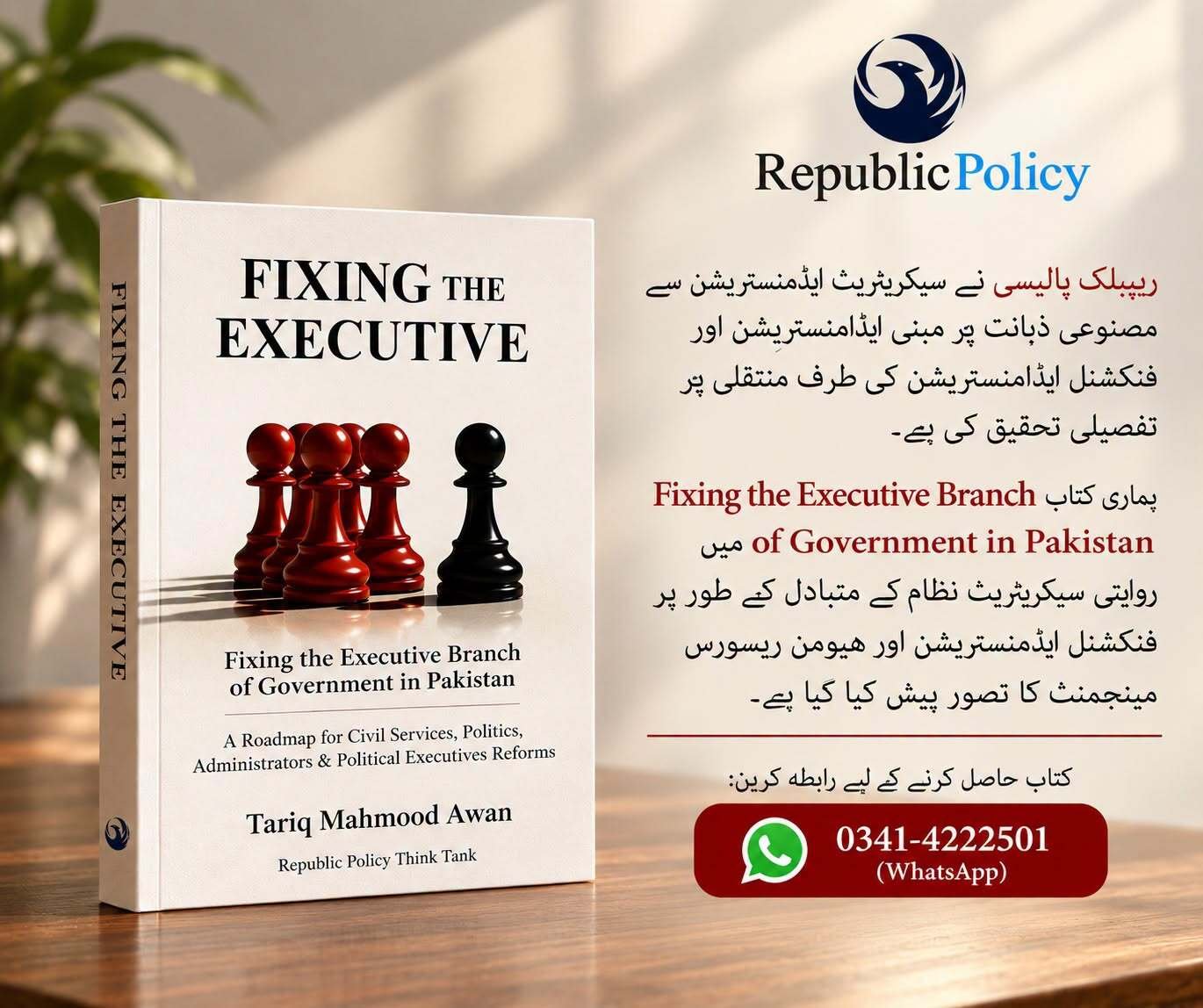
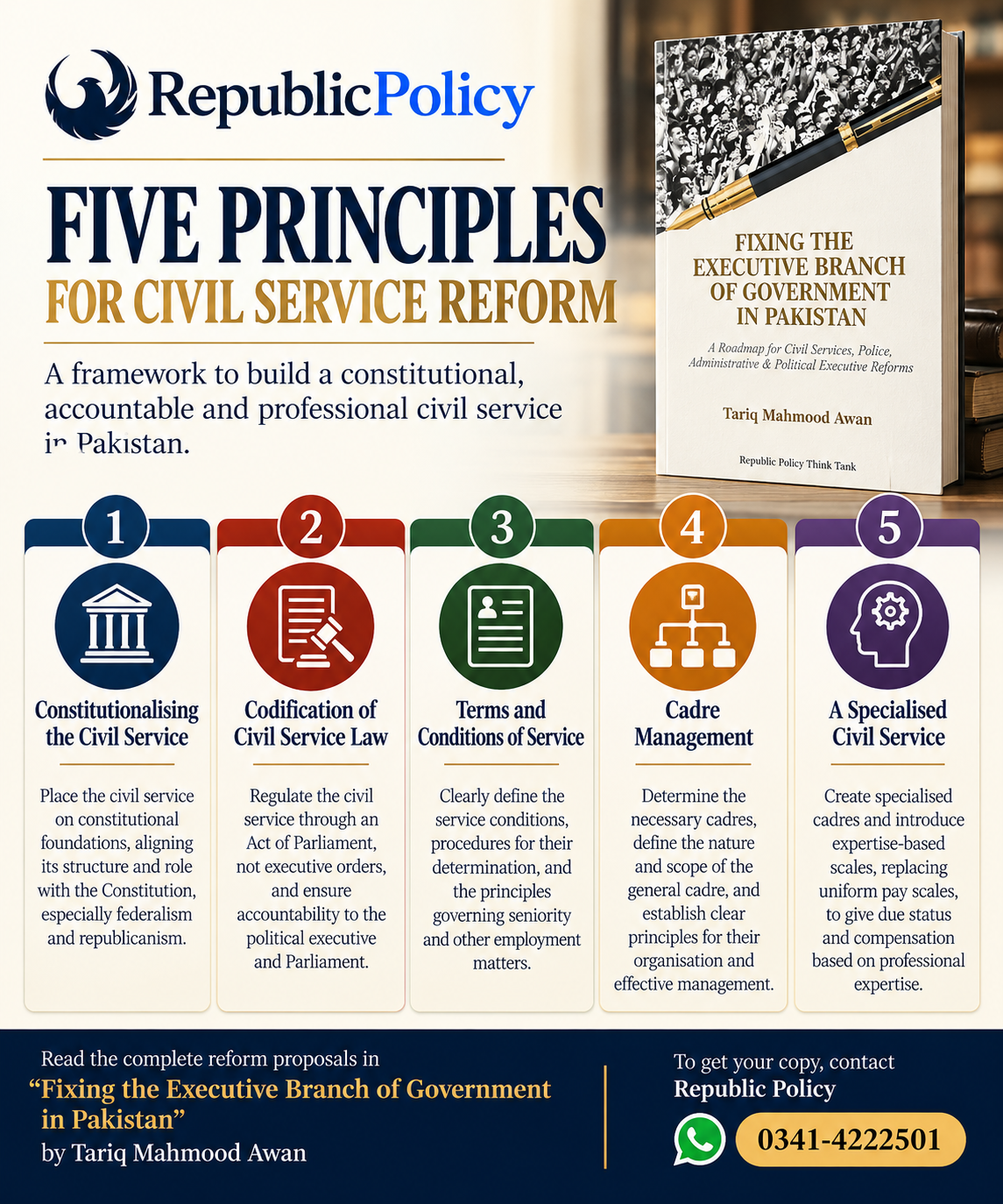
The best-selling books of Republic Policy Think Tank, including the landmark book The Bureaucratic Coup, are available at Vanguard Books, Liberty Books, Readings, Kitab Sarai, Sang-e-Meel, Saeed Book Bank Islamabad, National Book Foundation, and others across Pakistan. Contact for home delivery: 0300 9552542.