
Naeem Afzal
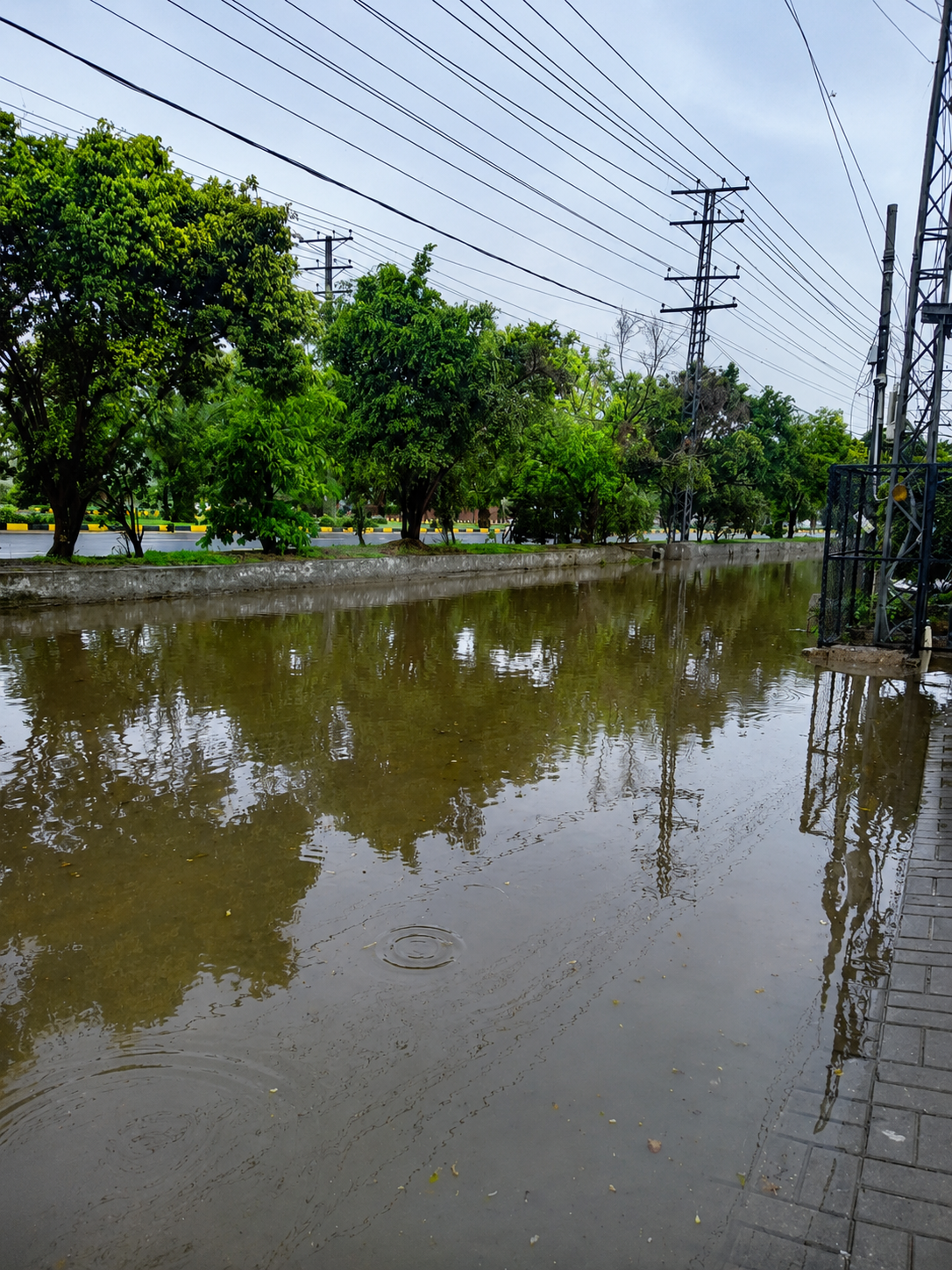
We have strange policies. Usually we lament the water scarcity and declining levels of aquifers. Our policymakers hold press conferences advising people on how to save the water. We live in a dry region; we get plenty of rainwater in monsoons only. But strangely, when monsoon spells start in July, we don’t have ways to live with water. Then we lament floods, which are basically excessive capacities of water for cultivation.
Let’s look at floods from a different perspective.
First, don’t demonize floods. Floods are not the problems. Our way of life and rate of adaptation are poor. I’ve seen floods my entire life. I was in 7th grade when I started hearing news about floods, consequential mass migration, destruction, diffusion of diseases, etc. Now, in 2025, floods are still visiting us.
Because floods are not a novel phenomenon for the states derived from the Indus Valley civilization. The archaeological evidence indicates that floods used to come to this land regularly; even the Indus civilization was wiped out due to the heavy floods. People were accustomed to flood cultivation. Floods were a means to land productivity in the Indus Valley. People used to adapt their ways of living to the flood patterns. I assume there might be an information system to guide people about flood thresholds. I need more study on that.
Second, we can’t stop floods. Rather, we need to learn to live with floods. First and foremost, Pakistan is a water-scarce country, with per capita availability of water standing at 800 cubic meters. Our country gets water from two sources: monsoon rains and glacier melting. The former is under pressure from climate change and becoming extremely unpredictable, whereas the latter is going at (melting) more than a normal speed.
Floods bring us water that we need direly. Why can’t we adopt flood irrigation like the ancient inhabitants of the Indus Valley Civilization? According to a study conducted by the World Bank (WB), Pakistan is listed as a water-scarce country, with per capita water availability reducing from 5000 cubic meters in the 1960s to 800 cubic meters in 2023. Why don’t we store it rather than fighting with floodwater?
Third, we need more dams, not on our land, but for the population. Population growth in Pakistan of 2.55% is a time bomb. Pervaiz Hoodboy, in his book, Pakistan: Identity and Future, enlisted pressing problems Pakistan is facing. On the top, he noted “Population Growth” as the most notable threat Pakistan is confronting.
Based on my living experience in Lahore, I can’t agree more with Pervaiz Hoodboy. Population explosion is worsening our already dead governance. Traffic, pollution, and waste are also the issues derived from a population bulge if linked with poor governance.
Population growth is a scientific phenomenon. My mother, when I discuss this issue of population growth and its remedies with her, counterargues with me by saying, “A lady is having 3 kids on average, which is a break from the tradition when women were pushed to have more sons. 5-7 children per woman wasn’t an unusual thing.”
It’s not as simple as it seems. Population growth is like a fission reaction. A larger nucleus splits into countless smaller nuclei. The advancements in medical science have helped humanity achieve longer lives. Pervaiz Hoodboy clarified this growth with a mathematical exponential function, where the slightest change in power causes immense change in the output. I prefer linking population growth with the problem of Chaos in Physics, where a minor diversion can cause enormous disruption in our universe. Similar things are happening in our metropolitan cities, where population growth is making already fragile governance worse than ever.
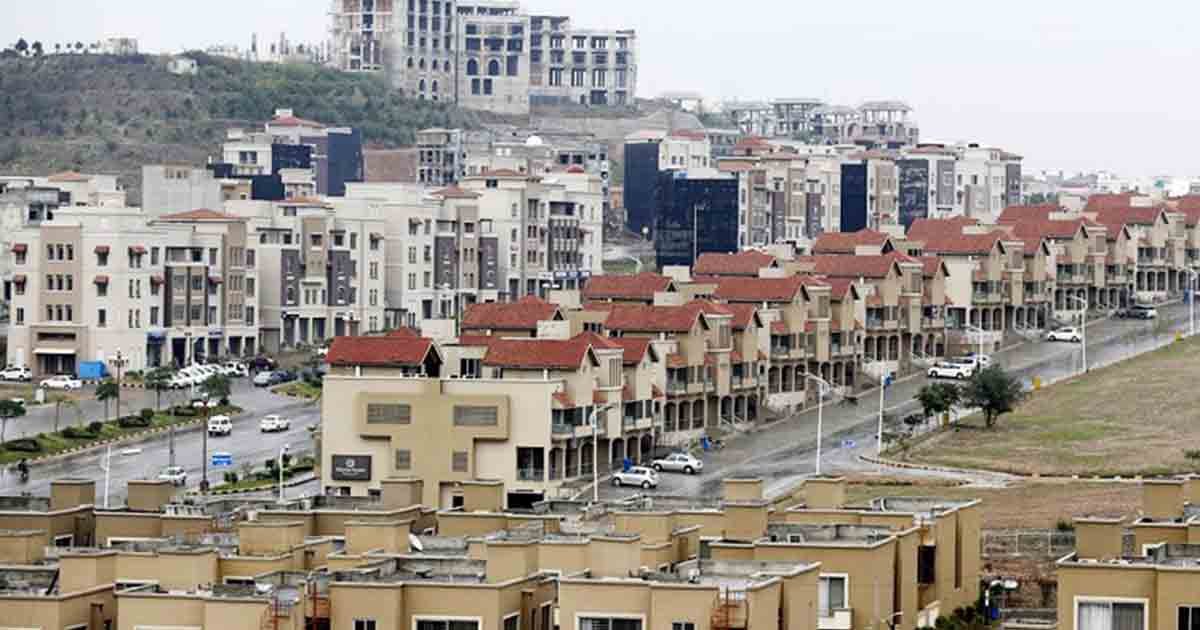
Other than population sprawl, we need to rethink our cities’ sprawl. Our cities are not modern cities; they are just sprawl. Modern cities are dense, well managed, and organized. Each year in the monsoon, the government tries to fight with water. We need to manage the water, not to fight or demonize the water. We can manage the water by effectively managing our cities.
In a posh area of Lahore, I saw a slum of poor people. It was alone among plazas and buildings. For a moment, I thought, how did it come here? When I did some research and saw old pictures, then I learned that the slum did not come here, but these are the plazas that occupied their place. Once where there were fields, now there are plazas and buildings.
In short, we snatched the space from water for drainage.
So blame the poor governance of cities, not the water. Stop demonizing floods.