Zafar Iqbal
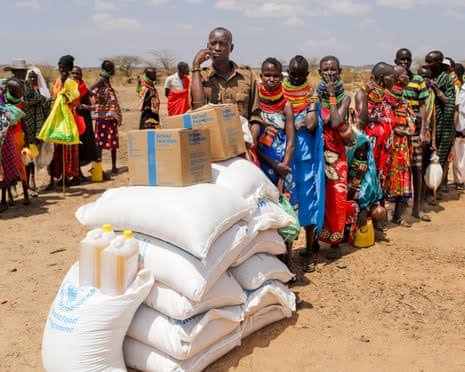
Punjab’s budget for the fiscal year 2027 arrives with impressive headline figures and a finance minister who was careful with his words. The total outlay stands at Rs5.9 trillion, a promised surplus of Rs910 billion is on offer, and the assurance that no ordinary citizen’s tax bill will increase was repeated with some enthusiasm. What received less emphasis was a nearly forty percent cut to annual development spending, including Rs140 billion in projects funded by Punjab’s international development partners. Money that was meant to build roads in underserved districts, expand schools in neglected towns, and strengthen hospitals serving the poor has been redirected. It will now help cover federal expenses. That is not fiscal prudence. That is the centre tightening the noose around provincial finances and calling it coordination.
This is the defining tension inside Punjab’s FY27 budget. On the surface, the numbers are tidy. Beneath the surface, a cash-strapped federal government is systematically clawing back resources from the provinces, and Punjab is absorbing a significant share of that pressure. The development cut is not a temporary adjustment to be reversed next year. It reflects a structural problem in Pakistan’s fiscal federalism, one in which the provinces are expected to generate more, spend less on themselves, and remain quiet about the difference.
The tax side of the budget is more defensible, though not without its own contradictions. Punjab is targeting a nearly forty-two percent rise in tax revenue for the coming year, driven by three levers: rate adjustments, wider coverage of the tax base, and tighter enforcement. Taken together, these represent a serious attempt to extract more from an economy that has historically been under-taxed at the provincial level.
The overhaul of abiana, the agricultural water charge, is one of the more technically sound decisions in the budget. The old system based charges on crop type, which created endless opportunities for misreporting and evasion. The new system introduces flat per-acre rates with separate slabs for orchards and lift-irrigation. It is simpler, harder to manipulate, and considerably easier for the administration to verify and collect. Done properly, it will bring more consistency to a revenue stream that has long underperformed its potential.
Bringing a larger portion of the services sector into the sales tax net is similarly sensible. A substantial share of Pakistan’s service economy operates informally, generating income and value that never appears in official accounts. Expanding coverage is not a punitive measure. It is a necessary step toward building a tax base that reflects the actual size and shape of the provincial economy. The people already paying taxes have a legitimate grievance when those who operate in the informal economy face no comparable obligation. Widening the net is both more fair and more productive than repeatedly increasing rates on those already inside it.
But the budget’s credibility on taxation is undermined by what it deliberately avoids. Real estate and property in Punjab remain among the most under-taxed assets in the country. Valuations used for tax purposes bear no resemblance to market realities. The gap between official rates and actual transaction values is not a matter of administrative difficulty. It is a matter of political choice. The people who own and transact in property are also the people with the greatest influence over how budgets are written, and the result is a persistent exemption dressed up as a valuation problem.
Agriculture presents an even starker case. It is Punjab’s largest economic activity by almost any measure, yet its contribution to provincial revenue remains negligible. Agricultural income tax collection has remained stuck at a few billion rupees annually for years, a figure that is genuinely embarrassing when set against the scale of the sector. This is not because agriculture is unprofitable or untaxable. It is because the political economy of Punjab has historically protected large landowners from bearing a revenue burden proportionate to their income. The budget does not address this gap in any meaningful way. Until it does, every claim about broadening the tax base must be read with appropriate scepticism.
The most genuinely ambitious element of the budget is PIVOT, a Rs2 trillion initiative targeting industrial clusters, agro-processing, and export development. Punjab has needed a coherent industrialisation push for a long time, and on paper PIVOT represents exactly that kind of commitment. It is oriented toward growth rather than extraction, toward building productive capacity rather than simply harvesting existing revenue streams. If it works, it could begin to shift Punjab’s economic base in ways that improve both employment and long-term revenue generation.
The difficulty is that budgetary allocations and actual outcomes in Pakistan have a complicated relationship. Grand industrial initiatives have been announced before, funded in part, implemented partially, and quietly absorbed into the bureaucratic routine. PIVOT will succeed or fail based on how the money moves, which institutions manage it, whether private investment actually follows public commitments, and whether political priorities shift before the clusters mature. These are execution questions, and they cannot be answered from the budget document alone.
What Punjab’s FY27 budget ultimately reflects is a government trying to manage several contradictory pressures at once. It is being squeezed by the centre and asked to generate more while investing less in its own people. It is expanding some parts of the tax base while carefully leaving the most powerful sectors untouched. It is making a large bet on industrial growth while cutting the development spending that builds the foundational infrastructure growth depends on.
The surplus looks good in a press release. The PIVOT commitment deserves genuine attention. But a budget that cuts development spending for the poor to cover federal costs, that leaves agriculture and property undertaxed, and that offers no meaningful answer to Punjab’s structural fiscal dependence on Islamabad is not a reform budget. It is a management document, holding the line in difficult circumstances while deferring the harder decisions to another year.
The best-selling books of Republic Policy Think Tank, including the landmark book The Bureaucratic Coup, are available at Vanguard Books, Liberty Books, Readings, Kitab Sarai, Sang-e-Meel, Saeed Book Stores, and others across Pakistan. Contact for home delivery: 0300 9552542.