
Dr Bilawal Kamran
Pakistan inherited a state machinery built for a different century, and it has spent most of its seventy-nine years refusing to let it go. The colonial administrative apparatus was designed to control, to extract, and to slow things down deliberately, for a distant empire that feared speed in its subjects far more than it valued efficiency. That machinery survives largely intact today, wearing the vocabulary of reform while preserving the instincts of delay. Nowhere is this contradiction more visible than in the state’s approach to regulatory reform, a project that has been announced, reannounced, and endlessly reworked, while the actual experience of doing business in Pakistan remains stuck in queues, paperwork, and waiting rooms that time forgot.
Consider the plain facts. While much of the world reduced business registration to a matter of seconds, a few clicks on a screen, Pakistan continued to demand physical files, physical stamps, and physical patience from its citizens. The cost of this backwardness did not fall on the state. It fell, as it always does, on the businessman standing in line, the exporter waiting for a licence, the small entrepreneur who gave up before the process even began. Only in 2024 did the government commit, on paper at least, to a serious overhaul of this outdated system. The commitment was real. The question, four years later, is whether commitment alone was ever going to be enough.
It was not, and here is why. Reform in Pakistan does not fail for lack of ambition. It fails for structural reasons, reasons embedded so deeply in the architecture of the state that no single minister, no single budget allocation, and no single announcement can dislodge them. Consider the legislative bottleneck first. Most meaningful reforms require a change in law before they can breathe. That means drafting, vetting, cabinet approval, and often parliamentary passage, a sequence that sounds procedural until one watches how long a single draft can sit untouched on a desk in Islamabad. Months become years. Files gather dust. Ambition, once written into law, must still survive the machinery meant to enact it, and that machinery has never been in a hurry.
Then there is the human factor, the quiet killer of every reform Pakistan has ever attempted. Officers are transferred with a frequency that borders on institutional sabotage. A reform championed by one secretary dies the moment he is posted elsewhere, because the successor inherits a desk, not a mission. No file transfers momentum. No system holds anyone accountable when a promising initiative simply evaporates after a transfer order. Delay, in such an environment, is not punished. It is not even noticed. It thrives precisely because no one pays for it.
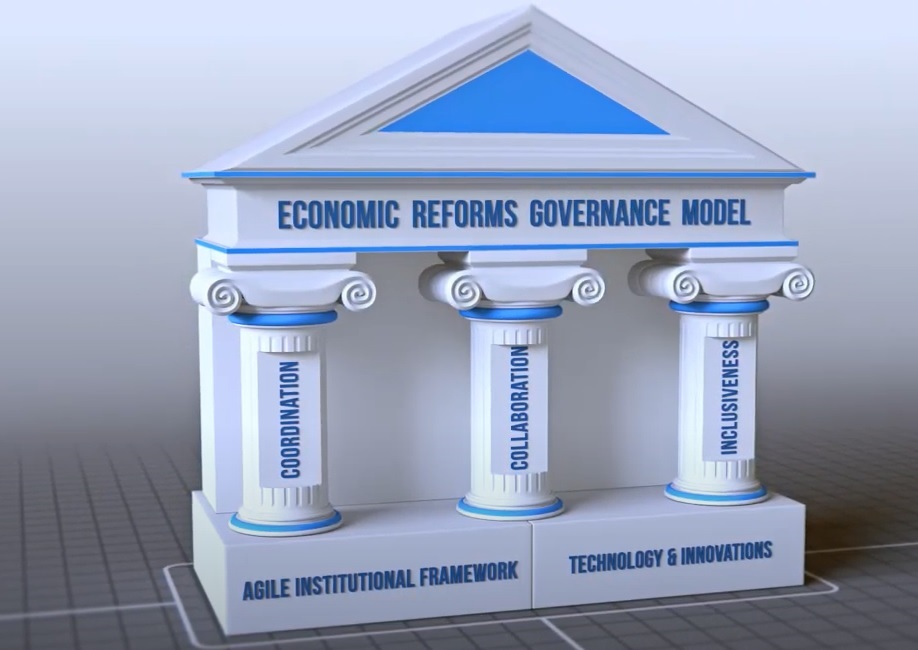
Coordination across departments compounds the problem further. Pakistan’s regulatory reforms rarely belong to a single ministry. They require multiple departments to move in unison, yet no single body possesses the authority to compel that unison. A coordinating committee can write letters, hold meetings, and issue recommendations, but recommendations are not orders, and everyone in the room knows it. Each department waits for the other to move first, and in that mutual waiting, reform quietly suffocates. This is bureaucracy not as inefficiency but as a system of mutual deniability, where responsibility is so diffused that it belongs to no one.
The 18th Amendment adds a further layer of complexity that the state has never fully resolved. Devolution handed provinces real authority, a democratic and constitutional necessity by any measure, but it also meant that federal decisions no longer travel automatically across the country. An agreement signed in Islamabad may carry no weight in Lahore, Karachi, or Peshawar unless the province in question separately consents. What results is not decentralisation in its best sense but fragmentation in its worst, a patchwork of half-implemented reforms that often confuse more than they clarify. The federation, fifteen years after devolution, still has not built the coordination mechanisms that devolution itself demanded.
Technology, ironically, has become its own category of failure. Digital portals, integrated databases, online licensing systems, these are precisely the tools that could bypass the human bottlenecks described above. Yet Pakistan’s dependence on a single, overstretched technology body means that digital reform moves at the pace of its slowest component. Portals remain “under development” for years. Systems are declared “almost ready” indefinitely, a phrase that has, by now, lost all meaning through repetition. Even when funding is approved and contracts signed, money frequently fails to reach the department in time, trapped in an approval chain with no incentive to move quickly. A budgeted, approved project can sit motionless indefinitely, not for lack of intention, but for lack of anyone willing to push the file forward.
And then, almost absurdly, some reforms are blocked by nothing more complicated than an empty chair. A board without a chairman, an authority without a head, a committee whose tenure has lapsed and whose replacement has not been named, these vacancies alone can freeze an entire reform agenda. The obstacle is not political will. It is not budget. It is simply that no one has bothered to fill a seat.
Is this, then, a wild goose chase, as some have described it? Not quite. Pakistan is not lost. It knows precisely where the goose is. It has written report after report describing the goose in exhaustive detail, its habits, its location, its value. What Pakistan lacks is not knowledge but capacity, the institutional discipline to actually catch what it has already identified and hold onto it. Intentions, however sincere, do not simplify a business licence. Targets, however ambitious, do not make a digital portal go live. Until Pakistan builds structures that survive individual officers, that bind departments to genuine coordination, that harmonise federal ambition with provincial reality, and that refuse to let a single vacant chair paralyse an entire reform agenda, the goose will remain exactly where it has always been: visible, documented, and permanently out of reach.
Real reform is not a matter of announcement. It is a matter of architecture, accountability, and the political courage to dismantle systems designed, quite deliberately, to resist change.
The best-selling books of Republic Policy Think Tank, including the landmark book The Bureaucratic Coup, are available at Vanguard Books, Liberty Books, Readings, Kitab Sarai, Sang-e-Meel, Saeed Book Bank Islamabad, National Book Foundation, and others across Pakistan. Contact for home delivery: 0300 9552542.