
Abdul Rehman Khan
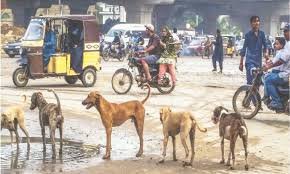
Pakistan is a country of contradictions, and nowhere is this more visible than in how its citizens relate to stray dogs. Walk through any urban neighbourhood and you will find two entirely different worlds coexisting on the same street. One person leaves out a bowl of water near the gate and tosses a piece of bread to the dog that sleeps by the wall every night. The next person crosses the road, picks up a stone, or calls the local authority in a panic. Both reactions are human. Both are understandable. But the question is not which reaction is more sympathetic. The question is what a civilised state is supposed to do when faced with a genuine public health challenge that also involves living, feeling creatures.
For decades, Pakistan’s answer has been brutal and simple: kill them. Poisoning, shooting, and culling have been the tools of choice for municipal authorities across the country. These methods have been applied with neither remorse nor effectiveness. The stray dog population has not declined. The attacks on humans have not stopped. What has continued, year after year, is the infliction of prolonged suffering on animals who have no voice and no recourse, carried out in the name of public safety by institutions that cannot even collect garbage reliably. It is not a solution. It is a ritual of violence that satisfies no one except those who confuse cruelty with control.
The Islamabad High Court’s permanent ban on these methods in the capital is therefore not a minor administrative ruling. It is a statement about what kind of society Pakistan wants to become. The Court has done what legislatures and local governments have consistently failed to do: draw a clear line between what is acceptable and what is not, and insist that public safety cannot be pursued through organised inhumanity.
In place of culling, the Court has endorsed the catch, neuter and release programme, which is the globally accepted standard for managing stray animal populations. The science behind it is not complicated. When dogs are culled, the surviving population fills the vacuum rapidly. Reproduction accelerates, territorial behaviour intensifies, and the problem returns within months. Neutering, by contrast, stabilises the population over time, reduces aggression, and interrupts the cycle of uncontrolled breeding. Cities across Asia, Europe and Latin America have implemented this model with measurable results. It requires investment, organisation and patience. It does not require poison.
But even catch, neuter and release is only the beginning of a serious policy response. Pakistan’s cities need animal shelters and sanctuaries that are properly funded and professionally managed. Strays that are injured, diseased or pose a genuine danger need to be housed, not left to deteriorate on the roadside. Vaccination drives, particularly for rabies, are essential not only for the animals but for the humans who live alongside them. Rabies remains a deadly and preventable disease, and mass vaccination of stray populations is one of the most cost-effective public health interventions available. The absence of such programmes is not a resource problem alone. It is a priority problem. The state has simply never treated this as worth doing.
There is an argument frequently heard in Pakistan that concern for animals is a luxury of the privileged, an imported sentiment that has no place in a country where millions of humans lack access to clean water, justice and security. This argument sounds serious but it does not hold. Compassion is not a finite resource that runs out when directed at animals. A society that normalises cruelty toward the defenceless does not thereby become more capable of protecting its human citizens. It becomes less so. The habits of indifference and institutional violence do not stay contained to one category of victim. They spread. They normalise. They become the default response of a state that has stopped asking whether what it is doing is right.
Islam itself, the framework through which most Pakistanis understand their moral obligations, is unambiguous on the treatment of animals. The Prophet, peace be upon him, warned of punishment for those who cause suffering to animals and praised mercy shown to them. A woman was condemned for starving a cat. A man was forgiven his sins for giving water to a thirsty dog. These are not peripheral traditions. They are central to an ethical vision that recognises living creatures as beings with rights, not objects to be disposed of when inconvenient.
What the Islamabad High Court has done is align the law with both modern science and ancient moral principle. The government’s responsibility now is to implement this vision seriously: to fund the neutering programme adequately, to build the shelters, to conduct the vaccination drives, and to train the municipal staff who will carry this work out. The Court can ban the old methods. Only the state can build the new ones.
Pakistan faces challenges that dwarf the question of stray dogs in scale. But a nation’s character is measured not only in how it treats its most powerful citizens, but in how it treats those who cannot speak, cannot vote and cannot fight back. The dogs sleeping on the streets of Islamabad tonight did not choose to be there. What happens to them next is entirely a matter of human choice.