
Why Terrorist Movements Can Become Victims of Their Own Strategy
Al-Qaeda, the organization created by Osama bin Laden and responsible for the September 11 attacks, has effectively ceased to exist as the centralized terrorist organization it once was. Terrorism and jihadist violence have certainly not disappeared, and armed groups carrying the al-Qaeda name continue to operate in several regions. But these organizations should not automatically be treated as extensions of the network that planned and executed 9/11. The central organization itself has largely collapsed.
Understanding how this happened is important because al-Qaeda’s decline was not simply the result of American military power. Counterterrorism operations, intelligence cooperation and the killing of senior leaders contributed significantly, but the organization also weakened itself through strategic mistakes, internal divisions and the loss of support among the very communities it claimed to defend.
Before September 11, al-Qaeda demonstrated an ability to organize major international attacks. Its campaign included attacks against American interests during the 1990s and culminated in the attacks of 2001. In the years that followed, however, its ability to conduct centrally directed international operations steadily declined. By the end of the first decade after 9/11, the operational momentum of global jihadism was increasingly shifting away from core al-Qaeda toward other organizations.
The American response played an important role, although it was often strategically confused. After 9/11, Washington defined its enemy broadly as international terrorism rather than limiting its objective to dismantling al-Qaeda. The resulting “war on terror” expanded far beyond the organization responsible for the attacks. The invasion of Iraq was particularly consequential. Al-Qaeda had not operated there before the American occupation, but the conflict subsequently created conditions in which jihadist organizations could recruit, expand and eventually produce the movement that became the Islamic State.
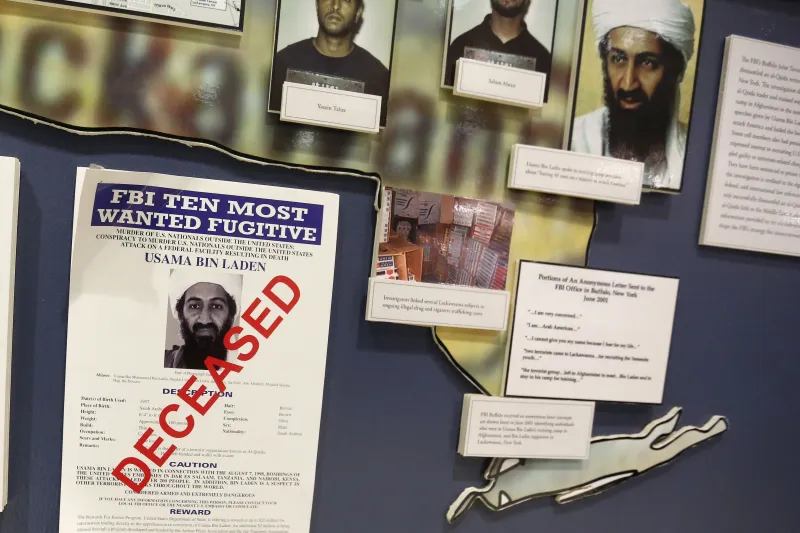
Nevertheless, sustained counterterrorism pressure gradually weakened al-Qaeda. The killing of Osama bin Laden in Abbottabad in May 2011 deprived the organization of its founder and symbolic leader. Documents recovered from his compound also indicated that bin Laden was no longer exercising the kind of operational control over the organization that was often assumed. His death therefore represented both a practical and psychological blow.
Drone strikes further reduced the organization’s leadership and operational capabilities, although their broader consequences were complicated. They eliminated militants and disrupted planned attacks, but civilian casualties and resentment surrounding drone warfare also became sources of radicalization and damaged perceptions of the United States among some allied populations. Military force weakened al-Qaeda tactically, but force alone did not explain its eventual collapse.
Less dramatic measures were arguably just as important. International intelligence cooperation, restrictions on terrorist financing, biometric screening, databases and improved information sharing made it increasingly difficult for transnational terrorist networks to operate undetected. Cooperation between American and British intelligence services, for example, helped disrupt a 2006 plot to destroy civilian aircraft travelling to the United States.
Yet perhaps the most important explanation for al-Qaeda’s decline lies within the organization itself.
Its strategy depended heavily on presenting itself as the defender of Muslims against foreign enemies. But attacks conducted by al-Qaeda-linked organizations increasingly killed Muslim civilians. Instead of mobilizing the Muslim world behind the organization, such violence alienated many of the people whose support al-Qaeda needed.
Bin Laden himself understood the danger. Communications recovered from Abbottabad show his concern that indiscriminate violence by associated groups was damaging al-Qaeda’s image. Public attitudes reflected that decline. Between 2003 and 2011, support for bin Laden fell sharply in several Muslim-majority societies, including Indonesia, Jordan, the Palestinian territories and Pakistan. His ambition to create a revolutionary movement capable of mobilizing Muslims internationally was steadily collapsing.
Al-Qaeda also struggled to control the organizations operating under its banner. Its attempt to build a global network produced a fundamental problem: decentralization increased geographical reach but reduced strategic control. Local groups had their own leaders, interests and methods. Some adopted tactics that directly undermined the broader strategy envisioned by al-Qaeda’s central leadership.
The most consequential example was the organization that eventually became the Islamic State. Originally emerging from al-Qaeda’s Iraqi branch, it developed a far more aggressive strategy and ultimately broke with al-Qaeda. By 2014, the Islamic State controlled substantial territory in Iraq and Syria and attracted thousands of foreign fighters. Suddenly, al-Qaeda faced competition from a younger and more spectacular jihadist movement.
The disagreement exposed a deeper strategic problem. Al-Qaeda’s leadership recognized that spectacular brutality could ultimately destroy public support. Ayman al-Zawahiri had warned Abu Musab al-Zarqawi against sectarian killings and graphic executions because such violence could alienate Muslim populations. Zarqawi ignored those warnings, and the movement that grew from his organization eventually eclipsed al-Qaeda.
The Islamic State eventually committed many of the same mistakes on an even larger scale. By concentrating fighters and territory in Iraq and Syria, it became vulnerable to conventional military power. Its extreme brutality also created enemies across ideological and geopolitical divides. An international coalition working with Iraqi, Kurdish and Syrian forces eventually dismantled its territorial caliphate.
But al-Qaeda did not recover from the competition. It had lost influence, recruits and organizational coherence. Zawahiri increasingly pursued decentralization, while groups associated with al-Qaeda concentrated primarily on local conflicts rather than implementing a centrally directed global strategy.
The killing of Zawahiri in Kabul in July 2022 further demonstrated how weak the central organization had become. The limited international reaction contrasted sharply with the enormous significance once attached to al-Qaeda’s leadership. Said al-Adel has subsequently been regarded as its apparent leader, but his presence in Iran and limited freedom of operation illustrate how far the organization has fallen from the network that once coordinated attacks across continents.
Al-Qaeda’s history therefore offers a broader lesson about terrorism. Terrorist organizations do not always disappear because they are militarily destroyed. They can also collapse because their strategies fail.
Military operations killed leaders and disrupted networks. Intelligence cooperation made international terrorism harder to organize. Financial restrictions reduced freedom of operation. But al-Qaeda also undermined itself by killing civilians, alienating potential supporters, losing control over affiliates, dividing internally and failing to transform spectacular violence into lasting political success.
The distinction matters today. Jihadist organizations remain active from Africa to South Asia, and some pose serious threats to local governments and civilians. But describing every organization carrying the al-Qaeda label as part of a single centrally controlled global network can exaggerate the strength of an organization whose original structure has largely disappeared.
The United States and its allies made serious mistakes during the long campaign that followed September 11, particularly by expanding a war against one organization into an open-ended struggle against terrorism itself. Yet the organization responsible for 9/11 ultimately failed to achieve its strategic ambitions.
Its leaders were killed, its international network fragmented, its popular appeal collapsed, and its affiliates increasingly pursued their own agendas.
Al-Qaeda was weakened by its enemies, but in the end, much of its defeat came from within. Terrorist organizations can survive military pressure for years; what they cannot easily survive is the failure of their own strategy.