
Arshad Mahmood Awan
The Strait of Hormuz has long been the world’s most consequential maritime chokepoint. Through its narrow waters, more than a fifth of the world’s oil supply moves each day. Whoever controls it holds a lever over the global economy. That geographic reality has now thrust the small, peaceful nation of Oman into the centre of a dangerous confrontation it never sought, as United States President Donald Trump threatened to “blow up” one of Washington’s oldest allies in the region.
The threat came during a cabinet meeting in Washington on Wednesday, when Trump was asked about reports that Oman and Iran were in discussions over jointly overseeing shipping passage through the Strait of Hormuz. His response was blunt and alarming: “Nobody is going to control it. It’s international waters, and Oman will behave just like everybody else, or we will have to blow them up.” The US Department of State subsequently confirmed the remark on social media, leaving no room for the interpretation that the president had misspoken.
The threat stunned observers across the world. Oman is a country of 5.3 million people with a tradition of quiet diplomacy, careful neutrality, and constructive mediation. It does not host American military forces, unlike Qatar, Bahrain, and the UAE. It has maintained working relationships with both Washington and Tehran for decades, which is precisely what makes it valuable as a diplomatic bridge. To threaten it with military destruction is, in the words of Raed Jarrar of the rights group DAWN, to speak like “a mafia boss”. The United Nations Charter, Jarrar reminded the world, prohibits the threat of force against any state, and that prohibition applies equally to the United States.
To understand what is driving Trump’s fury, one must understand the current state of the US-Iran war and what is at stake in the strait. Following the joint US-Israeli attack on Iran on February 28, Tehran closed the Strait of Hormuz and began asserting sovereignty over it. Iran has been charging tolls of as much as two million dollars per ship, framing these levies as “fees for services” rather than formal tolls, which international maritime law prohibits. The United States, for its part, has enforced a blockade on Iranian ports. A temporary ceasefire announced on April 8 has not held. Direct talks in Islamabad collapsed. Military exchanges have continued, with the Islamic Revolutionary Guard Corps firing warning shots at ships attempting to pass the strait with their radars switched off, striking a US airbase, and allegedly targeting Kuwaiti military positions as well.
Against this backdrop, Iranian state television reported that Tehran and Washington were close to agreeing on a memorandum of understanding under which Iran and Oman would jointly oversee the strait. The Trump administration flatly denied this, calling the reports “a complete fabrication”. Yet the president’s explosive reaction tells a different story. Analysts believe that precisely such an arrangement is what Trump is desperately trying to prevent.
Muhanad Seloom of the Middle East Council on Global Affairs explained the American fear with clarity. What Washington wants to avoid, he said, is the normalisation of Iranian control over the strait, dressed in legal and administrative language and given Arab cover by a trusted US ally. An Iran-Oman arrangement would convert what is currently a temporary act of war into a permanent post-war fact. It would establish a precedent that coastal states can regulate and monetise an international waterway, directly undermining the freedom of navigation principle that the United States has long championed and enforced across the world’s oceans. It would also hand Iran a strategic victory that would outlast any ceasefire agreement, one that no American president could easily reverse. For all three reasons, the prospect is intolerable to Trump.
Seloom also offered a more measured reading of Oman’s actual intentions. He argued that joint Iran-Oman control of the strait was “more posture than probability”. Oman’s real interest, he suggested, is not to co-own Iran’s blockade but to broker the reopening of the strait and restore normalcy to regional trade. That is entirely consistent with Oman’s historical approach to diplomacy: it wants to be the solution, not part of the problem. Samir Puri of King’s College London echoed this view, noting that Oman has long played a “skilful regional hand” by staying clear of conflicts and offering itself as a mediator. He found it difficult to see how bombing Oman would change Iran’s calculations over the strait in any useful way.
Oman’s role in the current crisis carries deep historical weight. Omani Foreign Minister Badr Albusaidi was actively mediating between Washington and Tehran in the days immediately before the war began. On February 27, the day before the US-Israeli attack on Iran, Albusaidi met Vice President JD Vance in Washington and spoke of “unprecedented progress” in nuclear negotiations. Hours later, Trump announced the attack, claiming Iran was about to strike first. Albusaidi pushed back directly, stating that significant progress had in fact been made and that Iran was not the imminent threat the US president described. That episode alone illustrates the gap between Oman’s careful, evidence-based diplomacy and the impulsive decision-making that has driven Washington’s conduct throughout this conflict.
Oman was itself a victim of the war it tried to prevent. Iranian drones struck the Duqm commercial port on March 1, and again two days later. At the time, Trump expressed sympathy, saying Iran was “hitting countries that had nothing to do with what is going on”. The contrast between that statement and his current threat to blow up the same country could not be more jarring.
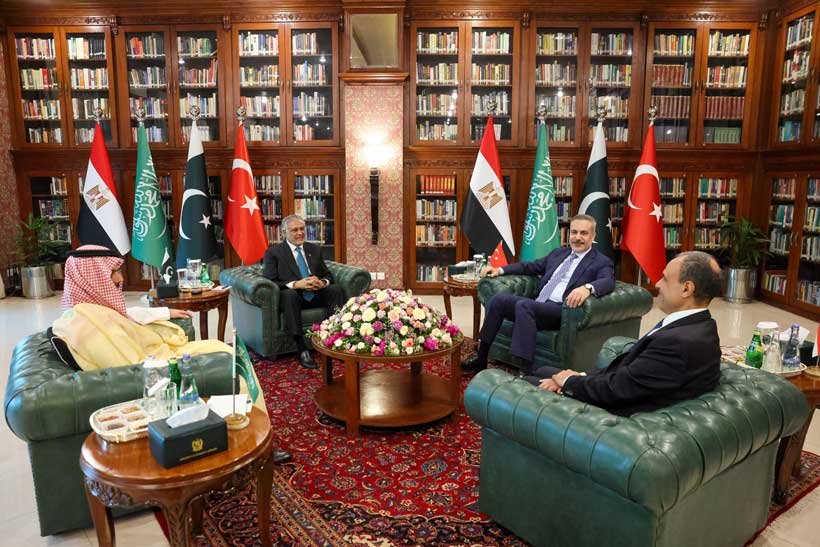
The broader picture is one of a region caught between two powers whose negotiations have repeatedly collapsed and whose military restraint is increasingly thin. Pakistan is mediating. The Abraham Accords are being dangled as a condition for peace. Saudi Arabia and Pakistan are being pressured to normalise with Israel, something experts regard as politically impossible without a credible path to Palestinian statehood. Meanwhile, oil tankers are switching off their radars and running the strait, and warning shots are being fired.
What Oman represents in all of this is not a threat. It represents the last available space for rational diplomacy. Threatening to destroy it is not a strategy. It is the absence of one.
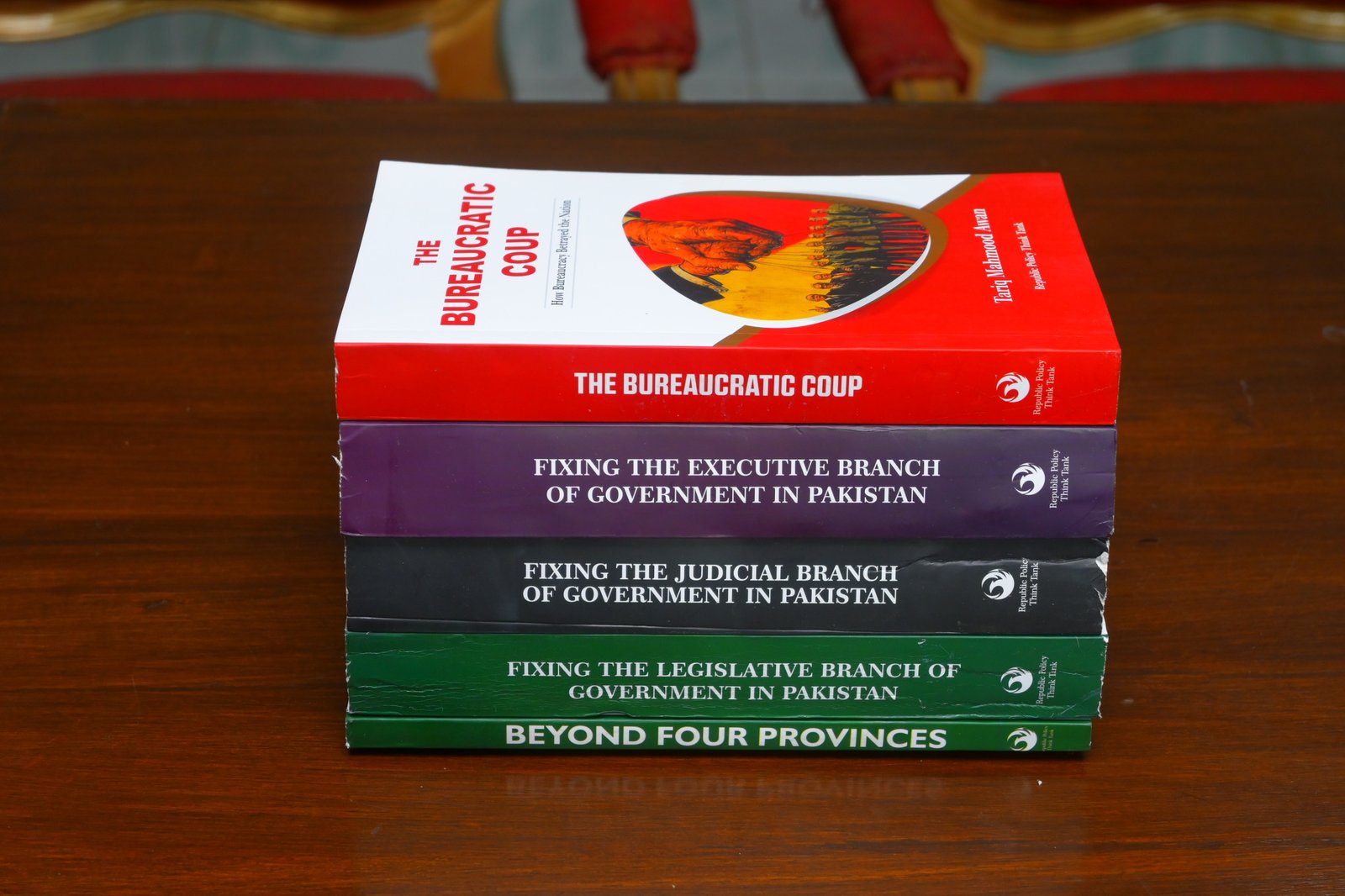
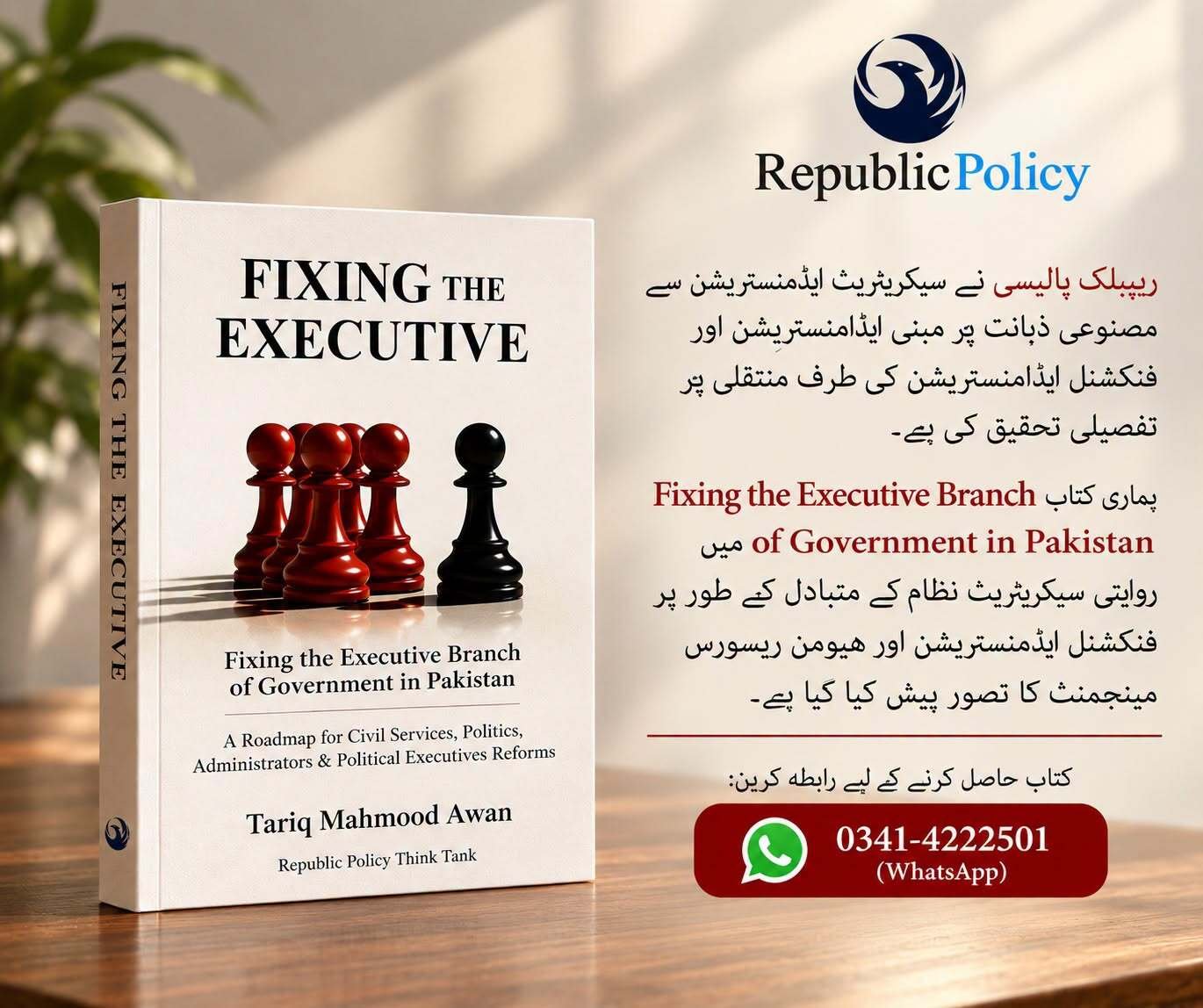
The Republic Policy Think Tank’s special work on governance reforms in Pakistan is now available in the form of four important books at bookstores across Pakistan:
- Fixing the Executive Branch of Government
- Fixing the Legislative Branch of Government
- Fixing the Judicial Branch of Government
- The Bureaucratic Coup
These books are available at Vanguard Books and other bookstores across Pakistan.