The conflict between the United States and Iran intensified once again as both countries accused each other of launching new military attacks, raising fears that their already fragile ceasefire could completely unravel.
The United States Central Command (CENTCOM) announced that it carried out a 90-minute military operation targeting Iranian coastal defence systems and cruise missile storage and launch facilities on Greater Tunb Island near the Strait of Hormuz. According to CENTCOM, the operation was intended to weaken Iran’s ability to threaten commercial shipping through one of the world’s most important energy corridors.
The latest strikes followed overnight US military operations involving fighter aircraft, drones and naval forces that targeted several military installations along Iran’s southern coastline and around the Strait of Hormuz. At the same time, Washington resumed naval restrictions on shipping connected to Iranian ports, increasing concerns over global energy supplies and pushing international oil prices higher.
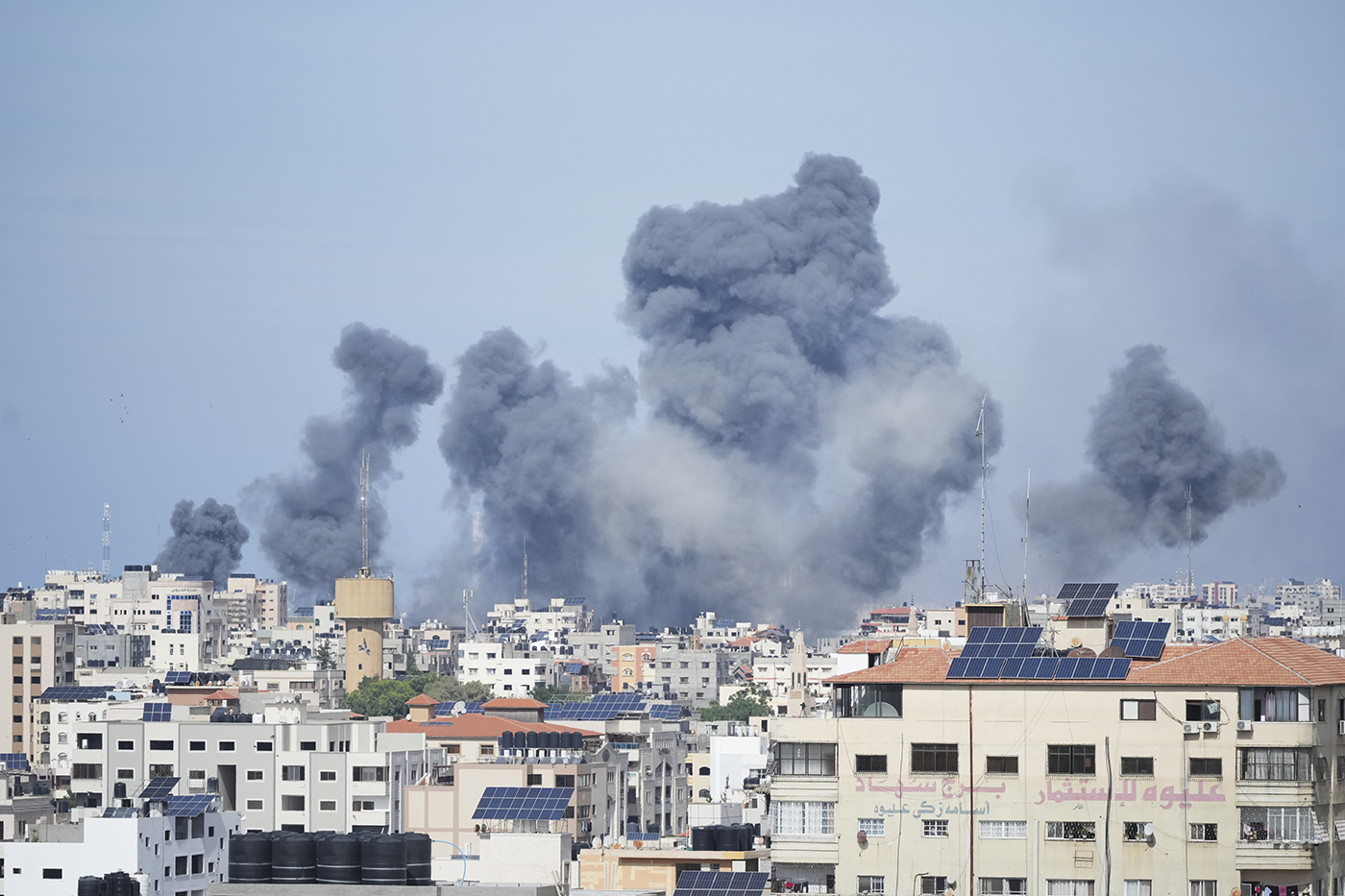
Iranian media reported explosions in several southern cities and islands, including Bandar Abbas, Qeshm, Hengam, Sirik and Bushehr, where air defence systems were activated in response to the attacks.
Iranian government spokesperson Fatemeh Mohajerani stated that more than 30 civilians were killed in the latest US attacks across southern Iran. Health Ministry spokesperson Hossein Kermanpour added that over 260 people were injured, with most receiving medical treatment before being discharged.
The Iranian military also reported that 13 US missiles struck Bambour Garrison in Iranshahr, killing seven soldiers from the 388th Brigade and injuring several others. Officials claimed the attack targeted residential facilities and military posts in an attempt to inflict maximum casualties.
Meanwhile, Iran’s Islamic Revolutionary Guard Corps (IRGC) claimed responsibility for overnight attacks on US military facilities in Bahrain, Kuwait and Jordan. The IRGC said it had damaged the US Fifth Fleet headquarters, logistics facilities and fuel depots in Bahrain while also striking a major US logistics centre in Kuwait. It further claimed to have destroyed shelters housing American fighter aircraft and several MQ-9 drones.
Jordan’s military confirmed that its air defence systems intercepted and destroyed three Iranian ballistic missiles that entered the country’s airspace.
The renewed violence comes less than a month after Washington and Tehran signed a memorandum aimed at extending an earlier ceasefire and opening negotiations to end the conflict that began in late February. Both governments now accuse each other of violating that agreement.
US President Donald Trump warned that military operations against Iran would continue until US objectives were achieved, adding that critical infrastructure, including power plants and bridges, could become future targets.
Washington also announced the continuation of naval measures restricting vessels linked to Iran, while deploying additional naval assets to the region. US officials said the operation seeks to limit Iranian maritime activity while maintaining the security of commercial shipping routes through the Strait of Hormuz.
Iran has threatened to expand restrictions on regional export routes, warning that energy corridors benefiting the United States and its allies could also be affected. Iranian media reported that Revolutionary Guard naval forces recently stopped two vessels in the Strait of Hormuz by firing warning shots.
The Strait of Hormuz remains one of the world’s most strategically important waterways, handling nearly one-fifth of global oil and gas shipments before the current conflict. Growing tensions pushed Brent crude oil prices above $86 per barrel as markets reacted to the renewed military escalation.
Separately, the United States imposed additional financial sanctions on individuals, companies and vessels allegedly involved in facilitating Iranian oil exports, while also freezing cryptocurrency assets reportedly linked to Iran’s central bank.